
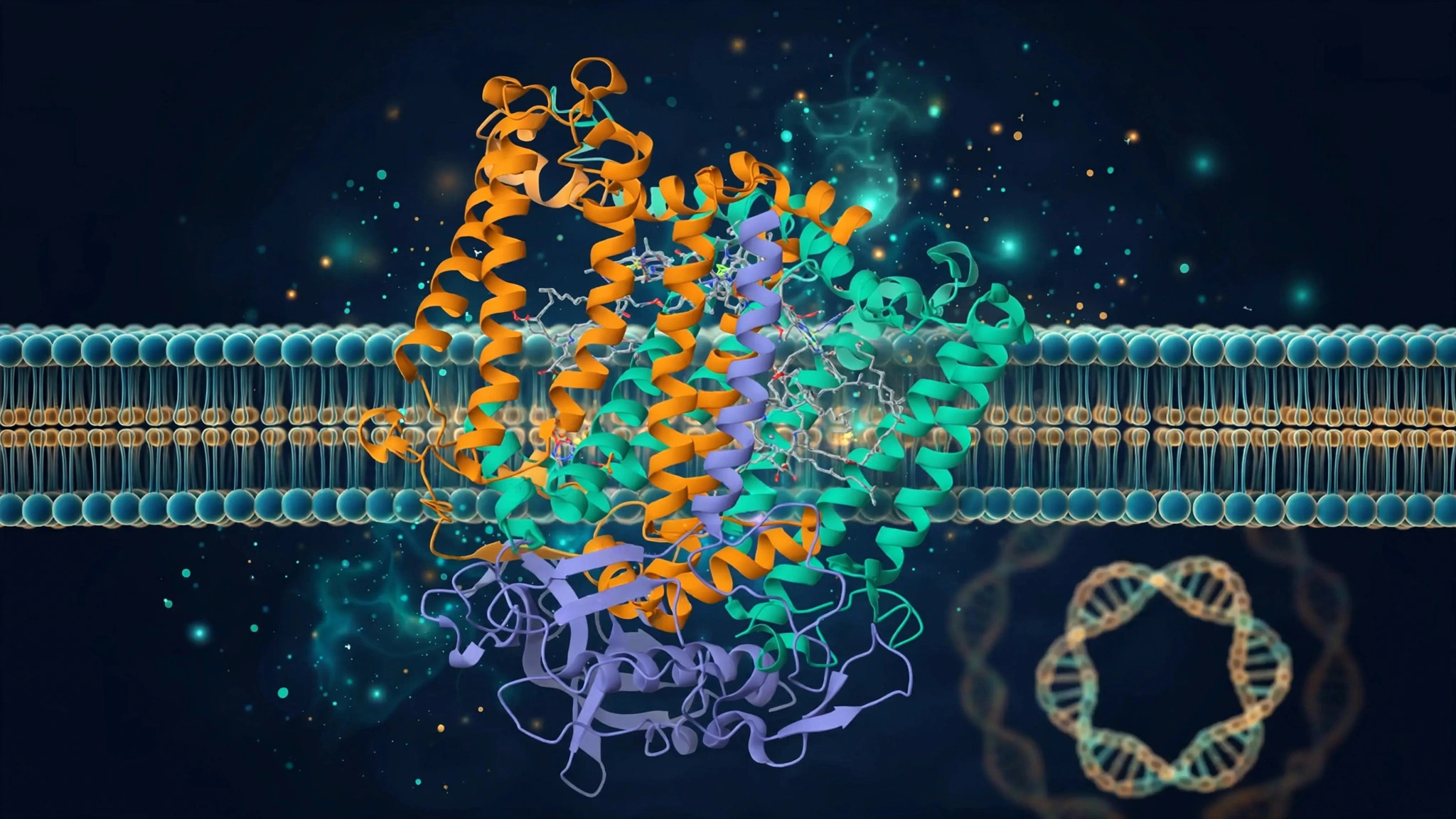
MT-CYB variants and complex III disease: a new clinical map
When mitochondria fail at complex III — the cytochrome bc1 step of the energy-production chain — the clinical fallout is wildly variable: exercise intolerance in one person, multisystem disease in another. A new review in Frontiers in Neuroscience, published September 29, pulls the scattered literature on MT-CYB-associated mitochondrial disease into a single genotype–phenotype map, from the m.15045G>A variant outward.
Why a map matters
MT-CYB is one of the 13 protein-coding genes on mitochondrial DNA, and its variants cause complex III deficiency — one of the rarer respiratory-chain disorders. Because cases are scattered across decades of case reports, clinicians and families have lacked a consolidated picture of which variants cause what. This synthesis closes that gap.
What it means for testing
For readers: this is a clinical genetic-testing story, not a consumer-test story. If a mitochondrial disorder is suspected, whole-mtDNA sequencing through a clinical lab — interpreted with resources like this review — is how variants like these get found and understood. Consumer mitochondrial-age scores don't do this.
The limits
A review synthesizes; it doesn't discover. No new treatment follows from this paper — but for a family navigating a rare diagnosis, a clear map of what a variant means is genuinely useful medicine.
Where the evidence stands
- Established: The clinical spectrum of MT-CYB variants is drawn from the published case literature.
- Preliminary: Genotype–phenotype correlations in rare mitochondrial disease remain based on small case numbers.
- Contested: How specific variants produce specific symptoms is still incompletely understood.
- Absent: No disease-modifying treatment for MT-CYB complex III disorders exists.