
Medications
Approved and investigational medicines that act on mitochondrial disease or pathways.


A liver drug picked for protecting mitochondria joins the world's largest Parkinson's trial
Ursodeoxycholic acid (UDCA) has treated certain liver conditions for over 30 years. University of Sheffield researchers identified it as a candidate to improve mitochondrial function in Parkinson's disease by screening an entire drug library in tissue samples from Parkinson's patients — the loss of mitochondrial function in dopamine-producing nerve cells is believed to play an important role in progression. After the early-stage UP study showed UDCA was safe and well tolerated in people with Parkinson's, UDCA has now joined the Edmond J Safra Accelerating Clinical Trials in Parkinson's Disease (EJS ACT-PD) platform as its third active arm, alongside telmisartan and terazosin. The trial, led nationally by UCL and Newcastle University, will recruit 2,000 participants across 40 NHS hospital sites, testing the drugs in parallel against placebo for disease-modifying potential.
Read article →
A mitochondrial inhibitor shifted glioblastoma metabolism on MRI — but the survival benefit was not significant, in mice
Lonidamine is an old drug with a modern rationale: it inhibits both glycolysis and mitochondria, the two energy systems glioblastoma cells reprogram to resist temozolomide, the standard chemotherapy. A study in Scientific Reports (Alrashidi, Bhaduri, Gash and colleagues, University of Liverpool, corresponding author Harish Poptani; published November 5, 2026) treated 66 mice bearing intracranial GL261 glioblastomas with saline, lonidamine, temozolomide, or the combination for five consecutive days, tracking the tumours with MRI and MR spectroscopy on days 0, 3 and 6. The metabolic effect was real and visible: lactate fell significantly in the lonidamine groups, the lactate transporter MCT4 was markedly reduced, and in lab-grown GL261 cells lonidamine acutely decreased mitochondrial respiration (with partial recovery later). The therapeutic bottom line was not: the combination's survival benefit was not significant, and there were no significant differences between groups in tumour volume, diffusion-imaging parameters, or mitotic index after six days.
Read article →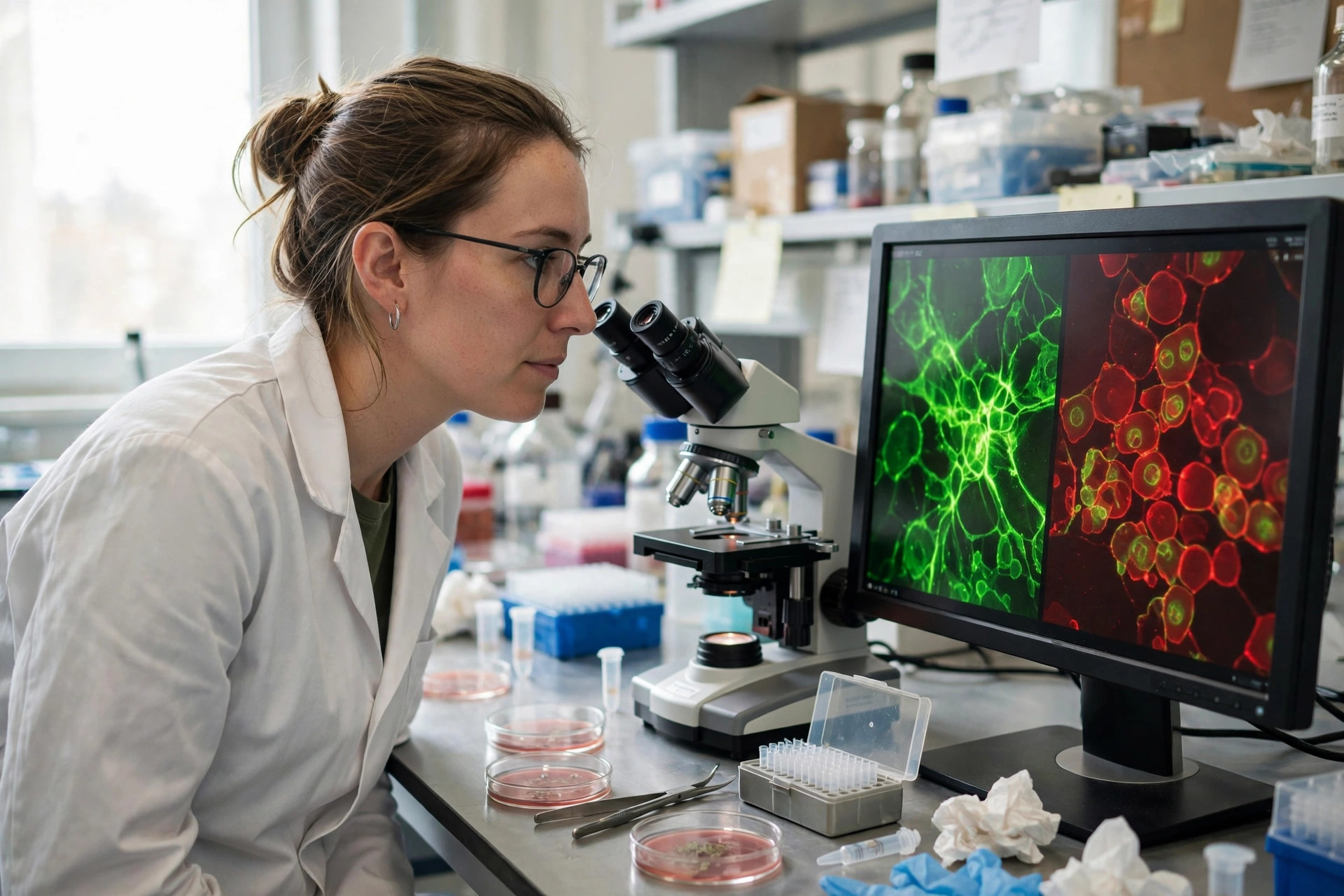
Metformin cleared aged cartilage cells by unlocking a mitochondrial death switch — in lab-grown cells, at doses far above blood levels
Senescent cartilage cells — aged chondrocytes that stop dividing and secrete inflammatory signals — accumulate in osteoarthritic joints, and no approved drug removes them. A study published October 28, 2026 in Frontiers in Pharmacology (Feng, Liu, Lin and Wu, Shantou University Medical College) used live-cell FRET imaging in an immortalised human chondrocyte line made senescent with doxorubicin to watch the mitochondrial life-or-death machinery directly: in senescent cells, the anti-death proteins Bcl-xL and Mcl-1 grip the executioner protein Bak more tightly than in young cells. Metformin loosened that grip (Bcl-xL-Bak FRET efficiency fell from 0.391 to 0.142), strengthened Bak's activation by Bim, increased Bak dimerisation on the mitochondrial membrane, collapsed mitochondrial membrane potential, and drove caspase- and ROS-dependent death that hit senescent cells far harder than normal ones at the same exposure. The decisive caveat is dose: the selective effects were shown at roughly 20 to 40 millimolar metformin, concentrations far above the blood levels patients on standard diabetes doses ever reach, and the authors themselves warn that data at those levels may reflect non-specific stress. A mechanism in a dish — a genuinely elegant one — is not a joint treatment.
Read article →
A drug designed to switch the mitochondrial DNA copier back on clears the UK for a Phase 2 trial in POLG disease
POLG disease is a rare, progressive genetic disorder in which mutations in the POLG gene — the gene for the enzyme that copies mitochondrial DNA — leave cells unable to maintain their mitochondrial genomes, depleting mtDNA and draining cellular energy production. There is no approved disease-modifying treatment. On October 30, 2026, Pretzel Therapeutics announced that the UK's Medicines and Healthcare products Regulatory Agency (MHRA) has authorized its clinical trial application for PX578, a first-in-class, brain-penetrant small molecule designed to activate the POLG enzyme and increase mitochondrial DNA. The authorization follows FDA clearance of the drug's IND application in August 2026 and an FDA Fast Track designation in September, and it clears the randomized, double-blind, placebo-controlled Phase 2 POLARIS trial in adults with POLG disease to start by the end of 2026, after a completed Phase 1 study in healthy volunteers. Authorization to test a drug is not evidence that it works: no patient with POLG disease has yet received PX578 in this trial.
Read article →
Simufilam calmed a cellular stress signal and restored mitochondrial membrane potential — in lab-grown TSC2-deficient cells
Tuberous sclerosis complex (TSC) is a genetic condition in which loss of the TSC2 gene leaves a growth-signaling pathway switched on, with effects across the brain and body. On October 28, 2026, Filana Therapeutics announced publication in the journal Cells of preclinical work by Yale School of Medicine researchers on its drug candidate simufilam in a human cell line engineered to knock out TSC2. In those cells, simufilam reduced elevated expression of ATF4 — a transcription factor at the center of the cell's stress response — by approximately 37 percent, and the study identified changes in mitochondrial pathways alongside restoration of mitochondrial membrane potential, the voltage across the inner membrane that mitochondria need to make ATP. The company says patient screening for a planned Phase 2a study in TSC-related epilepsy is expected to begin by the first quarter of 2027. Read the result at its correct size: one engineered cell line, one company-announced paper, and a lead author — Angelique Bordey of Yale — who also serves as Filana's Senior Vice President of Neuroscience.
Read article →
Mitochondrial disease drug napazimone: pivotal FALCON trial now expects full enrollment in the first half of 2027
Primary mitochondrial disease caused by mitochondrial DNA mutations still has no approved standard of care. Napazimone (KL1333) is one of the few candidates in a pivotal trial — and on October 27, 2026, Pharming Group's third-quarter report updated the timeline: more than 50 FALCON trial sites are actively recruiting, with significant expansion in the United States; the company expects about 145 of the planned 180 adult participants to be enrolled by the end of 2026, enrollment to complete in the first half of 2027, and topline results roughly one year after enrollment completes. That is a timeline update, not an efficacy result: no FALCON outcome data were reported in the update, and whether napazimone helps patients remains exactly the question the trial is designed to answer.
Read article →
A 'hypoxia in a pill' reversed Parkinson's symptoms — in mice
When mitochondria cannot use oxygen properly, oxygen can pile up and damage the brain. Broad Institute researchers led by Vamsi Mootha tested a two-drug combination designed to deliver less oxygen to tissues — GBT601, which makes hemoglobin hold onto oxygen, plus PT2399, which blocks the body's compensatory red-blood-cell response. In fresh reporting published October 22-23, 2026, the regimen reversed movement symptoms in a mouse model of Parkinson's after symptoms had appeared, worked comparably to breathing 11% oxygen, and in a Leigh syndrome mouse model extended expected lifespan from about 62 days to 158 days. It is mouse data, with no human Parkinson's trial.
Read article →
Heart drug sotagliflozin switched mitochondrial energy genes back on — in mice with a thickened heart
Sotagliflozin is a dual SGLT1/SGLT2 inhibitor already used in heart failure and diabetes care. Lexicon Pharmaceuticals announced on October 21, 2026 two newly published preclinical studies: in a mouse model of hypertrophic cardiomyopathy (HCM) — a thickened, stiff heart muscle — sotagliflozin normalised diastolic function, reversed hypertrophy progression, reduced fibrosis and oxidative stress, and upregulated mitochondrial gene sets for energy production in heart tissue. A second study found it reduced platelet activation in ex vivo human blood, unlike empagliflozin. The HCM findings are mouse data; the human Phase 3 SONATA-HCM trial reads out in 2027.
Read article →
A mitochondria-targeting brain drug goes on camera: NRG starts PET scans to prove NRG5051 reaches the brain
Many neurodegeneration drugs fail on a simple question: did enough of the medicine actually reach the brain? NRG Therapeutics announced on October 21, 2026 that a positron emission tomography (PET) imaging trial (NRG5051-102) of its lead asset NRG5051 has started in London. NRG5051 is an orally available, brain-penetrant inhibitor of the mitochondrial permeability transition pore (mPTP) acting through an NLRX1-mediated mechanism; the company has radiolabelled the molecule so PET scans in healthy volunteers can measure blood plasma kinetics and estimate levels in brain tissue, informing dose selection for future trials in ALS and Parkinson's disease.
Read article →
A GLP-1 drug extended lifespan by about 12% in older mice — with healthier mitochondria among the changes, in lab models
In a Nature study, female mice started on semaglutide at 20 months of age lived a median 834 days versus 742 days for controls — about 92 extra days — and showed less inflammation and senescence, better-functioning mitochondria, improved muscle and cognitive performance, and more new cells in memory regions of the brain. Coverage this week (Oct 13-16) stresses the caveats researchers themselves raise: mice only, females only, one strain, and an unresolved question of how much of the effect is simply eating less. No human lifespan evidence exists.
Read article →
Creatine added lean tissue and strength in adults aged 45 to 65 — even without a workout program, in a 12-week trial
Creatine's evidence base was built on young athletes, while its marketing increasingly targets older adults. In a Texas A&M randomized, placebo-controlled trial reported October 1, 64 adults aged 45 to 65 who finished 12 weeks on 10 grams of creatine a day gained lean tissue and strength — including about 2.4 pounds of lean tissue in the group that did not exercise — while aerobic capacity did not improve.
Read article →
A seizure drug candidate reshaped mitochondrial proteins and restored membrane voltage — in lab-grown TSC cells
Tuberous sclerosis complex is usually attacked through the overactive mTORC1 pathway. In a Yale study published October 14 in Cells, the small molecule simufilam changed 514 proteins in TSC2-deficient human cells — many of them mitochondrial — and restored mitochondrial membrane potential without suppressing mTORC1 at all.
Read article →
One year after approval, the first mitochondria-targeted drug reports $17.5 million in early sales
FORZINITY (elamipretide), approved in September 2025 as the first FDA-approved therapy that targets mitochondria, has generated $17.5 million in gross revenue since its December 2025 soft launch, according to an October 14 update from its maker, Mighty Therapeutics — with a confirmatory Phase 4 trial now recruiting on four continents.
Read article →
First Parkinson's patient dosed with MTX325, a pill designed to clear faulty mitochondria
Mission Therapeutics said October 15 that the first person with Parkinson's disease has received MTX325, an oral drug that blocks the USP30 enzyme to speed removal of dysfunctional mitochondria. The Phase 1b proof-of-mechanism study aims to enroll 36 people with mild to moderate Parkinson's across the UK, Europe, and Australia.
Read article →
Urolithin A did not improve blood-vessel function in a four-week trial of 50 adults with obesity
Urolithin A — a gut-derived compound sold for healthy aging because it stimulates mitophagy, the recycling of worn-out mitochondria — failed its main test in a randomized trial published October 9 in JAMA Network Open: four weeks at 1,000 mg a day did not improve peripheral blood-vessel function versus placebo. One brain blood-flow measure moved; cognition did not.
Read article →
Weekly rapamycin slowed a biological-aging clock in its first human trial - early reports, not yet peer-reviewed
Fresh reports from the PEARL trial say low weekly doses of rapamycin slowed the DunedinPACE epigenetic aging clock - but the numbers come from company and longevity-press reporting around Oct. 8, not from a peer-reviewed journal release yet.
Read article →
An old arthritis drug restored broken mitochondria in kidney cancer — in lab models
In clear cell kidney cancer, losing the chromatin protein SMARCD1 sets off a chain that fragments mitochondria and rewires tumor metabolism. The decades-old arthritis drug leflunomide restored mitochondrial function and slowed tumors in mice — including patient-derived models — and made standard therapies work better.
Read article →
The diabetes drug metformin blocked a cancer-killing process in lab cells — the opposite of what earlier studies found
In Pharmacology Research & Perspectives, researchers showed metformin and phenformin dose-dependently rescued lung and ovarian cancer cells from cysteine-deprivation ferroptosis by suppressing mitochondrial dysfunction — independent of the glutathione system, at doses far above clinical levels, and in a cell-type-specific way.
Read article →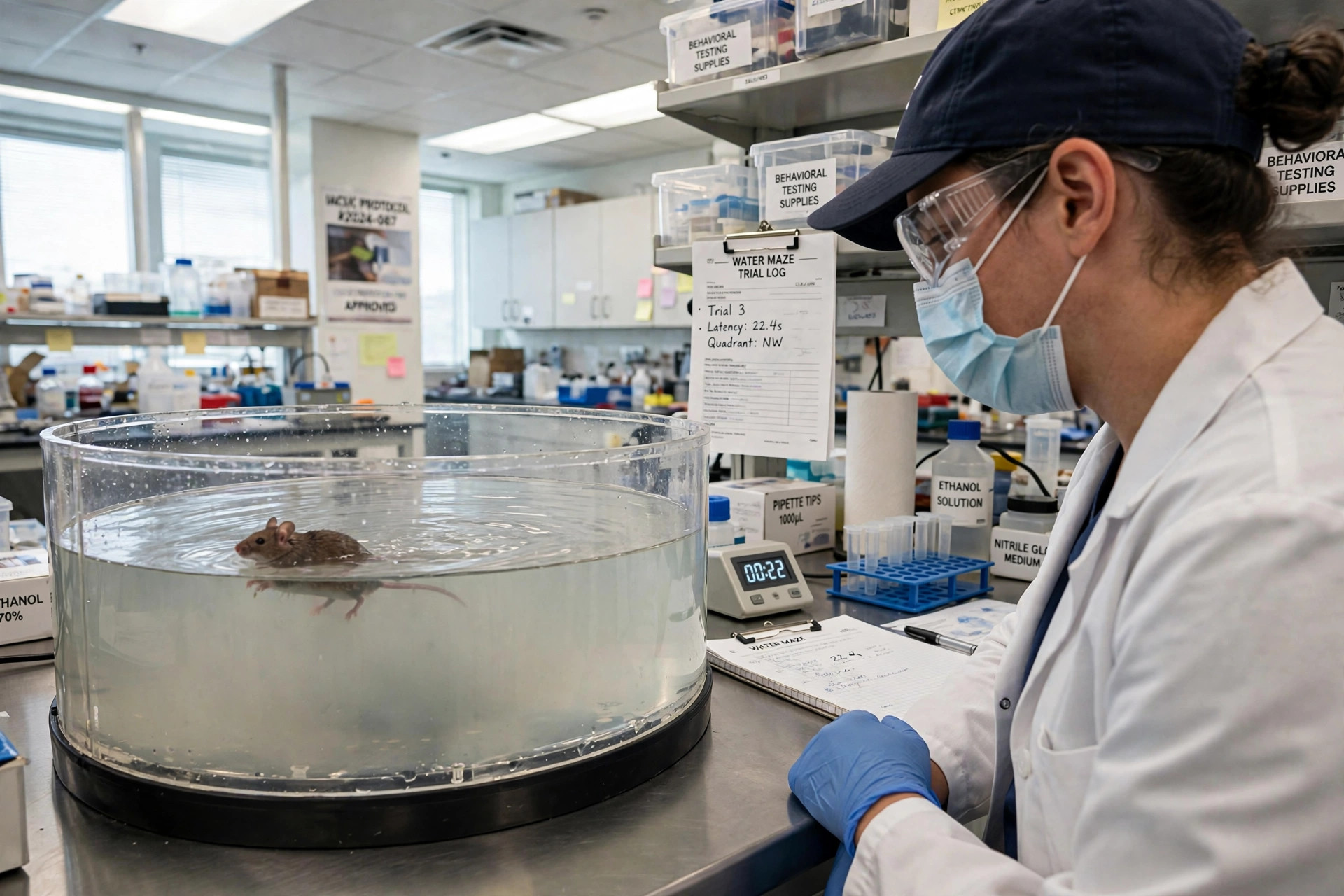
An NAD+ booster given before puberty eased memory problems in a schizophrenia model — in mice
Prepubertal NMN improved hippocampal neurogenesis markers, mitochondrial health, and maze performance in a two-hit mouse model of schizophrenia — with the authors' explicit warning that this is no reason to give NMN to children.
Read article →
A metabolic drug improved movement scores in an early Parkinson's trial — by way of the mitochondria
At the MDS 2026 congress, researchers reported that vutiglabridin — a metabolic drug that binds the mitochondrial enzyme PON2 — improved motor scores over placebo at 24 weeks in a randomized, double-blind Phase 2a trial in early Parkinson's.
Read article →
Urolithin A shielded mouse brains from the ravages of lost sleep
Mice pretreated with the mitophagy-promoting compound before sleep deprivation kept their memory scores and dodged the inflammation and mitochondrial fragmentation that lost sleep caused — but the compound was injected, not swallowed, and the mechanism is correlational.
Read article →
At a Boston longevity meeting, obesity drugs were pitched as aging drugs — here’s what the data actually show
Eli Lilly presented a small tirzepatide pilot in which epigenetic clocks ticked slower than elapsed time; Novo Nordisk reportedly claimed 3–4 years of biological-age reversal for semaglutide from unpublished data. A new review maps the GLP-1–mitochondria axis — and says direct human mitochondrial data is still missing.
Read article →
MitoQ: what the human trials of the mitochondria-targeted antioxidant actually show
The best-known mitochondria-targeted antioxidant has human trial data — and it’s thinner than the marketing: small trials found MitoQ lowered mitochondrial hydrogen peroxide emission without changing respiratory capacity, with strength gains only in adults over 70.
Read article →
An ALS drug aimed at mitochondria heads toward FDA review
Clene plans to file a new drug application for CNM-Au8 — an oral gold nanocrystal suspension designed to support mitochondrial function in ALS — with a possible FDA decision by mid-2027, after trial results that missed the main goal but showed other signals.
Read article →
Urolithin A vs. B: one supports mitochondria, one builds muscle — in lab cultures
The first head-to-head transcriptomic comparison of urolithin A and urolithin B in human skeletal-muscle cells (donors aged 55–96) found urolithin A dampened inflammatory signaling and boosted the antioxidant enzyme NQO1 — consistent with its mitophagy role — while urolithin B pushed cholesterol/adipogenesis and muscle-regeneration pathways instead.
Read article →
Keto and ketones for mitochondria: a new review says the evidence is thin
A new review in Nutrients (Yonsei University) finds that proposed mitochondrial mechanisms for ketogenic diets and beta-hydroxybutyrate are 'plausible but not established,' that most human studies never measured mitochondrial outcomes — and that effects appear genotype-dependent, with possible harm in POLG-related disease and mtDNA-deletion myopathy.
Read article →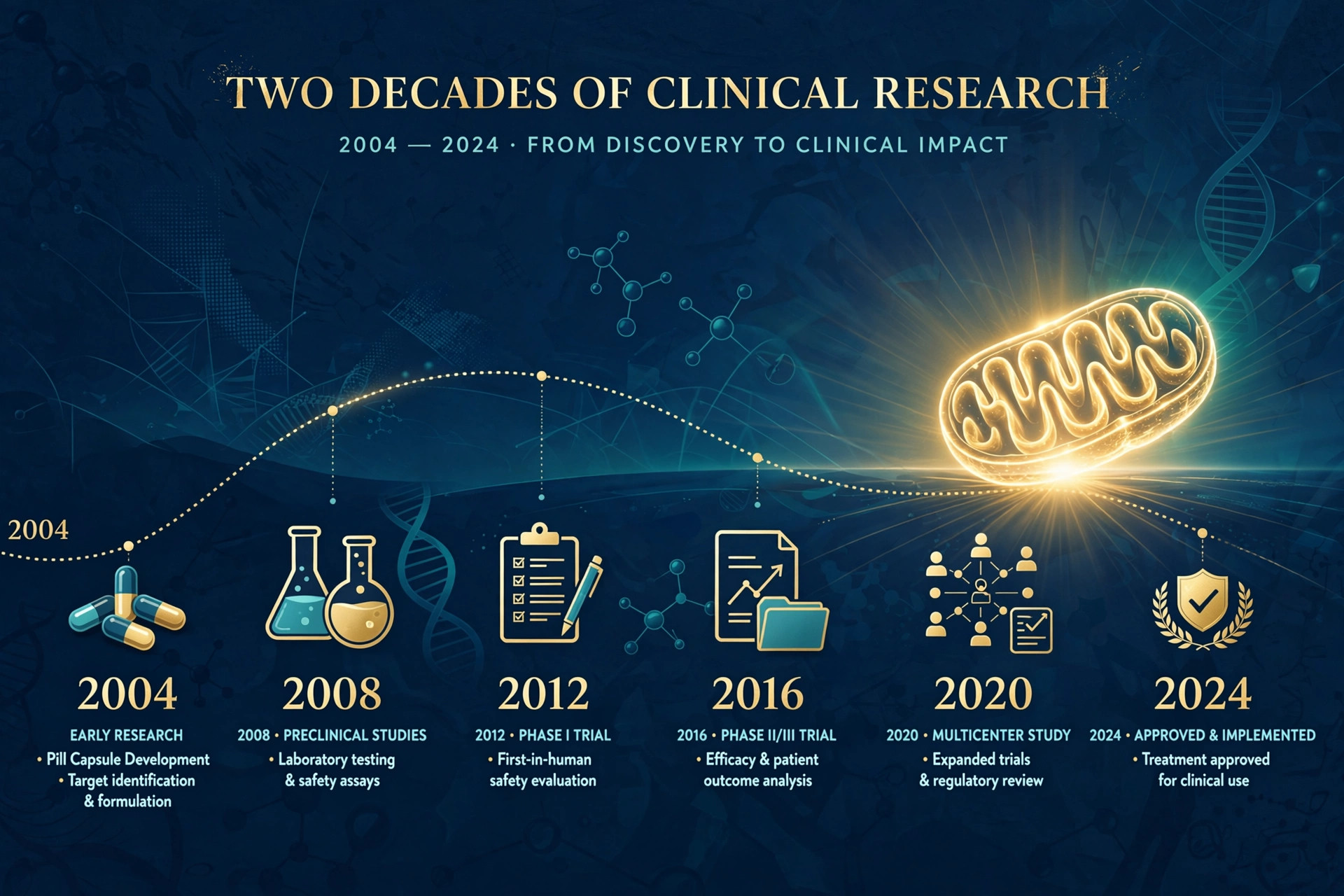
Two decades, 71 trials: what mitochondrial-disease research actually learned
A new review of 71 primary mitochondrial-disease trials finds elamipretide's big Phase 3 missed its endpoints while genetically-targeted drugs like Kygevvi won approvals — and broad enrollment kept diluting the signal.
Read article →
FORZINITY and SS-31: approval limits
Elamipretide’s accelerated approval is limited to Barth syndrome and does not validate gray-market or broad anti-aging use.
Read article →