EBO2 / EBOO
Extracorporeal blood oxygenation and ozonation · not FDA-approved
What it is + mitochondrial link
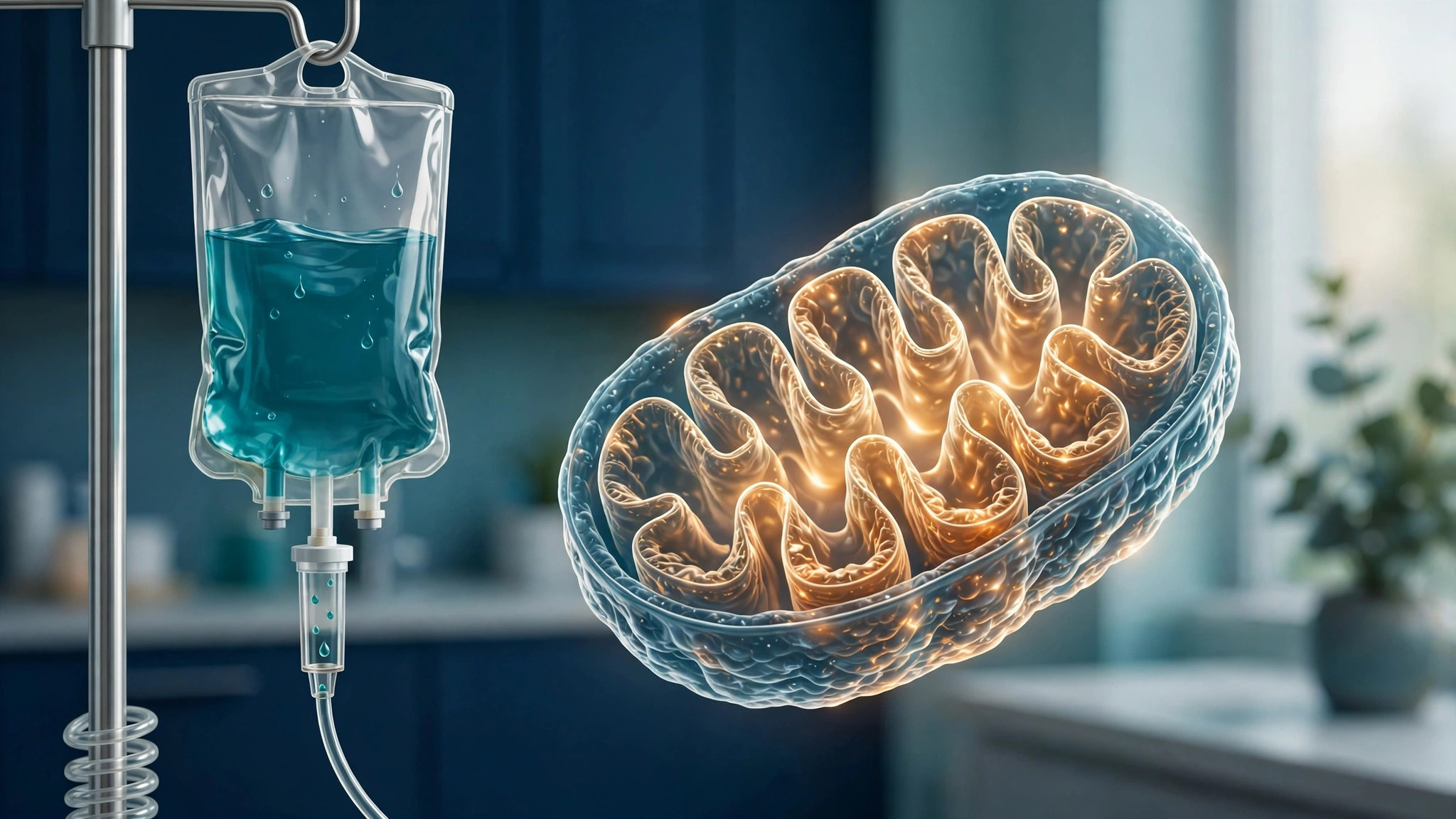
Blood moves through a continuous extracorporeal circuit, contacts a low-concentration oxygen–ozone mixture across a filter membrane, and returns through a second line. Sessions are commonly described as 60–90 minutes. Ozone disappears quickly, leaving reactive products such as 4-HNE. The hypothesis is mitohormesis: a controlled oxidative signal may activate Nrf2 defenses, encourage mitochondrial biogenesis, and alter red-cell oxygen unloading or microcirculation.
What the evidence shows
Low-dose ozone has produced transient mitochondrial changes in cell models, returning to baseline by 48 hours. The only controlled clinical trial we found randomized 28 people with peripheral artery disease to EBOO or IV prostacyclin; skin lesions and symptoms improved more with EBOO, but vascularization did not. It was small, single-center, developer-run and has not been independently replicated. No controlled human trial has measured mitochondrial or bioenergetic outcomes.
Risks + bottom line
G6PD deficiency is an absolute contraindication because of hemolysis risk. Other concerns include gas embolism, infection or clotting in the circuit, and reported neurologic events; toxic hyperthyroidism, platelets below 50,000 and severe cardiac instability are also cited contraindications. U.S. regulation describes ozone as a toxic gas with no known useful medical application. Marketing claims substantially exceed the evidence.