
A mitochondria-targeting peptide reversed egg aging — in mice and, early on, in human eggs
·Tip: press play, then lock your phone or switch apps — the article keeps reading.
The egg is one of the most energy-hungry cells in the body, and its decline with age runs straight through failing mitochondria. A new study in Aging Cell reports that a single week of elamipretide — a small mitochondria-targeting peptide already tested in human trials for heart failure — restored youthful fertility in middle-aged mice, and that early results in human eggs point the same way.
What the peptide did in aging ovaries
The team treated 10-month-old mice — well past the mouse reproductive prime — with daily elamipretide injections. The 5 mg/kg dose for seven days worked best: ovaries showed more high-quality dominant follicles, fertilization rates of aged oocytes rose substantially, and early embryos that normally stall between the two- and four-cell stages resumed developing. Under the microscope, mitochondria that had drifted away from the spindle returned to their proper position, ATP levels normalized, membrane potential rose, and reactive oxygen species fell.
Metabolomics revealed an unexpected handle: vitamin B6 metabolism was the most altered pathway, and supplementing B6 alone reproduced the maturation rescue — while blocking the VEGF-A pathway downstream reproduced many of the peptide's benefits. A vitamin B6–VEGF axis, jointly rescuing nuclear and cytoplasmic maturation.
The human eggs — and the honest limits
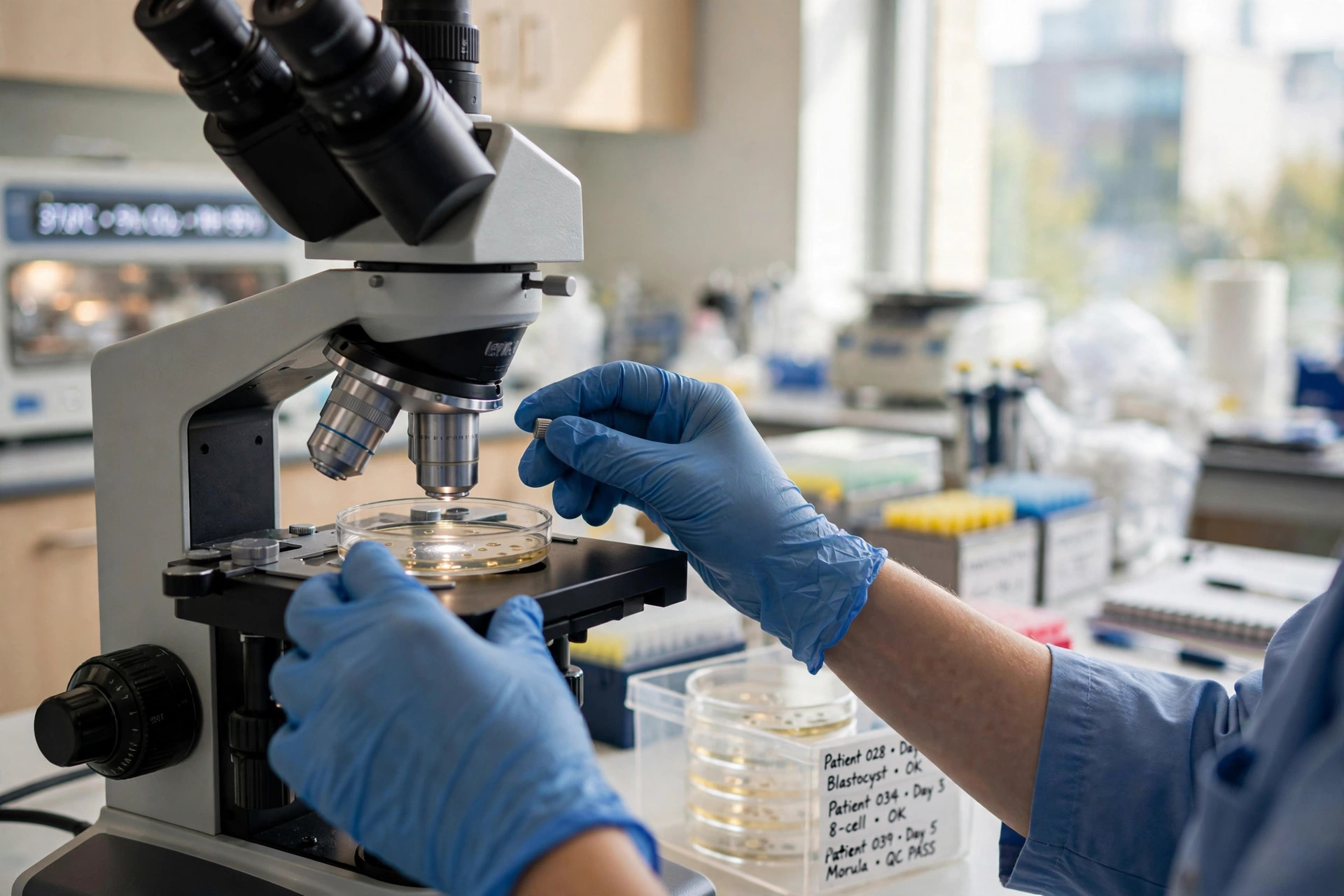
Crucially, the findings weren't confined to mice. In an in vitro experiment, germinal vesicle oocytes from 39 patients undergoing ICSI were cultured with or without the peptide. Among women aged 35 and older, elamipretide improved maturation at 24 and 48 hours and raised fertilization and cleavage rates — with similar gains in younger women's oocytes. Pig oocytes under oxidative stress were rescued too.
The limits define the story: the fertility benefit was transient, fading after about a month, and the human sample was small — three patients over 35 contributing 54 oocytes. Because elamipretide has already advanced into human trials for cardiac and neuromuscular indications, the authors argue the path toward fertility applications could be shorter than for most lab discoveries — but considerable work remains before any clinical use.
Where the evidence stands
- Established: Oocyte quality depends on mitochondrial energy; aging drops respiratory capacity and membrane potential while raising ROS; elamipretide binds cardiolipin to stabilize the inner mitochondrial membrane.
- Preliminary: A 7-day course at 5 mg/kg restored fertility measures in 8- to 12-month-old mice via a vitamin B6–VEGF axis; human germinal-vesicle oocytes (39 patients, in vitro) matured and fertilized better.
- Absent: Clinical application in fertility treatment; durability beyond the one-month benefit window; safety of this use in people.