
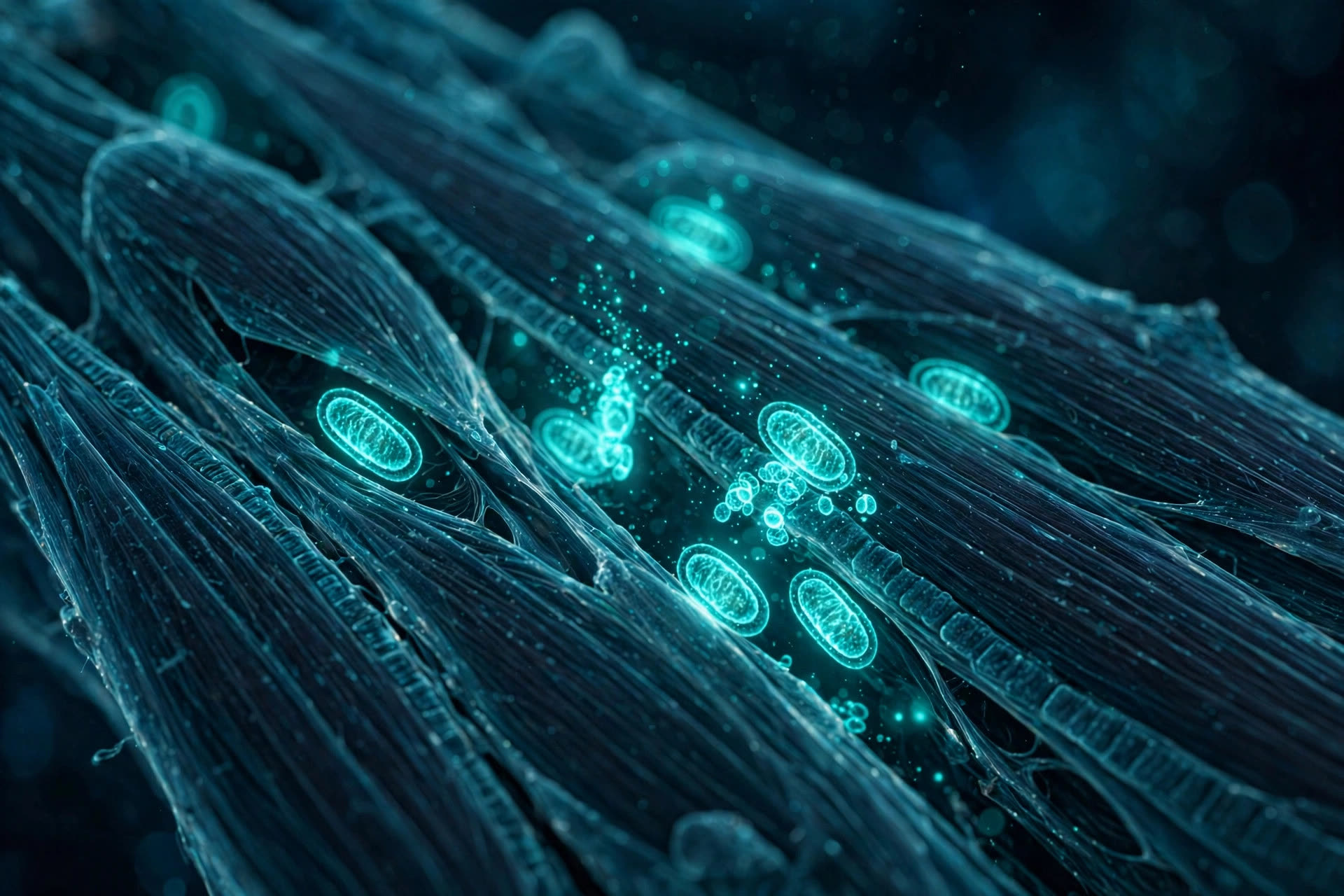
Transplanted mitochondria reboot the aging heart's broken cleanup system — in mice
·Your heart never stops, and its cells pay for that with a furious turnover of energy — and a constant need to clear out worn-out mitochondria. In aging hearts that cleanup system jams: damaged mitochondria pile up half-digested, energy output falls, and the pump weakens. A new study in Aging Cell, from a team at Shanxi Medical University, reports a striking reversal in mice — and points to a molecular culprit behind the jam.
What did the researchers do?
The team injected healthy mitochondria, isolated from bone-marrow stem cells, into the bloodstream of aged mice (aged with doxorubicin, a chemotherapy drug that accelerates cardiac aging). The transplanted mitochondria reached the heart, and the results were dramatic: cardiac pump function improved, the backlog of half-digested mitochondria cleared, and markers of cellular senescence fell. ATP — the energy currency mitochondria produce — was restored.
The deeper finding is the mechanism. The researchers identified an energy-sensing control axis, HIF-3α→BNIP3: when ATP falls in aging hearts, this axis floods the heart with BNIP3, a mitophagy receptor — too much of a good thing. The excess receptors create the “traffic jam”: mitochondria get tagged for disposal faster than the cell’s recycling machinery can process them. Restoring ATP by transplanting fresh mitochondria quieted the axis, and disposal resumed.
Does this apply to human hearts?
Cautiously, there is a human thread. The researchers examined human heart data and found the same BNIP3 elevation in aged human heart cells — the jam’s signature appears in people too. But a signature is not a therapy. No one has transplanted mitochondria to treat aging hearts in humans; the only human mitochondrial-transplant data comes from small pediatric studies of ischemia-reperfusion injury after cardiac surgery, a very different setting.
The practical gaps are large: how to deliver fragile mitochondria reliably, what dose, how often, and whether flooding an aging body with donor mitochondria is safe over time. Mitochondria carry their own DNA, and damaged or mismatched mitochondria can trigger inflammation — a real risk any future therapy must clear.
Why it matters — and what it doesn’t prove yet
This study matters because it gives a molecular explanation for why aging hearts jam their own cleanup machinery — and shows, in principle, that the jam can be unjammed. For a field chasing therapies for age-related heart failure, a defined control axis (HIF-3α–BNIP3) is a genuine advance: it offers drug developers a target that doesn’t require transplanting anything.
What it doesn’t prove: that mitochondrial transplantation will ever be an anti-aging therapy for humans. The evidence is mouse-level, the aging model is drug-accelerated, and the road from here to a safe human treatment is years long and uncertain. Anyone selling “mitochondrial infusions” for aging today is selling far ahead of this science — which is exactly the subject of our watchdog story today.
Where the evidence stands
- Established: Mitophagy declines with age and mitochondrial quality control is central to cardiac health; small pediatric studies of mitochondrial transplantation after cardiac surgery showed no immune response to autologous transfer.
- Preliminary: The HIF-3α→BNIP3 traffic-jam mechanism and its reversal were demonstrated in doxorubicin-aged mice; BNIP3 elevation was also seen in aged human heart cells (correlative only).
- Absent: No human data on mitochondrial transplantation for aging or age-related heart failure; delivery, dosing, and long-term safety are unsolved.