
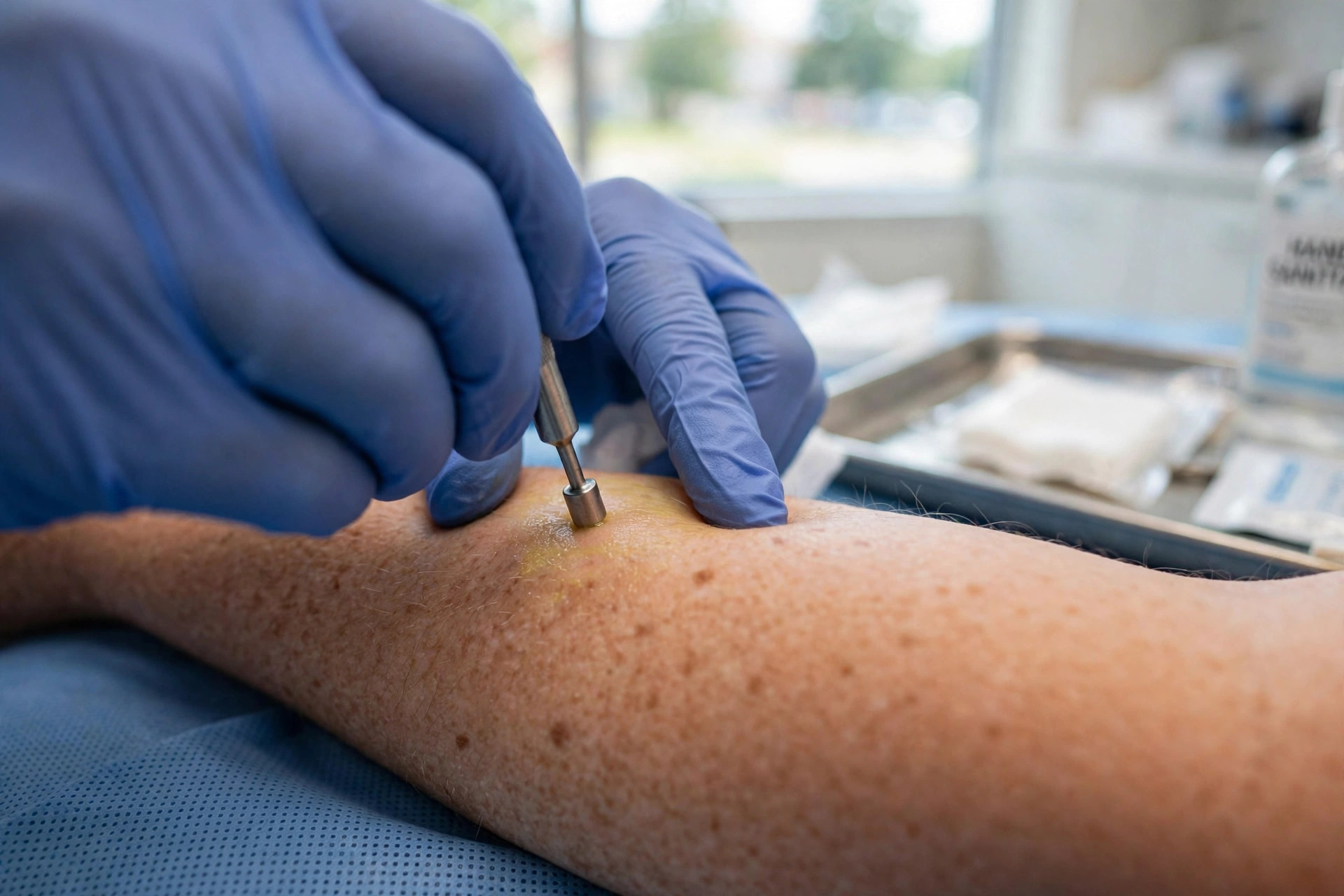
A small skin sample can now help diagnose mitochondrial disease — no muscle biopsy needed
·Tip: press play, then lock your phone or switch apps — the article keeps reading.
Diagnosing mitochondrial disease has always been the hard part. These rare genetic disorders — which strike about 1 in 5,000 people and can attack almost any organ — hide behind symptoms that mimic dozens of other conditions, and even today's genetic testing only finds a definitive cause in about 50 to 65 percent of suspected cases. A new study in EMBO Molecular Medicine now validates a less invasive answer: functional tests performed on cells grown from a simple skin biopsy.
What did the study do?
The study, jointly led by Dr. Johan Van Hove and Dr. Marisa Friederich of Children's Hospital Colorado and the University of Colorado Anschutz School of Medicine, evaluated a comprehensive set of functional diagnostic tests that measure how well mitochondria actually perform inside cells — rather than hunting for the genetic variant behind the failure. Samples came from more than 30 medical centers across North America, Europe, Australia, and New Zealand, making it one of the most comprehensive evaluations of mitochondrial functional testing ever conducted.
Crucially, this is the first comprehensive evaluation of how these tests perform in real clinical practice: how often they successfully contribute to a diagnosis, and how accurately they distinguish affected patients from those without the condition.
Why a skin biopsy changes the experience
Today, confirming mitochondrial disease can require muscle or liver biopsies — invasive procedures that carry real risk, especially for children. The study demonstrated that fibroblasts, grown from a small skin sample, can often provide the information needed instead. As Van Hove put it, getting critical diagnostic information from a simple skin biopsy has the potential to make the process more accessible and less burdensome for patients and families.
This matters most for the patients genetic testing leaves behind. When whole-genome sequencing finds variants of uncertain significance — or nothing at all — functional testing can show whether the mitochondria are actually failing, giving families an answer the DNA alone couldn't provide.
The tests are available now
This isn't a lab-only promise. Nearly all of the functional tests examined in the publication are now available through the Mitochondrial Diagnostic Laboratory within Children's Colorado's Department of Pathology and Laboratory Medicine — one of the largest providers of mitochondrial functional testing in North America, receiving patient samples from medical centers throughout the United States and Canada.
For anyone on a diagnostic odyssey, the practical takeaway: if genetic testing was inconclusive, ask the care team whether functional testing of fibroblasts is an option. The evidence behind it just got much stronger.
Where the evidence stands
- Established: Genetic testing identifies a definitive cause in only about 50-65% of suspected mitochondrial disease cases; functional testing measures actual mitochondrial performance in cells.
- Established: A large international study (30+ centers, EMBO Molecular Medicine) validates fibroblast functional testing from skin biopsies; the tests are clinically available at Children's Colorado for US and Canadian patients.
- Preliminary: How the diagnostic yield generalizes beyond this study's design — exact contribution rates to diagnosis were evaluated here for the first time and need replication.