
MA-5 lifts mitochondrial function in ALS models, but no human data yet
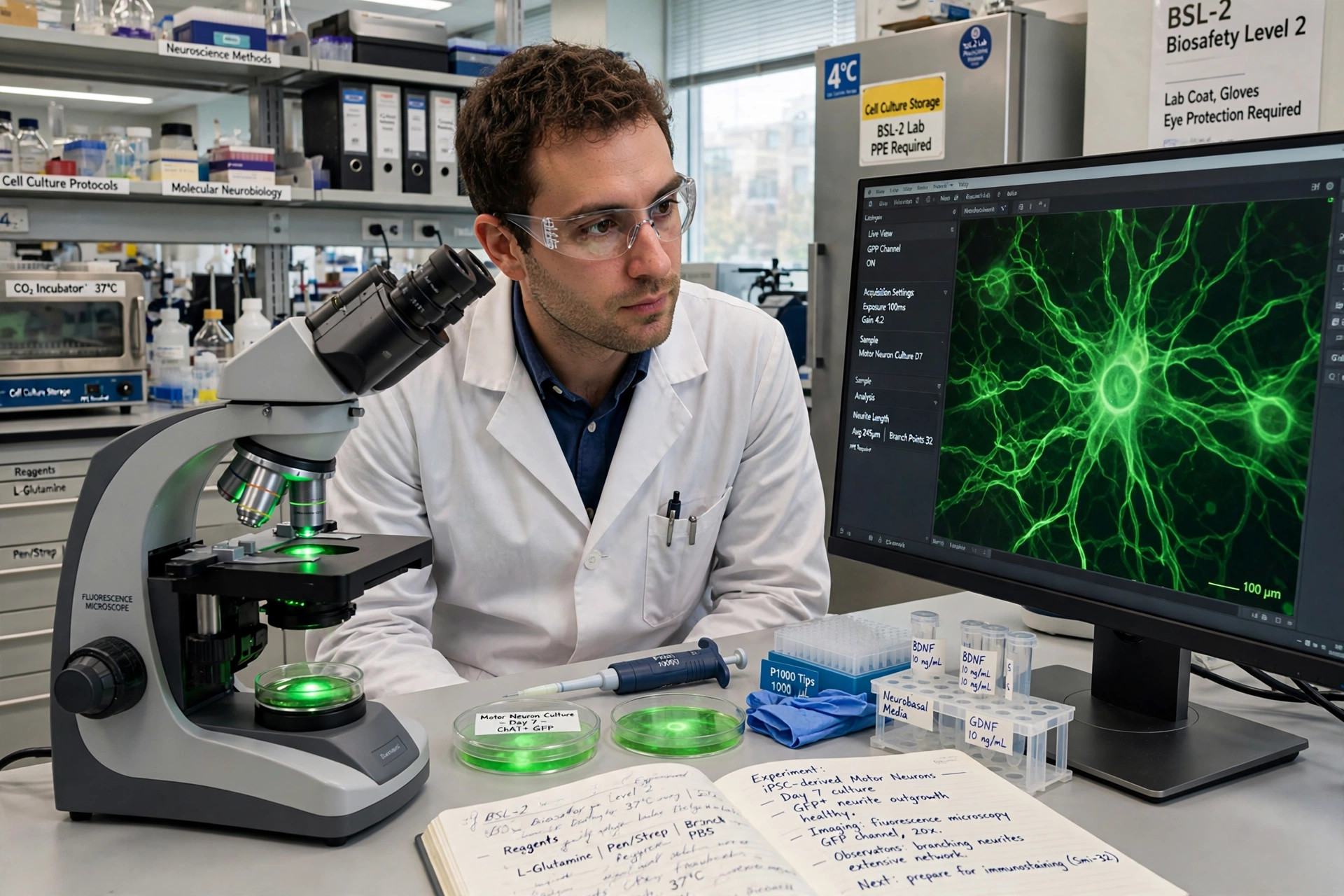
A Tohoku University team reports that the synthetic molecule MA-5 increased ATP production and mitochondrial motility in motor neurons derived from ALS patients — covering SOD1 and FUS mutations as well as sporadic cases — and improved locomotion in ALS-mutant fruit flies, according to findings reported September 24, 2026.
What is MA-5?
MA-5 is a synthetic small molecule studied for its effects on mitochondrial energetics. In this work it raised ATP output — the core job of mitochondria — and improved how mitochondria move within motor neurons, which matters because neurons depend on delivering energy where long axons need it.
Why study it in ALS?
Mitochondrial dysfunction is a well-documented feature of ALS. Patient-derived motor neurons give researchers a human-relevant cell model, and fruit flies provide a fast whole-animal readout. The team also flagged C7orf31 as a candidate blood biomarker for MA-5 response — potentially useful for selecting patients if human trials ever begin.
How does this connect to mitochondrial health?
ATP production and mitochondrial transport are the two functions MA-5 improved — both are textbook mitochondrial-health endpoints. But no human has received MA-5 for ALS, and cell-and-fly success routinely fails to translate.
Where the evidence stands
- Established: Mitochondrial dysfunction in ALS is well documented; MA-5's effects in cell and fly models are reported in the study.
- Preliminary: All efficacy findings are from cell and fruit-fly models; no human safety or efficacy data exist.
- Absent: There is no clinical program for MA-5 in ALS to evaluate — this remains early research, not a treatment option.