Brain stimulation repairs mitochondrial fission to ease movement and pain after spinal cord injury
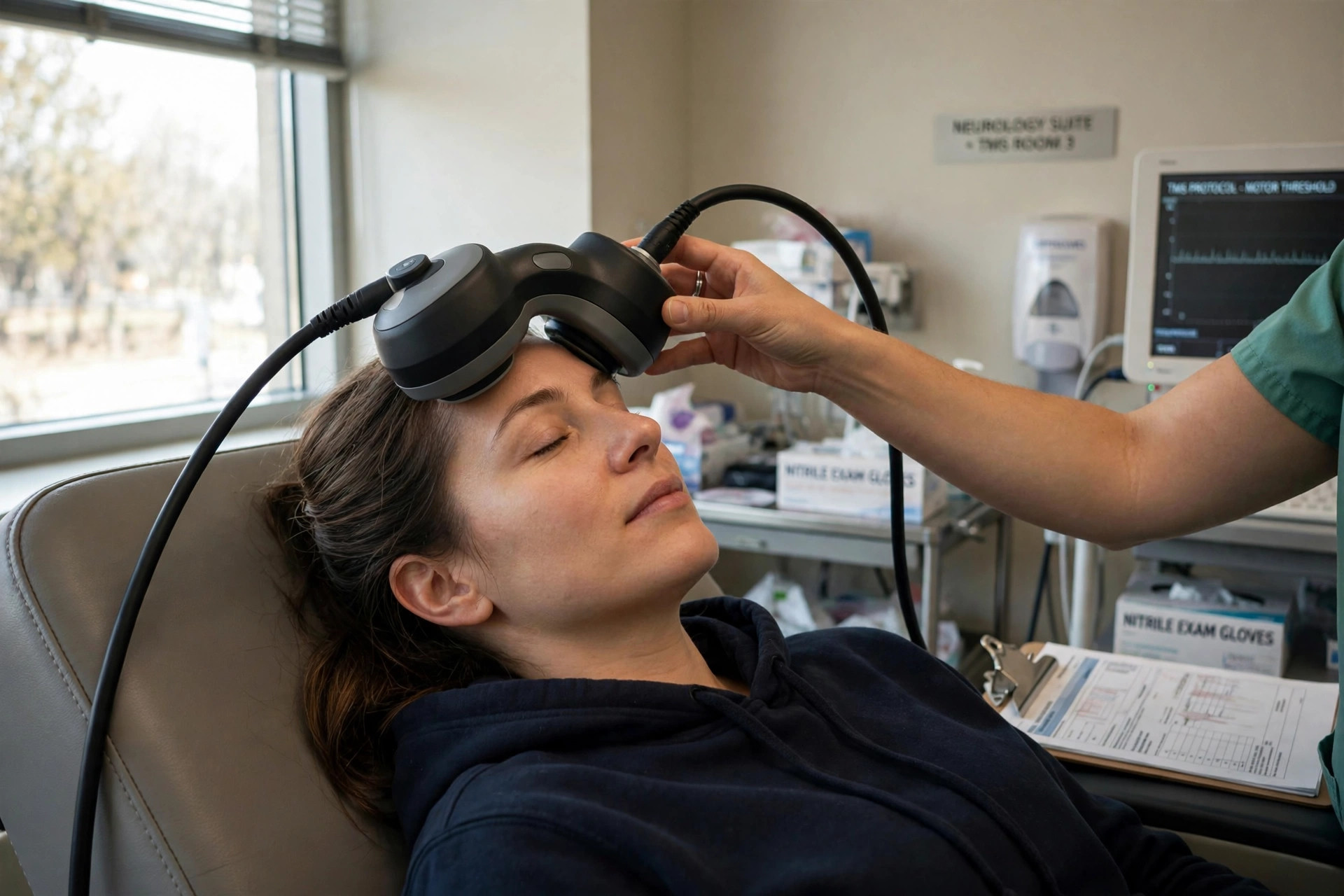
·Repetitive transcranial magnetic stimulation — rTMS, magnetic pulses delivered through the scalp — is already used in clinics for depression and explored for many neurological conditions. A new study in Experimental & Molecular Medicine now traces part of its benefit after spinal cord injury to something much smaller: Drp1, a protein that controls how mitochondria split apart in brain cells.
What did the study find?
The researchers ran a retrospective clinical study of 93 spinal cord injury patients treated at Xijing Hospital in Xi’an, China, between January 2018 and June 2025. Forty patients received at least four weeks of high-frequency rTMS — 10 Hz, 1,200 pulses per session, aimed at the M1 motor cortex — while 53 did not. The rTMS group showed better motor function and less neuropathic pain.
Retrospective studies can’t prove cause and effect on their own, so the team went looking for the mechanism in a mouse model of spinal cord injury — and found it in the mitochondria.
The mitochondrial mechanism
In the mouse model, high-frequency rTMS restored Drp1 — a key mitochondrial fission protein — specifically in layer V GABAergic interneurons of the motor cortex. With Drp1 back, mitochondrial shape, density, ATP output, and membrane potential all normalized.
Then came the causal tests. Virally boosting Drp1 in those neurons mimicked the therapy’s benefits; silencing Drp1 abolished them; and a drug that inhibits Drp1 erased the therapy’s effect entirely. This is the first identification of Drp1 as a bidirectional mediator of rTMS efficacy — a direct line from magnetic pulses on the scalp to mitochondrial dynamics inside neurons.
What this means — and what it doesn’t
Because rTMS is already an approved clinical modality, this isn’t a new-drug story — it’s mechanism-level evidence explaining why an existing therapy helps. That matters for patients today: it strengthens the rationale for rTMS in spinal cord injury rehab.
The honest limits: the human data are retrospective, not randomized — a real signal, but not the strongest kind of clinical proof. And the Drp1 causality chain was demonstrated in mice. The big conceptual advance is that mitochondrial dynamics are now a legitimate therapeutic lever for brain stimulation — not just a backdrop.
Where the evidence stands
- Established: rTMS is an approved clinical modality; a 93-patient retrospective cohort showed improved motor function and less neuropathic pain with high-frequency rTMS (non-randomized).
- Preliminary: Drp1 as the causal mediator of rTMS benefit — demonstrated with gain/loss-of-function experiments in mouse spinal cord injury models.
- Absent: Randomized-trial proof that targeting Drp1 improves human outcomes after spinal cord injury.