
Keeping Klotho levels up is the hard part: encapsulated Klotho-making cells are one proposed answer — a review, not a trial
Edited by Samael A. Tejada, Founder & Editor-in-Chief
·Tip: press play, then lock your phone or switch apps — the article keeps reading.
Of the two Klotho stories this week, this is the more serious engineering: a continuous-production implant answers the protein's genuine half-life problem in a way a cream never could. Serious engineering is still not evidence. A review written by the venture's own scientists, a cell-culture secretion milestone, and zero living-organism results add up to a program worth tracking — at the value of a program, not a treatment.
Why is sustained Klotho delivery such a problem?
Klotho is a protein whose levels decline with age, and whose experimental overproduction extends lifespan in animals — which is why it attracts therapeutic ambition. But a protein is not a pill: injected Klotho is cleared quickly, its half-life is short, and conventional protein or gene-delivery approaches struggle to hold levels steady. That delivery gap, the Frontiers in Aging article argues, is the main obstacle between Klotho biology and Klotho therapy — a fair statement of the field's position, and the premise the joint venture is built on.
How would encapsulated cells solve it?
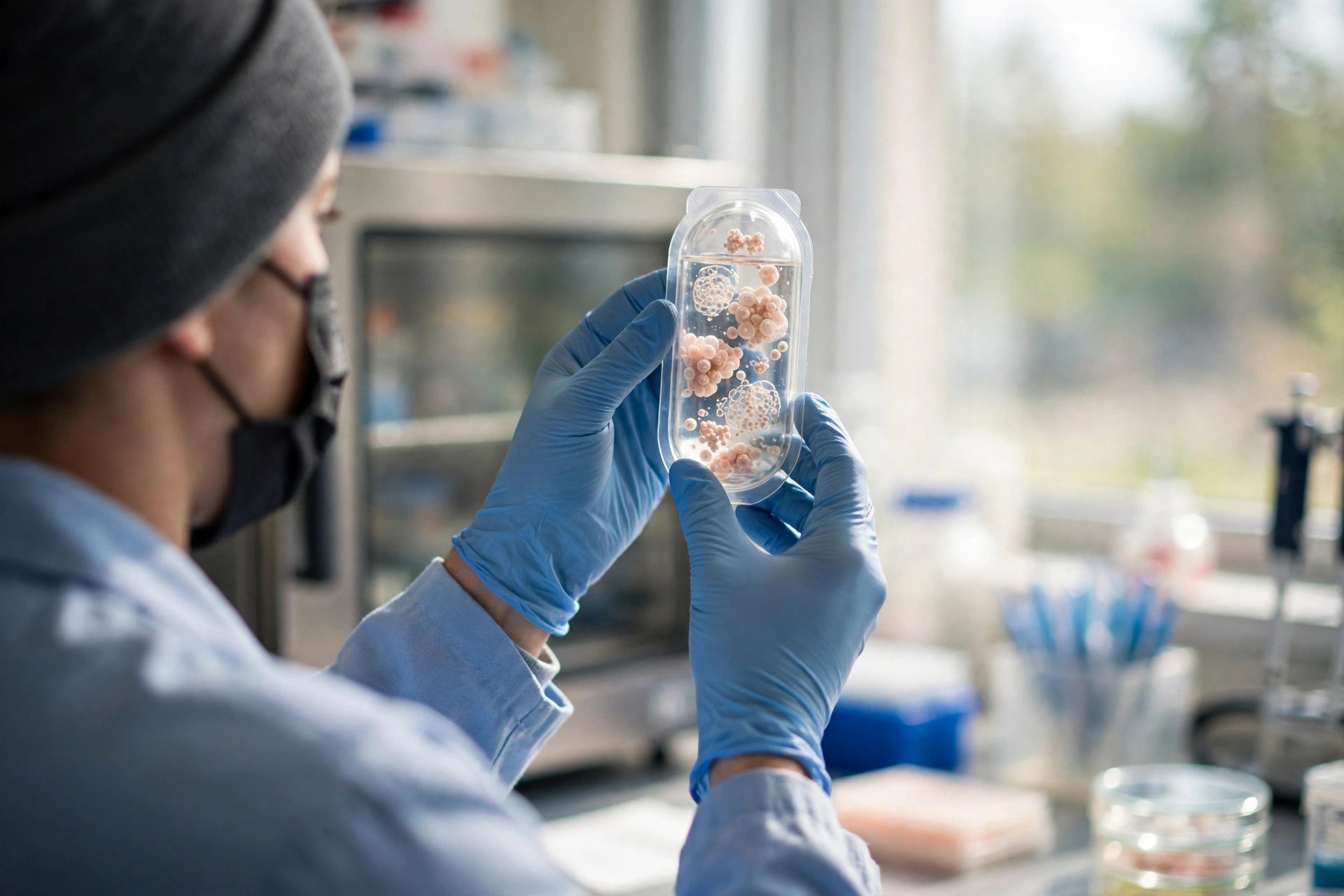
Klothonova's design replaces repeated dosing with a living factory. Engineered human cells that continuously produce soluble Klotho are enclosed in porous cellulose-sulphate capsules (Austrianova's Cell-in-a-Box platform): nutrients and oxygen diffuse in, Klotho diffuses out, and the capsule wall keeps the cells contained and protected from immune rejection. In September 2026 the companies reported the platform milestone — GMP-quality Klotho-producing cells from a tested master cell bank were encapsulated and remained viable, secreting high levels of Klotho into surrounding culture media. That demonstrates the capsule performs its basic function in a dish: containment plus release. It demonstrates nothing yet about output levels, durability or effect inside a body.
How should readers weigh this announcement?
Apply the same standard as yesterday's skincare story, and notice where this one scores better and where it scores the same. Better: the problem addressed is real, the platform has a plausible mechanism, and the claims made are engineering claims the companies actually tested in culture. The same: the journal article is a review and program description authored by Austrianova researchers about their own joint venture — peer-reviewed, and still the seller describing the product — announced by press release, with no animal or human efficacy data behind it. Klotho's connections to mitochondrial health (oxidative-stress defense, phosphate and mineral metabolism) make the target worth this site's attention; they do not shorten the road from a secreting capsule in media to a benefit in a person, which runs through animal studies, dose control, long-term safety of an implanted living product, and trials that have not been announced.
Frequently asked questions
What is Klothonova trying to build?
An implant of engineered human cells, enclosed in porous capsules, that continuously produce and release soluble Klotho — intended to overcome the protein's short half-life, which blocks conventional Klotho therapy.
Has the encapsulated Klotho product been tested in people?
No. The reported milestone is in cell culture: encapsulated GMP-quality cells stayed viable and secreted high levels of Klotho into surrounding media. No animal efficacy or human trial has been reported.
How is this different from the Klotho skincare covered yesterday?
The skincare applies Klotho protein to the skin's surface, where delivery to living cells is unproven. The encapsulated-cell program aims at sustained systemic levels from living cells inside the body. The delivery logic is stronger; the clinical evidence is, so far, equally absent.
Where the evidence stands
- Established: Klotho declines with age and is linked in animal and human association studies to kidney, cardiovascular, neurodegenerative and metabolic aging; the protein's short half-life is a recognized obstacle to Klotho therapy; encapsulated-cell platforms can in principle provide continuous protein delivery while shielding cells from the immune system.
- Preliminary: As reported by the companies (Sept–Oct 2026), GMP-quality engineered Klotho-producing cells were encapsulated in Cell-in-a-Box capsules and remained viable, secreting high levels of Klotho into culture media; a Frontiers in Aging review (Oct 28, 2026) authored by Austrianova researchers sets out the sustained-delivery rationale.
- Absent: Animal efficacy for the encapsulated Klotho product, any human trial, dose-control and long-term implant safety data, and independent replication by a group without a stake in the venture.
Join the discussion
To get the conversation started: What questions does this story raise for you? Share them below — every comment is reviewed by our moderators before it appears.
Community discussion only — not medical advice. Every comment is reviewed by our moderators before it appears. Sign in with Google or a free Hyvor account to join in.