First human signs that nicotinamide riboside can treat mitochondrial DNA disease
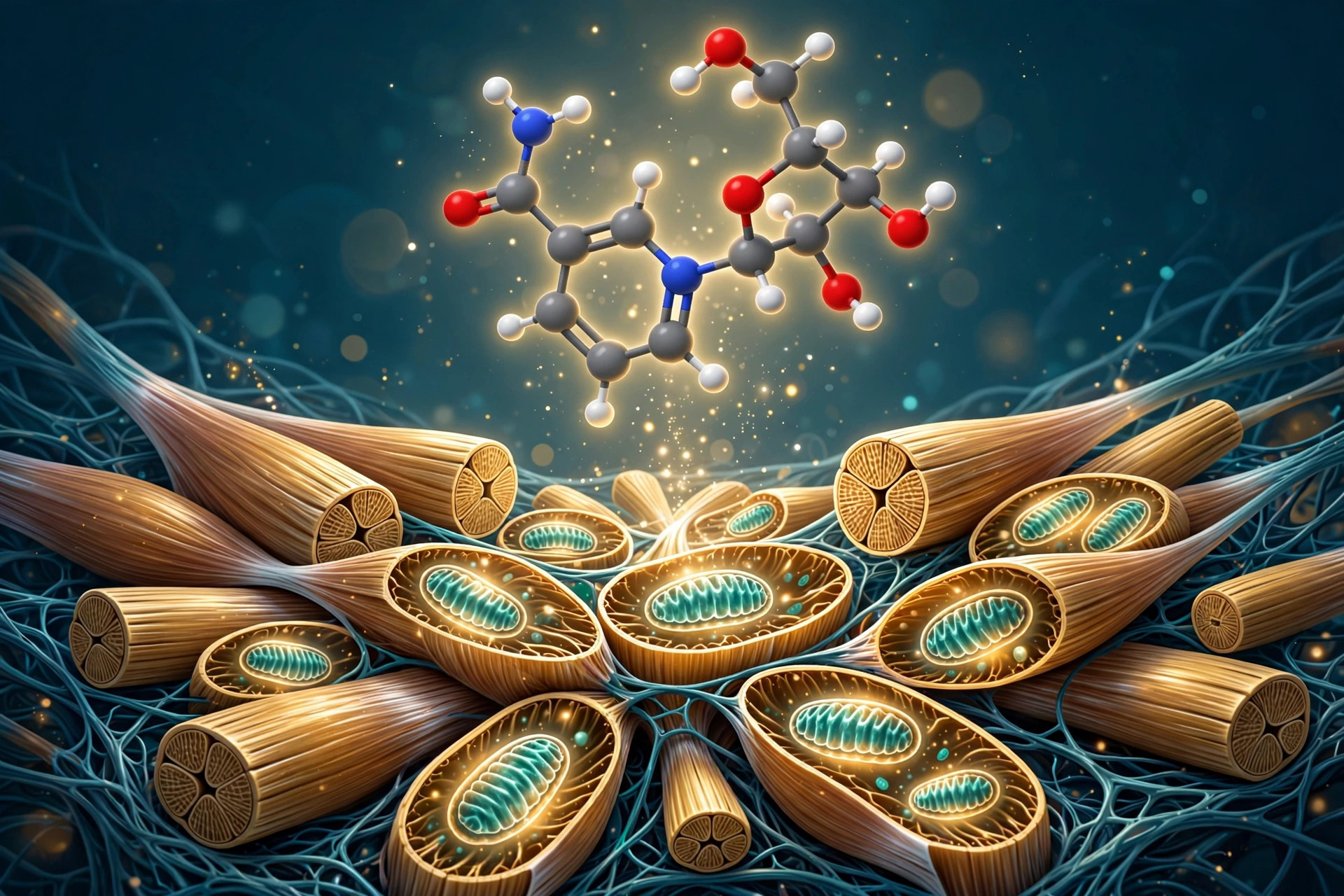
A small experimental-medicine trial at Cambridge has produced something mitochondrial medicine rarely sees: biopsy-confirmed improvement in human muscle mitochondria after NAD+ boosting. Eight patients with mitochondrial DNA disease took high-dose oral nicotinamide riboside (1,250–2,000 mg per day) for four weeks, and in the three patients with single large-scale mtDNA deletions, muscle biopsies showed fewer cytochrome-c-oxidase-deficient and ragged-red fibers, higher respiratory-chain complex I/IV activity, and — most provocatively — reduced mtDNA deletion load. Multi-omic analysis confirmed the predicted SIRT1/PGC-1α mitochondrial-biogenesis signature, according to coverage of the Genome Medicine 2026 paper (Schon/Chinnery) published September 26.
What exactly did the trial find?
In the three responders, the changes were measured in muscle tissue, not inferred from blood markers: fewer fibers with broken energy production, more active respiratory-chain complexes, and less of the deleted mitochondrial DNA itself. That combination is exactly what preclinical models predicted NAD+ boosting would do — a rare case of the prediction translating into human tissue.
Why did only some patients respond?
The five patients carrying the common m.3243A>G variant saw no benefit. That split is arguably the most important finding: genetic diagnosis determines who responds. A single large deletion and a point mutation like m.3243 create different biological problems, and the trial suggests NAD+ boosting addresses one but not the other.
Does this mean NR supplements treat mitochondrial disease?
No — and the distinction matters. This was a monitored, genetically stratified experimental-medicine protocol, not self-dosing. The study was tiny (n=8), open-label, and only four weeks long; clinical outcomes were modest even where the molecular findings were compelling. NR is already sold as a supplement, but buying a bottle is not the same intervention as this trial.
What happens next?
The honest read: this is the first human evidence that NAD+ boosting can drive genuine mitochondrial biogenesis in mitochondrial disease, and it sets up genotype-stratified trials as the obvious next step. Whether the molecular gains become meaningful clinical benefit is still an open question.
Where the evidence stands
- Established: The molecular findings — fewer COX-deficient fibers, higher complex I/IV activity, lower deletion load, SIRT1/PGC-1α activation — were measured directly in muscle biopsies in the three single-deletion patients.
- Preliminary: The trial had 8 patients, no placebo arm, and lasted 4 weeks. Clinical outcomes were modest; the headline findings are molecular, not functional.
- Contested: Whether oral NR achieves the same tissue effects in other genotypes or in healthy aging — and whether the molecular gains translate into durable clinical benefit — is not established.
- Absent: No large or long-term trial of NR for mitochondrial DNA disease exists yet.