
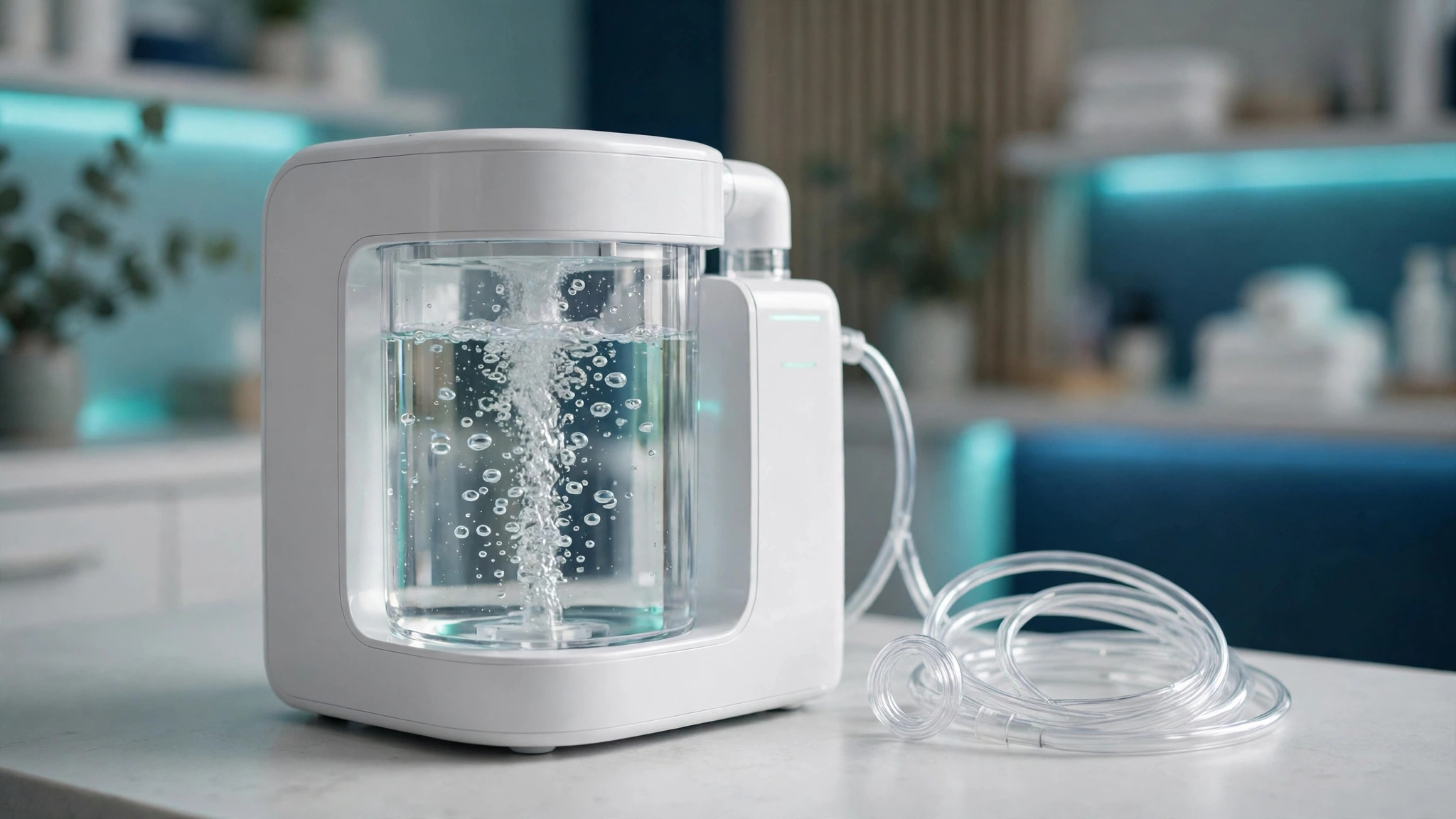
Brown's Gas and Mitochondria: What the Evidence Actually Shows
Edited by Samael A. Tejada, Founder & Editor-in-Chief
·Tip: press play, then lock your phone or switch apps — the article keeps reading.
Brown's gas machines are sold with a mitochondria pitch. More energy. Better cellular function. Improved ATP. The flagship consumer device in this space claims outright to improve mitochondrial function.
So we went looking for the study behind that claim. Here is the honest result: there isn't one. Not a weak one, not a preliminary one — none. No published study of Brown's gas, in any species, has ever measured a mitochondrial endpoint. Every mitochondria claim in Brown's gas marketing is borrowed from research on a different intervention, or invented outright.
That does not make this a short article, because the full picture is more interesting than the pitch. There IS real science in this space — some of it genuinely good. It just belongs to molecular hydrogen, not to the mixture. Separating the two is the entire point.
What Brown's gas actually is
Brown's gas — also called oxyhydrogen or HHO — is what you get when you split water by electrolysis in a single chamber: two parts hydrogen gas to one part oxygen gas, roughly 66.7% H₂ and 33.3% O₂, delivered together through a nasal cannula or mask. The ratio is fixed by the chemistry of water. It cannot be adjusted.
The name traces to Yull Brown, the Bulgarian-Australian inventor who promoted the mixture in the 1970s, mostly for welding and fuel applications. The medical chapter came later, largely from China, where hospital-grade oxyhydrogen generators have been studied for respiratory conditions. Consumer devices followed — the best-known in the United States is the AquaCure line, priced around $2,100 to $3,000.
Hold on to one fact for everything that follows: Brown's gas is not the same thing as molecular hydrogen therapy, even though the marketing treats them as interchangeable. Molecular hydrogen research studies H₂ — inhaled at low concentrations in air, dissolved in drinking water, or infused as hydrogen-rich saline. Different product, different dose, different evidence base.
What the Brown's gas studies actually show
The entire published human literature on oxyhydrogen is about a half-dozen studies, nearly all from Chinese research groups, and nearly all respiratory. Here is the honest inventory.
The strongest study is a real randomized trial. In 2021, Zheng and colleagues published a multicenter, double-blind randomized trial in Respiratory Research: about 108 patients with acute COPD exacerbations, inhaling hydrogen-oxygen mixture versus oxygen alone. The mixture won on symptom scores — breathlessness, cough and sputum scores improved significantly more than with oxygen alone. That is a legitimate result. But note what did not improve: pulmonary function, blood gases, and oxygen saturation showed no significant difference between groups. The win was how patients felt, not how their lungs measured.
The most-cited study is weaker than its reputation. The 2020 COVID-19 trial by Guan and colleagues in the Journal of Thoracic Disease reported faster symptom improvement with hydrogen-oxygen inhalation. It was open-label and not randomized — treating clinicians assigned the therapy — with 44 treated patients. Suggestive, not conclusive, and the authors say so.
The rest of the shelf: a matched observational COVID study, a retrospective Alzheimer's adjunct analysis, and uncontrolled cancer case series. Hypothesis-generating material, in the most generous reading.
And the point of this article: none of these studies measured anything about mitochondria. No respiration, no ATP, no membrane potential, no mitochondrial biomarkers of any kind. The respiratory data may or may not hold up — that is a separate question. It says nothing, in either direction, about your mitochondria.
Where the mitochondria story actually comes from
It comes from molecular hydrogen research — a real field, with a real literature. Understanding it is the only way to see exactly what Brown's gas marketing borrows.
The field starts with a 2007 Nature Medicine paper by Ohsawa and colleagues, showing that hydrogen selectively neutralizes the hydroxyl radical — the most destructive reactive oxygen species — while leaving useful signaling molecules alone. Elegant chemistry, demonstrated in cells and rats. Not humans, and not oxyhydrogen.
Since then, researchers have mapped several mechanisms by which H₂ interacts with mitochondria, mostly in animal and cell models:
- NRF2-mediated mitophagy. A 2026 study in mice found hydrogen preserved mitochondrial membrane potential after brain hemorrhage by activating the NRF2 pathway, which switched on the PINK1/Parkin system that clears damaged mitochondria. Block NRF2, and the protection disappeared.
- PGC-1α activation. Hydrogen stimulated expression of PGC-1α, the master regulator of mitochondrial biogenesis and fat metabolism, in animal work from Kamimura and colleagues.
- Respiratory-chain support. In rats, hydrogen-saturated water stimulated mitochondrial respiratory function in heart muscle cells and increased ATP production rates.
- The mitochondrial unfolded protein response. Cell and animal studies show H₂ can trigger this quality-control stress response.
This is legitimate, interesting, preclinical science. The review literature is candid about its stage: a 2026 review of hydrogen and mitochondrial quality control states plainly that clinical evidence for H₂ effects on mitochondrial function is still lacking.
There is exactly one human study that touches a mitochondrial endpoint. In 2023, researchers gave hydrogen-rich water to 30 patients with fatty liver disease (NAFLD) for eight weeks and measured mitochondrial respiration in their blood platelets. Respiration efficiency improved and platelet coenzyme Q10 rose, versus placebo. That is a real finding — and it is also a small trial, in a surrogate tissue (platelets, not liver or muscle), using hydrogen water, not Brown's gas. It is the strongest card in the entire mitochondria deck, and it does not belong to oxyhydrogen.
Beyond mitochondria specifically, molecular hydrogen has accumulated more than 64 peer-reviewed human studies and 81 registered trials across all delivery methods, including HYBRID II — a multicenter double-blind trial of inhaled 2% hydrogen in comatose cardiac-arrest patients, which found a survival signal (85% vs 61% at 90 days) though its primary neurological endpoint missed significance. The field's own reviews call it promising and "still in its infancy." Both halves of that sentence matter.
Brown's gas vs molecular hydrogen, side by side
| Brown's gas (oxyhydrogen) | Molecular hydrogen (H₂) | |
|---|---|---|
| Composition | Fixed ~66.7% H₂ + 33.3% O₂, made together by electrolysis; ratio can't be adjusted | H₂ alone (99.99% pure from separated electrolysis), diluted to 1–4% in air for inhalation, or dissolved in water/saline |
| Delivery | Inhalation only, from oxyhydrogen generators (hospital Asclepius units; consumer AquaCure) | Inhalation, hydrogen-rich water (bottles, tablets, pitchers), H₂ baths, hydrogen-rich saline in research settings |
| Dose control | Output quoted as mixed-gas flow, but the actual inspired dose varies with your breathing; no certification standard exists | Dose is specifiable and verifiable — percent × flow × time for inhalation; milligrams measured by gas chromatography for water; IHSA certification standards exist |
| Human evidence | ~6 published studies, nearly all respiratory, one double-blind RCT (symptom scores only) | 64+ published human studies, 81 registered trials, including a multicenter double-blind RCT |
| Mitochondrial evidence | None. No study, any species, any endpoint. | Mechanisms in animal/cell studies; one small human trial (platelet respiration in fatty liver, hydrogen water) |
| Safety record | No serious adverse events in its trials; but the gas itself is a premixed, detonatable mixture — safety depends entirely on device engineering | No adverse events attributed to H₂ in trials; clinical systems pre-dilute below the flammability limit |
| Typical device cost | ~$2,100–$3,000 (consumer units) | ~$2,600–$9,800 (clinical inhalers); water products far cheaper |
| Regulatory | One Class III device approval in China (Asclepius AMS-H-03); not FDA-approved or cleared; Malaysia's health ministry has warned against inhaler claims | Approved as Advanced Medical Care B in Japan for post-cardiac-arrest care (a regulated trial framework); not FDA-approved in the US |
Read the table honestly and a pattern emerges: on every row where the two genuinely differ — evidence volume, dose verifiability, regulatory standing, engineering risk — the hydrogen side is ahead. The mixture's only distinctive feature is its co-delivered oxygen. Which raises the obvious question.
Does the extra oxygen add anything?
This is the one claim that could, in principle, justify the mixture over hydrogen alone. In 2026, Tyler LeBaron — founder of the Molecular Hydrogen Institute and hydrogen research's most prominent evidence-standard-bearer — published the math in Respiratory Research.
At a typical consumer device output of about a liter per minute, the extra inspired oxygen amounts to roughly 40 extra milliliters per minute. Your inspired oxygen fraction rises from about 21% to about 21.36% — the physiological equivalent, LeBaron's team calculated, of descending about 160 meters in altitude. Their conclusion: there is no scientific evidence that oxyhydrogen outperforms hydrogen alone at an equivalent hydrogen dose, and the added oxygen is mechanistically unlikely to do anything meaningful in healthy people.
A 2024 review of oxyhydrogen in cancer reached the matching conclusion from the other direction: no direct comparative studies of pure hydrogen versus oxyhydrogen exist. Nobody has shown the mixture beats the molecule. The mixture's entire commercial premise rests on a comparison that has never been run — and the one rigorous analysis of its signature ingredient says the ingredient is a rounding error.
The safety question, answered fairly
Two different safety questions get conflated in this debate, and honesty requires separating them.
Physiological safety — what the gas does in the body — looks reassuring for both. No serious adverse events in the oxyhydrogen trials; in the COPD trial, adverse-event rates were actually lower on the mixture than on oxygen alone (63% vs 78%, all typical of the disease itself). For hydrogen, HYBRID II exposed critically ill patients to 2% H₂ for 18 hours with no adverse effects attributed to the gas.
Engineering safety is where they diverge. Hydrogen is flammable in air between 4% and 75%. Clinical hydrogen systems solve this by pre-diluting the gas below 4% before it ever reaches the patient. A Brown's gas stream leaves the device as a premixed, stoichiometric hydrogen-oxygen mixture — by construction, the detonatable ratio — so safety rests entirely on the machine: on-demand generation, no storage, small volumes, flame arrestors. The COPD trial's own testing found ambient hydrogen stayed at 0.8% after two hours of continuous operation in a confined space, below the explosion threshold. That is a well-run device behaving. It is not the same safety architecture as never delivering a detonatable mixture in the first place, and buyers of consumer units should understand the difference.
The claims audit
Against that record, here is what is actually claimed in the marketplace:
- "Improves mitochondrial function" (the flagship consumer device's own marketing). Supporting oxyhydrogen study: none exists.
- "Electrically Expanded Water" / "bioavailable electrons" fueling ATP. A vendor concept promoted by the AquaCure's inventor. It has no peer-reviewed existence — no independent validation, no scientific consensus that the claimed species exists.
- Vendor pages presenting generic hydrogen studies as Brown's gas evidence. This is the standard move, and it is the blur this article exists to correct: a study of hydrogen water in rats, or of inhaled H₂ in patients, is not a study of your machine.
The regulatory picture matches the evidence picture. No hydrogen or oxyhydrogen inhalation device is FDA-approved or cleared for any therapeutic use in the United States; consumer units are sold as wellness products. Malaysia's Ministry of Health has warned the public that hydrogen inhalers are unapproved and their disease claims unproven. China's Class III approval of the hospital Asclepius device is real, and it covers a specific medical device in a supervised setting — not consumer wellness machines, and not mitochondria claims.
The verdict
Molecular hydrogen is a legitimate research field: safe in every human trial so far, mechanistically interesting, with plausible — mostly preclinical — connections to mitochondrial quality control, and exactly one small human trial touching a mitochondrial endpoint. It deserves the trials now underway.
Brown's gas is a delivery mixture with a thin, respiratory-only human literature: one good symptom-score trial in COPD exacerbations, one widely cited but non-randomized COVID study, and nothing else of weight. Its claim on mitochondria is zero — not "early," not "emerging," zero, because the experiment has never been done. And its one theoretical advantage over plain hydrogen, the extra oxygen, has been calculated by the field's own leading voice to be physiologically negligible at real-world doses.
What would change this verdict: a Brown's gas trial that measures a mitochondrial endpoint — respiration, ATP production, validated biomarkers — in humans. Or a head-to-head trial showing the mixture outperforming hydrogen alone at the same hydrogen dose. Either would be publishable, notable, and covered here. Until one exists, a Brown's gas machine sold on mitochondrial benefits is a $2,000-plus device selling you someone else's research.
Frequently asked questions
Is Brown's gas the same as molecular hydrogen? No. Brown's gas is a fixed two-to-one mixture of hydrogen and oxygen produced together by electrolysis. Molecular hydrogen therapy uses H₂ by itself — inhaled at low concentration, or dissolved in water. They share an ingredient, not an evidence base.
Does Brown's gas improve mitochondrial function or ATP? There is no published evidence that it does. No study of Brown's gas, in humans or animals, has measured a mitochondrial endpoint. The claim traces to hydrogen-only research or to vendor concepts with no peer-reviewed support.
Has molecular hydrogen been shown to help mitochondria in humans? Once, narrowly: a small eight-week trial of hydrogen-rich water in fatty liver disease improved mitochondrial respiration measured in blood platelets. Everything else is animal or cell research. Promising, preliminary, and not about Brown's gas.
Is Brown's gas FDA-approved? No. No hydrogen or oxyhydrogen inhalation device is FDA-approved or cleared for therapeutic use in the US. A hospital oxyhydrogen device holds a Class III approval in China; hydrogen inhalation is an approved advanced medical care category in Japan for post-cardiac-arrest care under a regulated framework.
Is it safe? In published trials, neither gas produced serious adverse events. The real difference is engineering: clinical hydrogen is diluted below flammability limits before delivery, while Brown's gas is delivered as a premixed hydrogen-oxygen stream whose safety depends entirely on device design.
What did the COPD trial actually prove? That COPD patients inhaling the mixture during an exacerbation reported better symptom scores than patients on oxygen alone. Lung function, blood gases, and oxygen levels did not differ significantly. Symptom relief is a real outcome — it is not a mitochondrial outcome.
Where the evidence stands
- Absent: Mitochondrial evidence for Brown's gas: none. No published study of oxyhydrogen — in humans or animals — has measured respiration, ATP, membrane potential, or any mitochondrial biomarker.
- Established: The strongest oxyhydrogen human data is respiratory symptom relief: a 2021 double-blind randomized trial in COPD exacerbations improved symptom scores versus oxygen alone, with no significant difference in lung function, blood gases, or oxygen saturation.
- Preliminary: Molecular hydrogen's mitochondrial mechanisms (NRF2-mediated mitophagy, PGC-1α activation, respiratory-chain support, the mitochondrial unfolded protein response) come from animal and cell studies; exactly one small human trial — hydrogen-rich water in fatty liver disease — has measured a mitochondrial endpoint (platelet respiration).
- Established: No hydrogen or oxyhydrogen inhalation device is FDA-approved or cleared for therapeutic use in the United States. A hospital oxyhydrogen device holds a Class III approval in China, and hydrogen inhalation is an approved advanced medical care category in Japan for post-cardiac-arrest care.
- Preliminary: The added oxygen in Brown's gas is physiologically negligible at consumer-device output (~1 L/min raises inspired oxygen from ~21% to ~21.36%, per 2026 modeling in Respiratory Research), and no head-to-head trial has compared the mixture with hydrogen alone at the same hydrogen dose.
Join the discussion
To get the conversation started: Have you been offered a Brown's gas or hydrogen device with mitochondria or ATP claims? What were you told it would do?
Community discussion only — not medical advice. Every comment is reviewed by our moderators before it appears. Sign in with Google or a free Hyvor account to join in.