
The Physics of Mitochondria: How 19 Branches of Physics Explain — and Can Improve — Your Cellular Powerhouses
·Tip: press play, then lock your phone or switch apps — the article keeps reading.
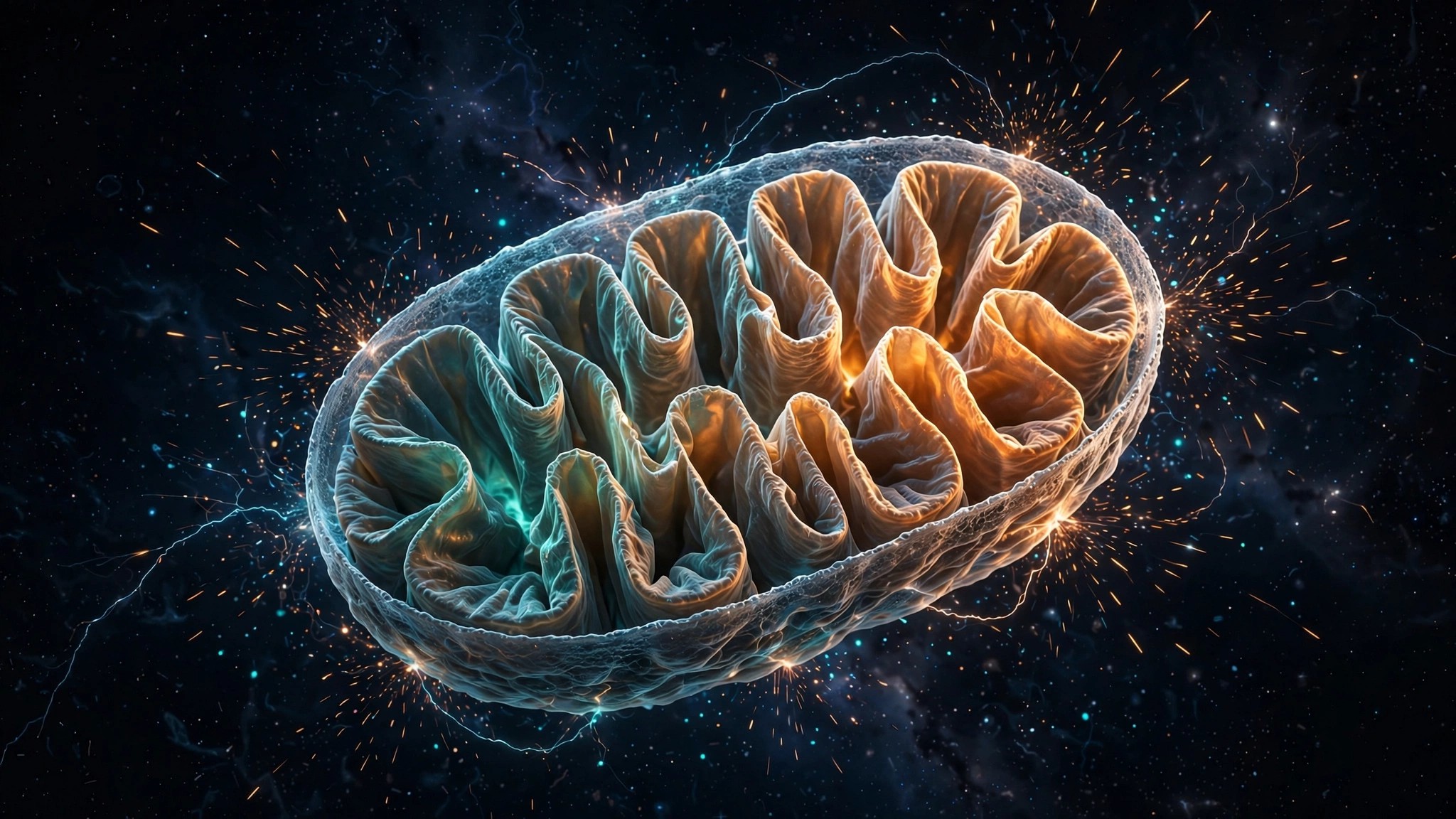
Mitochondria are not just biology. They are a physics system that happens to be alive: an electrical battery holding roughly 180 to 200 millivolts across a membrane five nanometres thick, a rotary motor that spins to make ATP, an electron current, a heat engine that can be deliberately uncoupled to warm you, and a network governed by diffusion, flow and chance. That is why every branch of physics has something real to say about them — and why physics also gives us the tools to measure them honestly.
The short answer
Here is the honest map, branch by branch. Some connections are established science with human data behind them. Some are preliminary — real mechanisms, small studies. Some are contested, and a few popular claims are simply absent of evidence, and we say so plainly, because knowing what is theory, and why it is still theory, is what separates hope from hype. The hopeful part is real: the strongest levers physics has revealed are available to almost everyone today, and the measurement frontier is moving fast enough that within a decade, much of what is now guesswork about your mitochondria may be directly measurable.
First, the machine in one paragraph
Nearly two billion years ago, a bacterium took up residence inside another cell and never left. Its descendants — your mitochondria — burn food with oxygen to make ATP, the molecule that pays for almost everything your body does. They do it with a chain of molecular machines that pass electrons from food to oxygen, use the released energy to pump protons across a membrane, and then let those protons flow back through a spinning turbine, ATP synthase, which stamps out ATP as it turns. Charge, current, voltage, heat, flow, spin, light: it is all here. Now, the branches.
1. Maxwell physics — the equations that describe the battery
The connection. In the 1860s, James Clerk Maxwell unified electricity, magnetism and light into four equations. The mitochondrion is those equations at work in miniature. Protons pumped to one side of the inner membrane turn that membrane into a capacitor: separated charge across an insulator. The resulting voltage — about minus 150 to minus 180 millivolts across roughly five nanometres — is an electric field of around 30 million volts per metre, close to the breakdown strength of the membrane itself. The electron transport chain is literally an electric current, and the light these equations predicted — electromagnetic radiation — is the same light other branches of physics use to probe and even feed the system (see Optics). Maxwell's framework is not a metaphor for mitochondrial energy; it is the mathematics the energy actually obeys.
Tools and technologies today. Everything electrical in this article — membrane-potential dyes, respirometers, PEMF devices — is applied Maxwell. Research-grade: voltage-sensitive fluorescent probes that report the membrane's charge in real time. Consumer: none that act on mitochondria directly; Maxwell's role is foundational, not a product.
Evidence: Established — as the governing description of the mitochondrial battery. What is theory: nothing here; this is the settled physics the rest of the article stands on.
2. Plasma physics — the fourth state of matter, used carefully
The connection. First, a clarification this field always needs: physics plasma is an ionised gas — free electrons, ions, radicals and ultraviolet light. Blood plasma is the liquid part of blood. They share an old word and nothing else. Cold atmospheric plasma (CAP) devices blow a room-temperature plasma jet that delivers a controlled burst of reactive oxygen and nitrogen species. At short, low doses, that burst kills microbes and stimulates skin cells to migrate — useful in wound care. At longer, higher doses, the same chemistry collapses mitochondrial voltage, releases cytochrome c and triggers cell death — which is exactly what researchers want against tumours. Dose decides whether plasma heals or kills, because mitochondria sit at the centre of both decisions.
Tools and technologies today. Clinical/research: CAP devices (such as kINPen and PlasmaDerm-type systems) used in wound centres and trials, mostly in Europe. Consumer: none legitimately — home "plasma pens" are cosmetic cautery tools, not CAP therapy.
Evidence: Preliminary. Reviews find consistent antimicrobial and wound-healing signals and real preclinical oncology effects, but penetration is shallow — one quantitative study found effects confined to less than 500 micrometres below the surface — and device heterogeneity plus missing long-term safety data keep CAP out of routine care. What is theory: deep-tumour treatment and any "mitochondrial rejuvenation" claim. Plasma is a surface ROS-delivery technology; it does not selectively repair mitochondria.
3. Quantum physics — tunnelling is real, "quantum healing" is not
The connection. Deep inside the respiratory chain, electrons do something classically impossible: they tunnel. Quantum tunnelling — passing through energy barriers rather than over them — is how electrons hop between the chain's fixed metal centres, spaced roughly 14 angstroms apart, at rates that Marcus theory predicts quantitatively. Hydrogen tunnelling contributes in enzymes too. A second quantum effect is plausible and actively researched: radical pairs. When two radicals are born together, their spins evolve in ways sensitive to tiny magnetic fields, which can change what chemistry they produce — including how much hydrogen peroxide versus superoxide a mitochondrion makes. This is the leading explanation for how birds sense Earth's magnetic field, via a protein called cryptochrome.
Tools and technologies today. Research only: EPR spectroscopy, ultrafast two-dimensional spectroscopy, magnetic-field respirometry rigs. Consumer: "quantum" pendants, chips, frequency waters and healing apps — none delivers a measurable physical quantity, a dose, or a trial.
Evidence: Established for tunnelling; Preliminary for radical-pair effects on mitochondrial ROS; Absent for quantum coherence in mitochondria and for quantum wellness devices. The coherence story deserves precision, because it is the one most often oversold. In 2007, researchers reported long-lived quantum coherence in a photosynthetic complex — at 77 kelvin, near deep-freeze. Later work found the coherence collapses in about 60 femtoseconds at room temperature and that the lingering signal was largely vibrational, not electronic. Photosynthesis turned out not to need the strong quantum claim — and no experiment has shown functional coherence in the respiratory chain at all. Warm, wet, noisy systems destroy coherence fast; that is why the honest verdict is: quantum mechanics runs the mitochondrion's chemistry, and quantum wellness products run on the vocabulary alone.
4. Classical mechanics — force, work, and the strongest medicine in this article
The connection. Mechanics is force times distance: work. When muscle contracts, myosin motors spend ATP — and the spending is the signal. The energy disturbance, calcium pulses and mechanical tension of exercise converge on a master switch called PGC-1alpha, which orders the cell to build more mitochondria, maintain them with fission and fusion, and clear the damaged ones. This was first shown in 1967, when endurance training was found to raise muscle oxidative enzymes, and it has been replicated ever since. Mechanotransduction — cells converting physical force into chemistry — is why loading a muscle remodels the power supply inside it.
Tools and technologies today. Consumer: your own training — endurance work, intervals, resistance training. Clinical: structured exercise rehabilitation. A systematic review's meta-regression found that, per hour of training, sprint-interval training built mitochondrial content about 2.3 times more efficiently than high-intensity training and about 3.9 times more efficiently than moderate endurance training — efficiency, not total superiority; volume still matters. Resistance training's main gift is muscle mass and strength, with modest mitochondrial gains, and a recent meta-analysis found concurrent training (both together) did not significantly differ from endurance alone on VO2 max or mitochondrial markers. Research: force plates, dynamometry, biopsy respirometry to verify it all.
Evidence: Established — the benchmark of this entire article. No drug, light, magnet or supplement has matched exercise's human effect size on mitochondria. What is theory: that passive mechanical gadgets reproduce it. They share some signals; they do not share the outcomes.
5. Thermodynamics — the heat engine you can uncouple
The connection. Chemiosmosis is applied thermodynamics. The free energy of food, captured as a proton gradient of 180 to 200 millivolts, pays for ATP synthesis at roughly 50 kilojoules per mole — the numbers close, with proton leak as the measurable loss term. And the system has a deliberate leak: a protein called UCP1, in brown and beige fat, which — once switched on by fatty acids released under adrenaline signalling — lets protons bypass the turbine and burn the gradient purely as heat. That is non-shivering thermogenesis, and it is why cold exposure can raise energy expenditure. (A warning the field learned the hard way: UCP1 is normally switched off and needs that fatty-acid activation — merely having brown fat is not the same as burning with it — and chemical uncouplers like dinitrophenol, which force the leak everywhere, have killed people. This pathway is powerful precisely because it is dangerous when uncontrolled.)
Tools and technologies today. Consumer: sauna, hot baths, cold plunge and cold showers — real thermal doses, unstandardised claims. Clinical/research: indirect calorimetry, core-temperature telemetry, brown-fat PET imaging in studies.
Evidence: Established for the energetics and for UCP1 thermogenesis; Preliminary for sauna and cold protocols as mitochondrial therapies; observational for sauna and mortality. The most-cited sauna finding — in 2,315 Finnish men followed about 21 years, bathing four to seven times a week was associated with 63 percent lower sudden cardiac death than once a week — is a dose-dependent association in an observational cohort, not a randomised trial; it cannot prove the sauna caused it. Small human studies of cold acclimation and hot-water immersion show real but inconsistent mitochondrial signals. What is theory: consumer "metabolic efficiency boosters" and brown-fat supplements with no human dose-response data behind them.
6. Electromagnetism — fields, currents and the PEMF question
The connection. If Maxwell wrote the laws, electromagnetism is the lived experience of them: currents, fields and forces. Your cells run on endogenous electric fields — wounds generate measurable fields that guide healing cells — and the mitochondrial voltage is the strongest field in the cell. The obvious question follows: can external electromagnetic fields nudge the system? That is the premise of PEMF, pulsed electromagnetic field therapy.
Tools and technologies today. Clinical: PEMF devices are FDA-cleared for specific jobs — helping stubborn bone fractures heal, post-operative pain and swelling, spinal fusion support. Those are bone indications, not mitochondrial ones. Consumer: whole-body PEMF mats and wearables, widely marketed for "recharging mitochondria." Research: controlled coils paired with respirometry.
Evidence: Preliminary for mitochondria; Established for the bone indications. The best human synthesis for a non-bone outcome — PEMF for multiple sclerosis fatigue, seven randomised trials, 327 people — found a small effect on fatigue (standardised mean difference minus 0.23) and no effect on quality of life or depression, and fatigue is a symptom, not a mitochondrial measurement. One striking laboratory result: isolated rat-heart mitochondria exposed to a weak static magnetic field (about 0.27 to 1.9 millitesla) raised their respiration by up to 40 percent in a bell-shaped dose pattern while lowering reactive oxygen species (Beutner and colleagues, 2025) — a single lab, in a dish, not yet replicated, with no human data. What is theory: that consumer mats reproduce any of this in your muscles. No large human trial has ever measured a direct mitochondrial outcome after PEMF. The field, frequency and dose that would matter are unknown — "EMF" without numbers is not a dose.
7. Optics — feeding the chain with light
The connection. The final enzyme of the respiratory chain, cytochrome c oxidase (Complex IV), absorbs light — principally in the red band around 630 to 680 nanometres and the near-infrared band around 800 to 880. Photobiomodulation (PBM) proposes that absorbed photons knock inhibitory nitric oxide off the enzyme, speeding electron flow, raising voltage and ATP, and releasing a brief, signalling pulse of reactive oxygen species and nitric oxide. Crucially, the dose-response is biphasic: too little light does nothing, too much inhibits. That single fact explains much of the field's inconsistency — and why "more" is not better.
Tools and technologies today. Consumer: red and near-infrared LED panels and handhelds (common wavelengths 660, 810, 830, 850 nm). Clinical: low-level laser and LED devices, with one of PBM's strongest niches being prevention of oral mucositis during cancer therapy, where guidelines support it. Research/measurement: near-infrared spectroscopy (NIRS) — optics turned on the body to measure muscle oxygen use (see AMO).
Evidence: mechanism Established in vitro; human performance Contested; clinical niches Preliminary. A 2026 synthesis of 35 athlete studies summarised the field fairly: cellular work consistently shows the absorption and ATP effects, several trials show improved VO2 peak, time to exhaustion or strength with pre-exercise light, meta-analyses suggest modest reductions in muscle soreness and oxidative damage — and numerous high-quality trials find no benefit, with no superiority over standard recovery methods. Transcranial light for cognition remains small-trial territory. Harms are mostly practical: eye risk from bright sources, burns at high power, caution over tumours or thyroid, interactions with light-sensitising drugs (see Combinations). An "infrared sauna" is mostly a heat device wearing an optics label — its benefits, if any, likely belong to the Thermodynamics section.
8. Acoustics — pressure waves, promising in the lab, quiet in humans
The connection. Sound is a travelling pressure wave, and tissue hears it mechanically: radiation force, microstreaming, and — through mechanosensitive channels such as Piezo1 — calcium signals that mitochondria respond to. Low-intensity pulsed ultrasound (LIPUS) is the serious end of this branch: in cells and animals it has restored mitochondrial fusion proteins, suppressed excessive fission, preserved membrane voltage and lowered ROS in inflamed or diabetic tissue models, and raised PGC-1alpha signalling in regenerating mouse muscle.
Tools and technologies today. Clinical: LIPUS devices are established as an adjunct for fracture healing — a bone indication, not a mitochondrial one. Diagnostic ultrasound and elastography measure muscle, legitimately. Consumer: whole-body vibration platforms (mouse studies show improved mitochondrial markers; human mitochondrial trials do not exist), and "sound healing" offerings, including claims about specific frequencies such as 528 hertz.
Evidence: Established for the fracture adjunct; Preliminary (preclinical only) for LIPUS and vibration as mitochondrial therapies; Absent for sound-frequency healing. No human trial has tested LIPUS with a mitochondrial endpoint, and there is no mechanism by which airborne sound at safe pressures selectively targets mitochondria. Music can lower stress; that is psychology, valuable and different.
9. Fluid dynamics — the river that feeds the fire
The connection. Respiration is supply meeting demand. Oxygen reaches mitochondria through a flow system governed by fluid dynamics: cardiac output, haemoglobin, capillary density and diffusion distance form a conductance chain described by the Fick principle. Here is the fact that disciplines this whole field: in healthy people, maximal oxygen uptake is limited more by delivery — the heart and blood — than by the mitochondria themselves, which usually hold capacity in reserve that delivery cannot feed. Flow also talks: laminar shear stress on blood-vessel walls switches on endothelial programmes, including mitochondrial biogenesis and antioxidant defences; disturbed flow does the opposite. Heat therapy works partly through this branch — expanded plasma volume, more shear.
Tools and technologies today. Clinical: cardiopulmonary exercise testing, treatment of anaemia and heart failure — unglamorous, effective. Consumer/clinical: blood-flow-restriction (BFR) training — cuffs that partially occlude flow during light exercise to create a local low-oxygen training stimulus. Research: NIRS, Doppler and contrast ultrasound of microcirculation.
Evidence: Established for delivery physiology and shear signalling; Contested-to-Preliminary for BFR's mitochondrial claims. Meta-analyses find BFR aerobic training can improve VO2 max more than matched training without cuffs, but in trained athletes mitochondrial protein content and capillarity sometimes do not change even when VO2 max rises — suggesting delivery-side adaptations instead. BFR carries real risks (nerve injury, rare rhabdomyolysis, clotting contraindications) and belongs under supervision. What is theory: that any supplement or device meaningfully "opens the river" the way training and treating anaemia demonstrably do.
10. Statistical mechanics — the wisdom and randomness of crowds
The connection. A cell holds hundreds to thousands of mitochondria, constantly fusing, splitting, flickering and being recycled. Nothing inside them moves in straight lines for long: molecules diffuse by Brownian motion through a crowded interior where diffusion runs two to four times slower than in water, reactions fire stochastically, and individual mitochondria blink — their voltage flickers, their chemistry pulses. A tissue's energy is therefore an ensemble property, a statistic of a population — exactly what statistical mechanics describes. It also explains a threshold that matters in mitochondrial medicine: cells tolerate mutant mitochondrial DNA until its share (heteroplasmy) crosses roughly 60 to 90 percent, varying by mutation and tissue — which is why mitochondrial diseases can switch on so abruptly, and why shifting that percentage is a therapeutic idea.
Tools and technologies today. Research: single-organelle imaging, fluorescence correlation spectroscopy, stochastic network models, deep sequencing to quantify heteroplasmy. Consumer: none — and that is a feature of this branch, not a gap.
Evidence: Established as description; Absent for entropy-based interventions. The diffusion, fluctuation and network science is solid. The popular leap — "ageing is entropy, so buy something that lowers your cellular entropy" — is not. Living things are open systems that export entropy; that fact violates nothing and prescribes nothing. Specific, testable pieces of ageing biology (mtDNA mutation accumulation, declining mitophagy) stand or fall on their own evidence. What is theory: any product claiming to restore "statistical coherence" — no definition, no assay, no trial.
11. Relativity — the honest connections are in orbit
The connection. Einstein's relativity touches mitochondria in exactly two honest ways. First, quietly: E = mc squared underlies the energy accounting of every PET scan (see Particle physics). Second, dramatically: spaceflight. Orbit is free-fall, and astronauts live with microgravity, disrupted light cycles, and galactic cosmic radiation — and mitochondrial dysfunction has emerged as a central finding of space biology. A landmark multi-omics analysis of 59 astronauts and hundreds of flown samples (da Silveira and colleagues, Cell, 2020) found mitochondrial stress signatures across tissues, validated against the NASA Twins Study, in which Scott Kelly's year in orbit shifted mitochondrial gene expression and blood markers of aerobic metabolism (lactate-to-pyruvate ratio rose), largely normalising after return.
Tools and technologies today. Research: the space-omics programme itself; countermeasure research for deep-space missions. Consumer: none.
Evidence: Established as an association in a unique cohort; Preliminary as to cause. Spaceflight stresses mitochondria — but radiation cannot be separated from unloading, carbon dioxide, and sleep loss in a handful of astronauts. And relativistic time dilation at orbital speeds amounts to nanoseconds: biologically irrelevant. What is theory: everything marketed as "relativity healing." If a claim cannot say which term of which equation changes which mitochondrial variable, it is branding, not physics.
12. Nuclear physics — radiation's signature, and isotopes that tell the truth
The connection. Mitochondrial DNA sits nanometres from the chain that makes reactive oxygen species, without the protective packaging and full repair toolkit of nuclear DNA. Ionising radiation writes a recognisable signature into it: damage accumulates, including a characteristic 4,977-base-pair "common deletion" that removes genes for ATP synthase, Complex I and cytochrome oxidase components — one reason radiation, from radiotherapy to cosmic rays, injures mitochondria, and why the damage can amplify ROS in a vicious circle. (Precision matters: mtDNA does have base-excision repair; "no repair at all" would be wrong.)
Tools and technologies today. Research/clinical: radiation protection and dosimetry; stable-isotope tracing — feeding labelled carbon-13 substrates or heavy water and reading the labels with mass spectrometry — which remains the gold standard for measuring metabolic flux and mitochondrial turnover in living humans. These tools measure; they do not treat.
Evidence: Established for radiation damage to mtDNA and for isotope tracing as measurement. What is theory: that any of this licenses exposure. See Particle physics for deuterium-depleted water and radiation hormesis, the two claims this branch attracts.
13. Particle physics — the physics inside the scanner, and two claims to grade
The connection. PET imaging is particle physics in a hospital: a positron emitted by a tracer meets an electron, they annihilate, and two 511-keV photons fly apart in opposite directions — the scanner reads those pairs to build the image. Tracers now exist that bind mitochondrial Complex I itself: in people with Friedreich's ataxia, heart binding of the tracer 18F-BCPP-EF ran about 50 percent lower than in healthy volunteers, tracking the disease's genetics — a genuine mitochondrial biomarker, research-grade today. The particles inside mitochondria matter too: superoxide is a radical, a particle with an unpaired electron, and its chemistry is particle physics at bench scale.
Tools and technologies today. Clinical: PET imaging in cardiology and neurology (one Complex-I-binding perfusion tracer family is in clinical coronary use). Research: Complex I tracers, metabolic imaging. Consumer claims to grade: deuterium-depleted water (DDW) and low-dose radiation "hormesis."
Evidence: Established for PET physics and tracer science; Contested-to-Absent for DDW; Contested for hormesis-as-therapy. A 2024 systematic review of deuterium-depleted water in cancer found 15 studies, of which only one was an interventional trial — small, 44 people — with the rest in dishes and animals, largely from one research group; the authors called for real randomised trials. For healthy people drinking DDW as a "mitochondrial deuterium detox," controlled evidence is absent. Radiation hormesis — the idea that small radiation doses stimulate repair — is a legitimate research question and an unproven therapy; regulators still protect the public on the cautious model. Neither claim earns a place in a health routine today.
14. Astrophysics and cosmology — your mitochondria are older than Earth
The connection. This branch supplies the origin story, and it is not decoration — it is mechanism. Mitochondria descend from an alphaproteobacterium absorbed by an archaeal host roughly 1.5 to 2 billion years ago, in oceans transformed by the Great Oxidation Event about 2.4 billion years ago, when cyanobacteria filled the air with oxygen and made high-yield aerobic respiration both possible and necessary. And the "made of stardust" line is literally, precisely true here: the iron at the heart of your cytochromes and iron-sulphur clusters — the very atoms that carry electrons down the respiratory chain — was forged in massive stars and scattered by supernovae before Earth existed. Every breath you take moves electrons across iron older than the Sun. The living link continues: cosmic light-dark cycles entrain circadian clocks, and mitochondrial respiration, dynamics and NAD metabolism oscillate with the day — disrupt the cycle, as shift workers and astronauts do, and mitochondrial rhythms measurably suffer.
Tools and technologies today. Consumer: the oldest one there is — daylight. Morning light, regular sleep-wake timing, and seasonal rhythm are how this branch reaches your mitochondria in practice. Research: space-radiation biology; circadian science.
Evidence: Established for endosymbiosis, the Oxidation Event, stellar iron and circadian-mitochondrial coupling; Contested for geomagnetic-storm health effects; Absent for astrology-style claims. If this branch gives the article its wonder, it earns it honestly: the connection between your cells and the universe is not a metaphor. It is chemistry with a return address.
15. Condensed matter physics — the membrane is a material
The connection. A membrane crowded with proteins, lipids and charges is soft condensed matter, and scientists treat it that way: two-dimensional fluids, curvature, phase behaviour, conduction along surfaces. Three results matter for health. First, cardiolipin — a distinctive four-tailed fat found almost only in the inner mitochondrial membrane — cradles the respiratory complexes, shapes the folded cristae where energy is made, and when it fails, the result is Barth syndrome, a serious mitochondrial disease. Second, protons do not swim as intact ions over distance; their charge relay-races through ordered chains of water molecules — the Grotthuss mechanism — inside Complex I and ATP synthase, a proton wire confirmed by simulation and structure alike. Third, the respiratory complexes sometimes assemble into supercomplexes, "respirasomes"; whether that assembly actually improves efficiency, or mainly provides stability, remains genuinely unsettled.
Tools and technologies today. Research: cryo-electron microscopy and tomography, solid-state NMR, model membranes, lipidomics. Clinical spillover: the cardiolipin-targeting drug in the Frontier section below exists because of this branch.
Evidence: Established for cardiolipin and proton wires; Contested for the supercomplex advantage; Absent for consumer "membrane-phase" interventions.
16. Biophysics — the toolbox that produced every number in this article
The connection. Biophysics is where physics instruments meet the organelle directly, and it is the reason this article can quote numbers at all. High-resolution respirometry (the Oroboros O2k) measures oxygen consumption of fibres, cells or isolated mitochondria while researchers add substrates and inhibitors in sequence to interrogate each complex. The Seahorse analyser trades depth for throughput in living cells. Patch-clamping a mitoplast — a stripped mitochondrion — records single inner-membrane channels directly. Fluorescent dyes such as TMRM report membrane voltage, with caveats (JC-1, the popular alternative, is artefact-prone, and marketing that quotes single-dye results deserves scepticism). And cryo-electron microscopy — Nobel Prize, 2017 — delivered near-atomic structures of all five complexes and proved ATP synthase is a rotary motor: proton flow spins a ring, the shaft turns, and each full revolution makes three ATP. In vertebrates that ring has just eight segments — the most economical gearing known.
Tools and technologies today. All research or clinical-research grade. That boundary is itself consumer protection: no wearable measures mitochondria directly. Watches and rings infer from heart rate, variability and temperature — useful proxies, not organelle readings.
Evidence: Established. With one standing warning: capacity measured in a dish is not the same as function in a living person — the gap most device marketing quietly jumps.
17. Geophysics — standing on a magnet, breathing thinner air
The connection. Earth's magnetic field at the surface runs about 25 to 65 microtesla — the background hum in which radical-pair chemistry evolved, and unquestionably sensed by birds, turtles and many other animals. Whether humans sense it is an open question: in a 2019 study (Wang, Kirschvink and colleagues), rotating Earth-strength fields produced EEG changes in some participants, with a polarity pattern the authors argued points to magnetite-based sensing rather than radical pairs — intriguing, un-replicated as behaviour, and not a demonstrated human sense. Geophysics' other lever is altitude: as barometric pressure falls, oxygen pressure falls with it, and the body adapts through the HIF pathway — more red-cell production, metabolic rewiring, and mitochondrial remodelling that surprises most people: with prolonged acclimatisation, muscle mitochondrial volume density actually falls, while each remaining mitochondrion can become more economical, including a switch in a Complex IV subunit that improves oxygen use. Adaptation is remodelling, not simply "more."
Tools and technologies today. Consumer: altitude exposure itself (live-high/train-low camps are an established sports practice built on the red-cell arm), and the contested consumer category of earthing or grounding — walking barefoot or using conductive sheets, on the claim that Earth's electrons neutralise your reactive oxygen species. Research: hypoxia chambers, magnetically shielded rooms.
Evidence: Established for altitude physiology; Preliminary-to-Contested for human magnetoreception; Absent-to-Contested for earthing. The earthing literature is small, short, dominated by one recurring author group, often unblinded, with surrogate endpoints and no adequately powered independent trial with a hard — let alone mitochondrial — endpoint. Barefoot walks outdoors are pleasant and come bundled with daylight and movement, both genuinely good for mitochondria for other reasons; "electron deficiency" is not a diagnosis. And the Schumann resonance — a real electromagnetic resonance of the Earth-ionosphere cavity at about 7.83 hertz — has no controlled evidence behind devices claiming to "tune" you to it; the frequency's resemblance to brain-wave bands is numerology, not coupling.
18. Atomic, molecular and optical physics (AMO) — the science of seeing
The connection. AMO is the branch that makes mitochondria visible. Its lasers and spectroscopy read molecules by their light: fluorescence imaging tracks NADH and FAD glow (the "redox ratio"), calcium, ATP and voltage sensors; Raman spectroscopy fingerprints cytochrome redox state without any label at all. Its finest hour in this story: optical tweezers. In 1997, Noji and colleagues used them to film a single ATP synthase head spinning — torque around 40 to 50 piconewton-nanometres, near-perfect efficiency at stall — turning "rotary motor" from metaphor into measurement. And AMO owns this article's best-validated consumer-adjacent measurement: near-infrared spectroscopy of muscle. When Ryan and colleagues (2013) cross-checked the NIRS recovery rate constant against phosphorus-31 magnetic resonance spectroscopy, the gold standard, the two agreed almost exactly — identical mean time constants of 31.5 seconds, correlations of 0.88 and 0.95, variability around 7 to 8 percent. That is what validation looks like.
Tools and technologies today. Research/clinical-research: fluorescence and Raman microscopes, NIRS laboratory protocols with cuff occlusions. Consumer: muscle-oxygen wearables using the same physics — without the laboratory protocol's validation for mitochondrial capacity, and thrown off by fat thickness. Atomic-level ROS chemistry also lives here: one-electron reduction of oxygen makes superoxide; controlled, it signals; in excess, it damages — the chemistry that explains why antioxidant megadoses can backfire (see Combinations).
Evidence: Established as measurement science; Preliminary for clinical Raman and redox imaging.
19. Computational physics — simulating the machine, atom by atom
The connection. The respiratory complexes are too small and fast to watch directly, so physicists rebuild them in silico. Molecular-dynamics and quantum-mechanics/molecular-mechanics simulations — hundreds of thousands of atoms, membranes and water included — have shown Complex I's proton channels hydrating spontaneously and forming the water wires that carry protons by the Grotthuss relay; 2025 work on a near-atomic mouse Complex I structure mapped the energetically favourable proton paths and a gating tyrosine that may control them. ATP synthase simulations reproduce the ring's rotation energetics. These models are validated against cryo-EM structures, mutagenesis and kinetics — and their authors state their limits (force-field accuracy, timescales) in print.
Tools and technologies today. Research: simulation, stochastic network models, metabolic flux models fed by isotope data, AI-assisted drug discovery — structure prediction and virtual screening against respiratory targets and cardiolipin-binding peptides. Consumer: apps offering a "mitochondrial score" or a mitochondrial "digital twin."
Evidence: Established-to-Preliminary for simulated mechanisms (strongest for proton pathways); Preliminary for AI drug discovery — real pipelines, no AI-discovered mitochondrial drug through pivotal trials yet; Absent for consumer digital twins. A score fitted from heart-rate variability and sleep is a proxy model, not a measurement of your organelles. The honest promise of this branch is different and better: simulations are how the next generation of mitochondrial drugs gets designed before it is ever synthesised.
When branches combine: synergy, cancellation, and real risk
Physics branches do not act on mitochondria one at a time in real life — you stack them every time you train, plunge, shine a light or take a supplement. The evidence here is unusually clear about two mistakes, genuinely hopeful about a couple of combinations, and silent about the stacks sold hardest.
Established: cold water after lifting cancels part of the workout. In a 12-week trial (Roberts and colleagues, 2015), men who took a 10-minute, roughly 10-degree cold plunge after each resistance session gained about 2 percent quadriceps mass versus about 15 percent in the active-recovery group, with satellite-cell and growth signalling suppressed for up to 48 hours — a finding since supported by meta-analysis. Endurance adaptation is not blunted the same way. The practical rule: keep cold immersion away from lifting (different days, or at least six to eight hours apart); use it freely when the goal is in-season soreness relief.
Established: antioxidant megadoses can mute the signal that makes exercise work. Reactive oxygen species are not only damage — they are the training signal. In 2009, Ristow and colleagues showed that vitamin C at 1,000 milligrams a day plus vitamin E blocked exercise-induced gains in PGC-1alpha signalling, the body's own antioxidant enzymes and insulin sensitivity. In 2014, Paulsen and colleagues found similar blunting of mitochondrial protein responses at comparable doses — though VO2 max and performance still improved, and food-level antioxidants show no such effect. The harm is real, partial and dose-dependent; the recurring culprit is gram-dose vitamin C around training.
Preliminary synergy: heat with exercise; light before exercise. Heat and training share machinery — heat-shock proteins, plasma volume, endothelial shear — and small rehabilitation trials of sauna-plus-exercise suggest additive functional gains. Light before exercise is the most-studied PBM timing, but the combination has not robustly beaten well-programmed exercise alone; one group's combined light-plus-static-magnetic-field trials in athletes are positive, small and awaiting independent replication. Stacks of PEMF plus light sold as consumer systems have no factorial trial at all — Absent.
Real risks of stacking. Light-sensitising drugs (doxycycline, some fluoroquinolones, St John's wort) plus light therapy can cause phototoxic reactions. PEMF and strong magnets are contraindicated near pacemakers, defibrillators and insulin pumps. Cold exposure strains the cardiovascular system and needs caution with heart disease, Raynaud's and pregnancy. Sauna plus alcohol is a documented arrhythmia and fainting risk. And any modality that masks pain invites overtraining. The principle the evidence supports: sequence your stressors so their signals do not cancel, and treat "more modalities equals more benefit" as unproven — these are hormetic systems, with inverted-U dose curves, and branch 7's biphasic light response is the general lesson.
The frontier: why the future of mitochondrial health is genuinely bright
Hope, to be worth anything, has to survive the evidence grading. Here is what does.
The first mitochondria-targeted drug approval has happened. Elamipretide, a peptide that binds cardiolipin and stabilises the inner membrane, received FDA accelerated approval in September 2025 (as Forzinity) for Barth syndrome in patients weighing at least 30 kilograms — a landmark: proof that a drug aimed at the organelle's physics can reach patients. Honesty requires the rest of the story: its blinded trials in other conditions missed their primary endpoints, a confirmatory trial is still owed, and nothing about the approval extends to ageing, fatigue or performance. A door has opened; it is a narrow door, honestly described.
A mitophagy enhancer has real randomised data. Urolithin A, which promotes the recycling of worn-out mitochondria, improved muscle strength by about 12 percent over four months in a randomised trial of 88 middle-aged adults (Singh and colleagues, 2022), with supportive endurance findings in older adults (Liu and colleagues, 2022) — while also missing its primary endpoint in one trial and awaiting independent replication. Preliminary, sponsor-funded, and still the best supplement-grade record in this article.
Gene therapy for a mitochondrial disease improved vision — and taught humility. In the REFLECT trial (98 patients) of a gene therapy for Leber hereditary optic neuropathy, vision improved substantially in treated eyes at five years — and, fascinatingly, in untreated fellow eyes too, a contralateral effect no one fully understands. Regulators have not approved it. The biology is real; the medicine is not finished.
The cautionary tales are progress too. NAD precursors reliably raise NAD metabolites in blood — and have largely failed to improve muscle mitochondrial respiration, content or shape in human trials. That is the field working as it should: claims meeting respirometers. Meanwhile mitochondria transplantation — injecting a patient's own mitochondria into injured heart muscle — has early surgical experience and no randomised proof yet, and true mitochondrial DNA editing exists so far only in animals.
The deepest reason for hope is measurement. Physics is about to make mitochondria visible in living people: Complex I PET tracers, hyperpolarised carbon-13 MRI that watches metabolic flux in real time, validated optical sensing, respirometry on ever-smaller samples. Therapies follow biomarkers — the elamipretide and gene-therapy stories both turned on being able to measure. A decade from now, "how are my mitochondria?" may have a number for an answer. For an organelle that decides so much of lifespan and healthspan — how long you live, and how well — that is a future worth being excited about, on evidence.
The bottom line
Maxwell physics. The equations of the membrane battery and its fields Evidence: Established (foundational)
Plasma physics. ROS bursts that heal wounds or kill tumour cells via mitochondria Evidence: Preliminary
Quantum physics. Tunnelling moves the electrons; spin chemistry may tune ROS Evidence: Tunnelling Established; devices Absent
Classical mechanics. Exercise: force and work that order new mitochondria built Evidence: Established — the benchmark
Thermodynamics. The proton gradient is stored free energy; UCP1 burns it as heat Evidence: Established mechanism; protocols Preliminary
Electromagnetism. Fields and currents; PEMF's mitochondrial promise untested in humans Evidence: Preliminary; consumer claims Absent
Optics. Complex IV absorbs red/near-infrared light Evidence: Mechanism Established; performance Contested
Acoustics. Pressure waves nudge fusion, fission and signalling in the lab Evidence: Preclinical only; sound healing Absent
Fluid dynamics. Oxygen delivery limits the system; shear stress signals vessels Evidence: Established; BFR Contested
Statistical mechanics. Populations, thresholds and chance govern the network Evidence: Established as description
Relativity. Spaceflight stresses mitochondria (Twins Study, 59-astronaut omics) Evidence: Established association
Nuclear physics. Radiation scars mtDNA; isotopes measure flux truthfully Evidence: Established (harm and measurement)
Particle physics. PET annihilation images Complex I; radical chemistry Evidence: Established imaging; DDW Contested-to-Absent
Astrophysics & cosmology. Endosymbiosis, the Oxidation Event, supernova iron in your cytochromes Evidence: Established (origins and circadian link)
Condensed matter. Cardiolipin, cristae and proton wires as materials science Evidence: Established; supercomplex benefit Contested
Biophysics. Respirometry, patch clamp, cryo-EM — the measuring toolbox Evidence: Established
Geophysics. Earth's field, altitude remodelling; earthing unproven Evidence: Altitude Established; earthing Absent-to-Contested
AMO physics. Lasers and spectra that let us see and validate (NIRS vs MRS) Evidence: Established measurement
Computational physics. Atom-by-atom simulation of the proton machinery Evidence: Established-to-Preliminary
Read the table as a map of where to put your trust and your effort. The universe wrote your mitochondria in starlight and ancient oceans; physics describes every volt and spin of how they run; and the levers with the deepest evidence — movement, oxygen, heat, light in sane doses, sleep in rhythm with the sky — are the ones already in your hands. The rest is coming, and now you know how to tell the real arrivals from the vocabulary.
FAQ
Which branch of physics matters most for mitochondrial health? For understanding, thermodynamics and electromagnetism: the proton gradient is stored free energy, and the membrane voltage is the battery everything reads. For improving your mitochondria, classical mechanics wins outright — exercise is the largest, most replicated human effect in this entire review.
Is photobiomodulation real? The mechanism is real and measured in vitro: Complex IV absorbs red and near-infrared light, and ATP output responds. Human performance results are genuinely mixed — modest soreness benefits, inconsistent functional gains — and dose follows a biphasic curve, so device quality and dosing discipline decide whether a given product does anything.
Is there any truth to "quantum" mitochondrial products? Quantum mechanics itself is deeply true here — electrons tunnel through the respiratory chain. But no consumer quantum device delivers a measurable field, photon or spin intervention, none has a trial, and functional quantum coherence has never been shown in mitochondria. The physics is real; the products borrow its vocabulary.
Can combining therapies backfire? Yes, in at least two proven ways: cold-water immersion right after resistance training blunts muscle growth signalling, and gram-dose antioxidant supplements around training blunt some mitochondrial adaptations. Stacking is a timing and dosing question, not a shopping list.
Is earthing good for mitochondria? There is no adequately powered, independently replicated trial showing a mitochondrial benefit; the existing literature is small and methodologically weak. Walking barefoot outdoors bundles daylight and movement, which help for other, well-supported reasons.
What is the most hopeful development in mitochondrial medicine? The first FDA approval of a cardiolipin-targeted drug (elamipretide, accelerated, for Barth syndrome in 2025), randomised-trial support for the mitophagy enhancer urolithin A, and — above all — imaging and sensing advances that are making mitochondrial function measurable in living people. Therapies follow biomarkers.
Where the evidence stands
- Established: Chemiosmosis and the proton gradient: mitochondria store energy as roughly 180 to 200 millivolts across the inner membrane, and ATP synthesis is driven by that gradient (thermodynamics and electromagnetism are the machine’s operating system).
- Established: Exercise is the largest, most replicated human mitochondrial intervention in this review: endurance, interval and resistance training all drive mitochondrial biogenesis through PGC-1alpha signalling.
- Established: Quantum tunnelling moves electrons through the respiratory chain (Marcus theory, roughly 14-angstrom spacing). No consumer “quantum” device delivers a measurable intervention, and functional quantum coherence has never been shown in mitochondria — graded Absent.
- Contested: Photobiomodulation: Complex IV absorbs red and near-infrared light and ATP responds in vitro; human performance results are mixed, with modest soreness benefits and a biphasic dose curve.
- Established: Two combination harms: cold-water immersion right after resistance training blunts muscle growth signalling (about +2% vs +15% quadriceps gain in the key trial), and gram-dose vitamin C with vitamin E blunts some mitochondrial adaptation markers.
- Established (narrow): Elamipretide (Forzinity) received FDA accelerated approval in September 2025 for Barth syndrome in patients weighing at least 30 kg — the first mitochondria-targeted drug approval; broader uses remain unproven and a confirmatory trial is required.
- Absent: Earthing/grounding products, Schumann-resonance devices, deuterium-depleted water for healthy people (one small interventional trial in the whole literature), and “mitochondrial scores” from wearables have no adequate controlled evidence.
Li Y, Fromme T. Uncoupling protein 1: structure, function and regulation (2022). ↗
PEMF for multiple sclerosis fatigue: systematic review and meta-analysis of 7 RCTs (2025). ↗
Beutner G, et al. Static magnetic field effects on isolated mitochondria (2025). ↗
Photobiomodulation in athletes: narrative synthesis of 35 studies. Quality in Sport (2026). ↗
Cold atmospheric plasma reviews. https://pmc.ncbi.nlm.nih.gov/articles/PMC8835529/ ; ↗
Exercise and mitochondrial content: systematic review and meta-regression. ↗
Ryan TE, et al. NIRS versus 31P-MRS cross-validation of muscle oxidative capacity (2013). ↗
Garrett-Bakelman FE, et al. The NASA Twins Study. Science (2019). ↗
Ionising radiation and the mtDNA common deletion: review. ↗
18F-BCPP-EF Complex I PET in Friedreich ataxia. Journal of Nuclear Medicine (2025). ↗
Lu Y, Chen J, et al. Deuterium-depleted water in cancer: systematic review (2024). ↗
Complex I proton pathways and Grotthuss transfer: MD/QM-MM studies. ↗
Noji H, et al. Direct observation of the rotation of F1-ATPase. Nature (1997). ↗
Earthing research: critical appraisal of the grounding literature. ↗
Join the discussion
To get the conversation started: What questions does this story raise for you? Share them below — every comment is reviewed by our moderators before it appears.
Community discussion only — not medical advice. Every comment is reviewed by our moderators before it appears. Sign in with Google or a free Hyvor account to join in.