
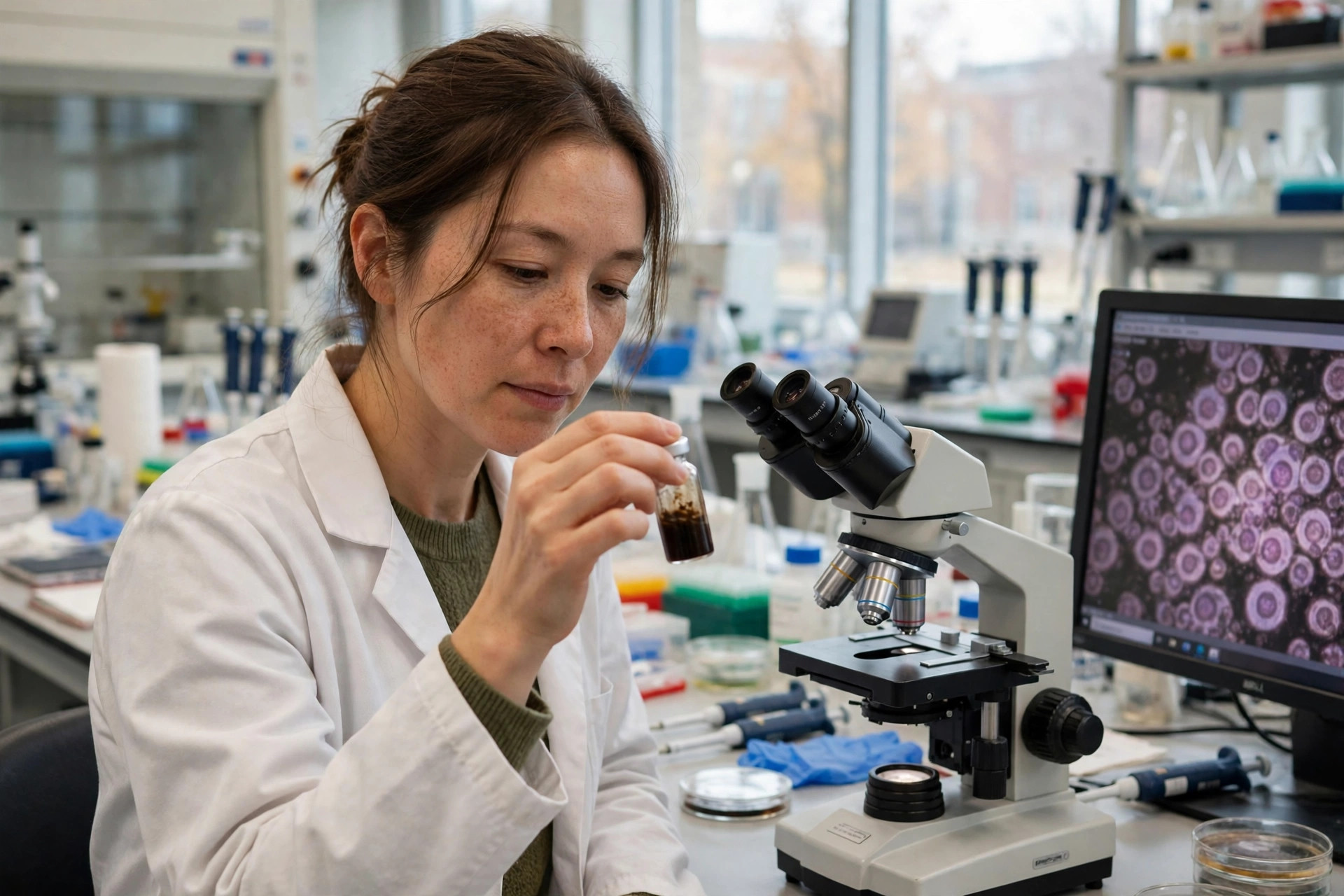
Black pepper's piperine forced oral cancer cells into mitochondrial failure while sparing healthy cells — in lab-grown cells
Edited by Samael A. Tejada, Founder & Editor-in-Chief
·Tip: press play, then lock your phone or switch apps — the article keeps reading.
Piperine, black pepper's main alkaloid, selectively killed oral cancer cells in culture by driving reactive oxygen species accumulation and mitochondrial membrane depolarisation, a Scientific Reports study reports (November 23, 2026), with significantly lower toxicity to non-malignant cells. It is cell-culture evidence only; no animal or human cancer data exist.
Many cancer drugs work by pushing malignant cells past a stress threshold that healthy cells can still tolerate. This study asks whether a familiar dietary molecule exploits exactly that gap — cancer cells already run their mitochondria closer to the edge.
How did piperine kill the cancer cells?
A battery of stains told a consistent story: intracellular reactive oxygen species rose sharply, mitochondrial membranes depolarised (the JC-1 signal of a failing proton gradient), lysosomes changed, chromatin condensed and membranes blebbed — the classic sequence of oxidative-stress-driven apoptosis centred on mitochondrial dysfunction. Computational modelling accompanied the wet-lab work, supporting the compound's interactions with its proposed targets.
How selective was it, really?
The differential was the point of the design: pronounced dose-dependent cytotoxicity against four oral cancer lines, against significantly lower toxicity in normal oral epithelial cells (NOE), peripheral blood cells, fibroblast and muscle cell lines, and red blood cells — a favourable biocompatibility profile in vitro. Selectivity in a dish, however, is the easiest kind to show; tumours in a body add blood supply, metabolism, excretion and an immune system.
What would have to happen before this matters clinically?
Animal pharmacokinetics and tumour studies first — piperine is notorious for altering drug metabolism, which cuts both ways — then formulation, dosing and safety work, and only then early human trials. The authors frame it accurately: potential for future oral-cancer therapeutic development, warranting further investigation. Nothing here supports taking piperine supplements to treat or prevent cancer.
Frequently asked questions
What is piperine?
The alkaloid that makes black pepper pungent. It is studied for biological activity and is also known to change how the body metabolises some medicines.
What is mitochondrial membrane depolarisation?
Loss of the electrical gradient across the inner mitochondrial membrane. Without it the organelle cannot make ATP properly, and sustained loss is a step toward programmed cell death.
Should anyone take piperine for oral cancer?
No. This is a cell-culture study. It provides no human evidence and piperine can interact with prescribed drugs.
Where the evidence stands
- Established: Piperine is the principal bioactive alkaloid of black pepper, reactive oxygen species and mitochondrial membrane collapse are established routes to apoptotic cancer-cell death, and piperine can alter the metabolism of other drugs.
- Preliminary: The selective oral-cancer cytotoxicity and its mitochondrial mechanism: one study (Scientific Reports, 2026) in cultured cancer and non-malignant cell lines with computational support.
- Absent: Animal tumour data, human safety or efficacy data for piperine in any cancer, and any basis for supplement use against cancer.
Join the discussion
To get the conversation started: What questions does this story raise for you? Share them below — every comment is reviewed by our moderators before it appears.
Community discussion only — not medical advice. Every comment is reviewed by our moderators before it appears. Sign in with Google or a free Hyvor account to join in.