FDA advisers voted to clear six peptides for legal compounding — including one made by your mitochondria
·Peptides are everywhere — on social media, in wellness clinics, and in gray-market vials sold as “research chemicals.” This summer, the FDA’s Pharmacy Compounding Advisory Committee took up the question of whether seven popular peptides should become legally compoundable — and its advisers voted yes on six of them, over the unanimous objection of the FDA’s own career scientists. Here’s what the vote means, where the mitochondria connection sits, and why nothing changes for patients yet.
What did the panel actually decide?
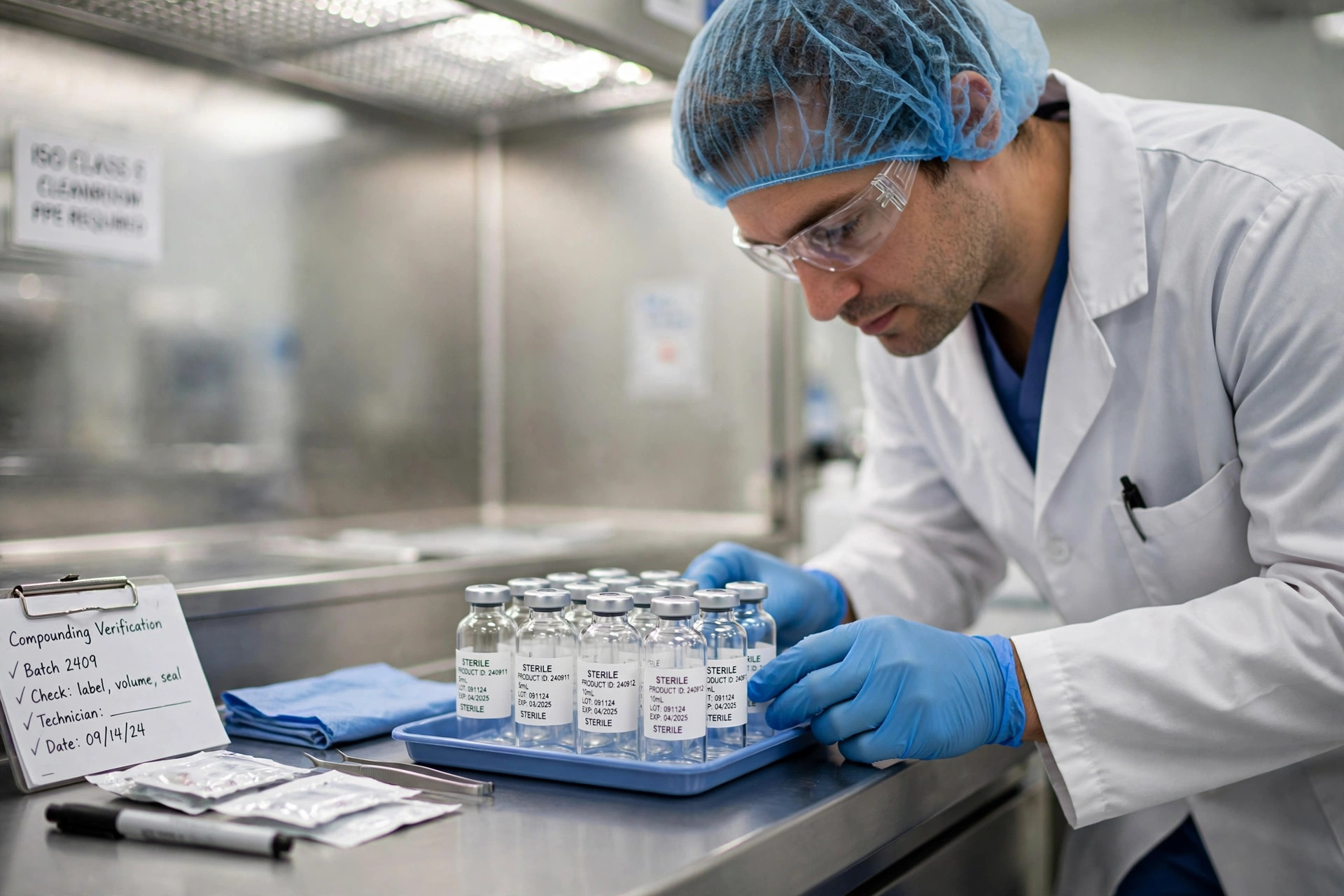
The committee met July 23–24, 2026, at the FDA’s White Oak campus to evaluate seven peptide bulk substances nominated for the 503A bulk list: BPC-157, TB-500, KPV, MOTS-c, Semax, Epitalon, and Emideltide (also known as DSIP). Getting on that list is the legal gateway for state-licensed 503A compounding pharmacies — today, none of the seven qualifies, because none has a United States Pharmacopeia monograph, forms part of an FDA-approved drug, or appears on the list.
The FDA’s scientific staff unanimously recommended against adding any of them, citing missing quality monographs and characterization gaps. The panel went the other way: it voted to recommend six of the seven (Emideltide was the lone rejection). BPC-157, KPV, and TB-500 passed 8–6; MOTS-c passed 7–5. The panel’s composition drew scrutiny — several newly appointed members run or work for clinics that sell peptide treatments, according to the Associated Press — and one trade publication reported an “audible gasp” at the first tally. Advisory panels rarely vote against FDA staff.
What’s the mitochondria connection?
One of the six recommended peptides is MOTS-c — a short peptide encoded directly in mitochondrial DNA and studied for its role in metabolic function. It’s the clearest mitochondria hook in the whole proceeding, and it’s also the one with the thinnest human dossier: MOTS-c has limited human safety and efficacy data, and its first human trial is still recruiting.
That gap between biological intrigue and clinical proof is the story of most of these substances. BPC-157 and TB-500 have large followings and almost no rigorous human data; the panel’s vote was about compounding access, not about whether any of these peptides work.
Does this change anything for you right now?
No. An advisory vote is not a rule, and a rule is not an approval. Before any of the six peptides can be lawfully compounded, the FDA must review the recommendation, publish a proposed rule, take public comment, and issue a final rule — a process that typically takes 8 to 12 months and has not yet begun. Until then, compounding these substances remains unlawful under federal standards.
The consumer-safety warning hasn’t changed either. Harvard T.H. Chan researcher S. Bryn Austin warned on October 1 that gray-market vials sold as “research chemicals” carry no guarantee of identity, purity, or sterility — “What else is in that vial? Bacteria, heavy metals, solvents, or other toxins? ‘Who knows?’” A Smithsonian feature in September found that roughly half of more than 500 surveyed physicians had a patient disclose experimental peptide use in the past year. A second committee meeting is expected before February 2027 to consider more peptides — including GHK-Cu and LL-37 — so this regulatory story is just getting started.
Where the evidence stands
- Established: The advisory panel voted to recommend 6 of 7 peptides for the 503A bulk list; FDA career scientists unanimously recommended against adding any of them.
- Contested: Whether the FDA will follow the recommendation, and the panel’s independence — several members have ties to clinics that sell peptide treatments.
- Absent: Human efficacy and safety data for most of these peptides as compounded products; no immediate legal change from the vote.