
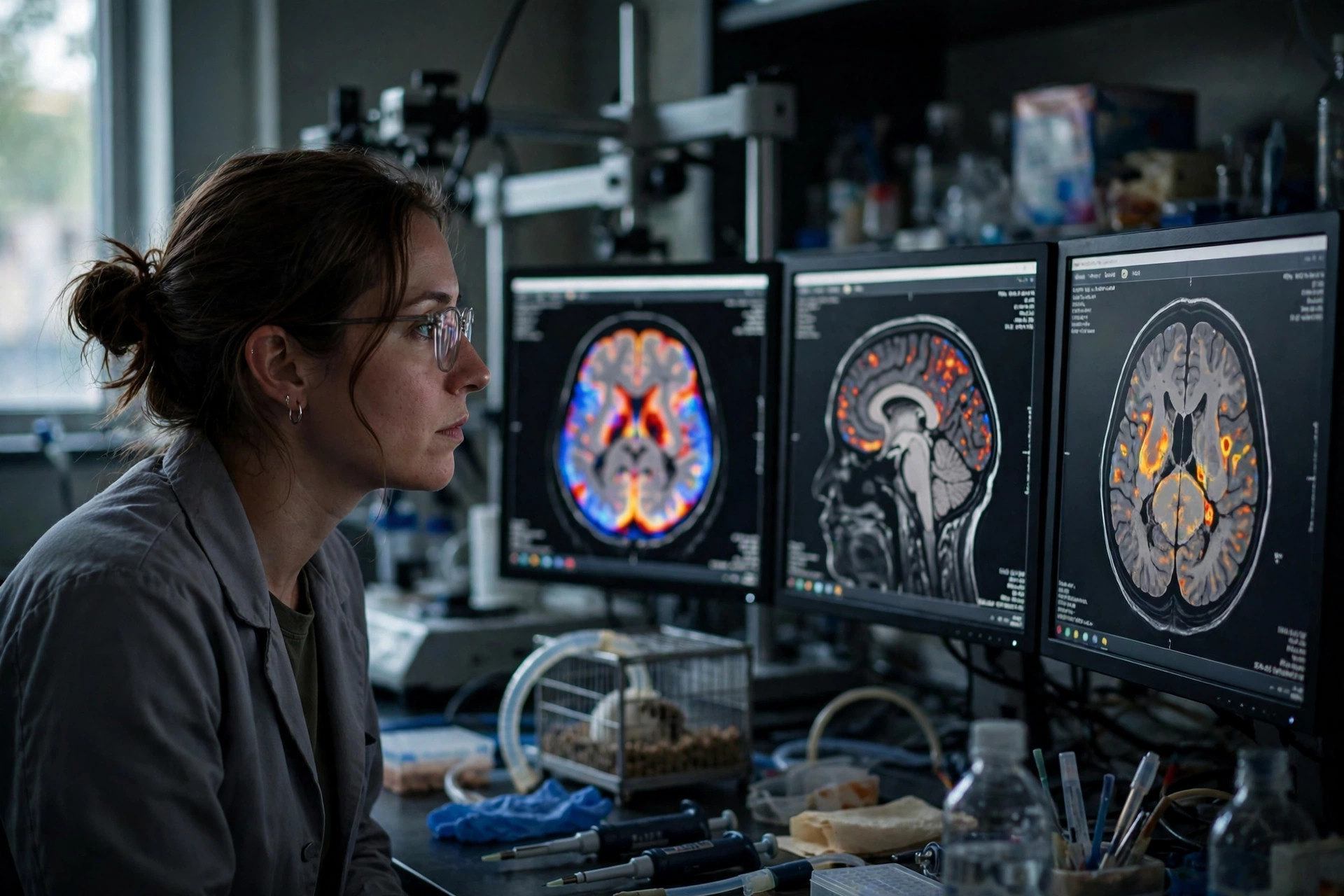
In sleeping sickness, the brain rewires its fuel use and protects memory — in mice
Edited by Samael A. Tejada, Founder & Editor-in-Chief
·Tip: press play, then lock your phone or switch apps — the article keeps reading.
Sleeping sickness progresses from blood to brain, and its late stage brings the behavioural changes that give the disease its name. This study tracked parasites, gene expression, metabolism and behaviour together over the course of infection — and found a brain actively switching fuels rather than simply failing.
What exactly changed in brain fuel use?
The model reproduced the fall in brain tryptophan seen in patient samples, and added a first: an unprecedented 1.8-fold decrease in global brain glucose metabolism during stage II infection, alongside an 18-fold decrease in brain insulin transcripts, while the pathways that respond to insulin were unchanged. Genes for fatty-acid and lipid metabolism were upregulated — an alternative fuel supply being recruited as glucose use was suppressed.
Where do mitochondria sit in the switch?
Transcriptional programmes regulating mitochondrial metabolism adapted dynamically across infection, ultimately producing a programme that diverts host brain metabolism away from glycolysis during stage II. In plain terms, mitochondria — the organelles that burn both sugar- and fat-derived fuel — were transcriptionally retuned so the brain could meet its energy demands from fatty acids and lipids, drawing on adipose reserves while glucose metabolism was suppressed.
Why did memory survive — and what remains unknown?
Despite the profound neurometabolic changes, infected mice showed unchanged anxiety-like behaviour and unimpaired episodic learning and memory. The authors propose the reprogramming may explain the progressive — rather than sudden — onset of neurological symptoms in patients, and that understanding the switch could inform therapies to ease those symptoms. All findings are from a mouse model; translation to human sleeping sickness requires further validation, and whether the switch eventually fails in longer or more severe disease is not answered here.
Frequently asked questions
What is stage II sleeping sickness?
Sleeping sickness (human African trypanosomiasis) is caused by the parasite Trypanosoma brucei. In stage I it circulates in blood and tissues; in stage II it invades the central nervous system, causing behavioural changes that can progress to coma and death.
What metabolic switch did the study find?
In mice, late-stage infection reduced global brain glucose metabolism 1.8-fold and brain insulin transcripts 18-fold, while fatty-acid and lipid metabolism genes rose and mitochondrial programmes shifted — diverting the brain from glycolysis toward fat-derived fuel.
Did the infected mice lose memory?
No. Despite the profound metabolic changes, anxiety-like behaviour was unchanged and episodic learning and memory were not impaired in the infected animals in this study.
Has this been shown in people?
No. The findings come from a mouse model. The model reproduced the brain tryptophan decrease seen in patient samples, but the fuel switch itself has not been confirmed in human brain tissue.
Where the evidence stands
- Established: Stage II human African trypanosomiasis involves parasite invasion of the central nervous system, behavioural changes, and a documented fall in brain tryptophan in patient samples.
- Preliminary: In a bioluminescent mouse model (PLOS Pathogens, 2026), stage II infection brought a 1.8-fold fall in global brain glucose metabolism, an 18-fold fall in brain insulin transcripts, upregulated fatty-acid/lipid metabolism and dynamically adapted mitochondrial programmes, with learning, memory and anxiety-like behaviour preserved.
- Absent: Human brain-metabolism data confirming the switch, and any therapy based on supporting or mimicking this reprogramming.
Join the discussion
To get the conversation started: What questions does this story raise for you? Share them below — every comment is reviewed by our moderators before it appears.
Community discussion only — not medical advice. Every comment is reviewed by our moderators before it appears. Sign in with Google or a free Hyvor account to join in.