
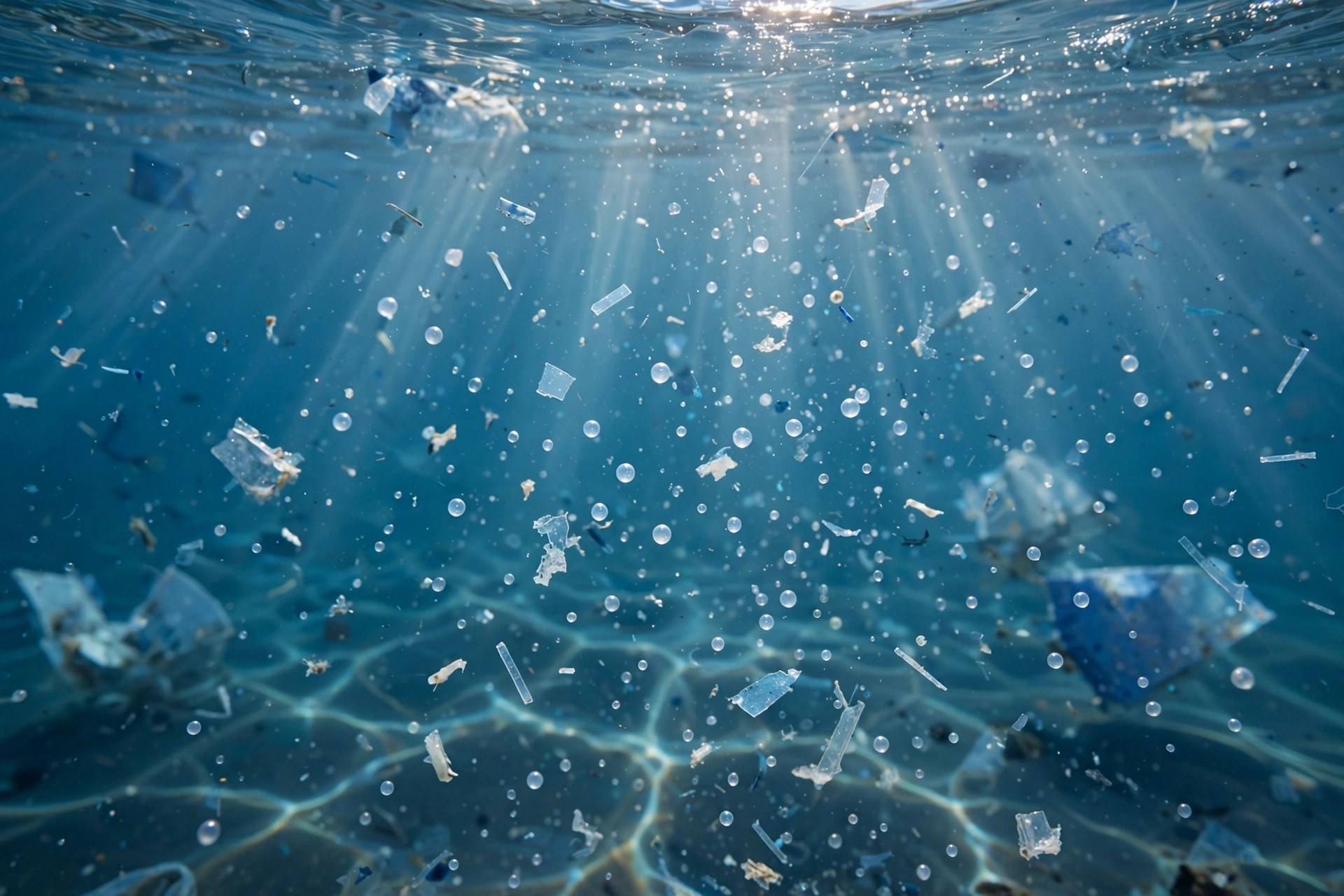
Microplastics ride the food chain through the body — and at the brain's gate, failing mitochondria open the door — in lab models
·Microplastics are already in human blood, lungs, hearts and brains — and brain samples from 2024 carried significantly more than samples from 2016. A new study in npj Emerging Contaminants, part of the Nature portfolio, asked a harder question: what happens when microplastics arrive the realistic way, climbing the food chain? Feeding microplastic-carrying mealworms to mice, researchers found the particles spread systemically and triggered injury, oxidative stress and early scarring across multiple organs. And the paper's discussion points to the mitochondrial link that matters most for the brain: laboratory experiments show microplastics directly impair the cells lining the brain's blood vessels by triggering mitochondrial dysfunction.
What did the study actually do?
Most microplastic toxicity work doses animals by injection or gavage — routes that don't match real life. This team built a food-chain model: mealworm larvae ate polystyrene microplastics (about 9.5 micrometers across), and mice then ate the larvae, mimicking how particles biomagnify up the trophic chain. After one week, fluorescently tagged particles showed up across organ tissues. The damage was not subtle: liver cells dying by apoptosis, swollen kidney tubules, thickened lung air sacs with early collagen scarring, plus a systemic oxidative-stress signature — depleted glutathione ratios, elevated lipid-damage markers, and weakened antioxidant enzymes.
Notably, the brain itself showed no gross lesions in the mice — the blood-brain barrier held, at least structurally, over one week. The mitochondrial story for the brain comes from the in-vitro work the authors cite: in dish experiments, microplastics directly impaired brain microvascular endothelial cells — the cells that form the blood-brain barrier — by triggering mitochondrial dysfunction and apoptotic signaling, reducing cell viability, breaking tight junctions and increasing barrier permeability.
Where do mitochondria come in?
Endothelial cells are energy-hungry — maintaining the brain's barrier is constant work — so mitochondrial damage hits them disproportionately. When their mitochondria falter, the cells die or loosen the tight junctions between them, and the barrier leaks. That is the proposed route by which a pollutant in the gut could eventually reach the brain's doorstep: not by brute force through the barrier, but by degrading the energy supply of the cells that maintain it.
The broader paper reinforces the theme systemically: suppressed calcium and magnesium ATPase activity implied impaired energy metabolism in the liver, and oxidative stress — mitochondria's oldest enemy — was the common thread across damaged organs.
What this means — and doesn't — for you
This is animal and cell-culture evidence, not proof that the microplastics in your food are damaging your mitochondria today. The doses, the one-week window and the single polymer type (polystyrene) all limit how far the findings stretch. But the direction of travel is worth attention: human tissue burdens are rising, and the MAHA movement's current debates — over pesticides, microplastics and ultraprocessed-food packaging — are converging on exactly these environmental toxicants. Reducing exposure where you reasonably can (less plastic food contact, filtered water, ventilation while cooking) is common-sense hygiene, not a prescription — and the science of what these particles do inside us is still being written.
Where the evidence stands
- Established: Microplastics are detected in human blood, liver, kidney, lung, heart and brain, with 2024 brain and liver samples carrying significantly more than 2016 samples.
- Preliminary: The food-chain transfer model is a one-week mouse study with one polymer; the brain-endothelial mitochondrial mechanism comes from in-vitro experiments.
- Absent: No demonstrated human health effect of microplastics on mitochondrial function or the blood-brain barrier.