
Microcurrent stimulation raised neuron mitochondria's breathing capacity sharply — in rat cells
Edited by Samael A. Tejada, Founder & Editor-in-Chief
·Tip: press play, then lock your phone or switch apps — the article keeps reading.
In cultured adult rat sensory neurons, microcurrent stimulation from StimCell's eBalance device raised mitochondrial basal respiration 49%, maximal respiration 119% and spare respiratory capacity 174% versus controls (company-announced, November 12, 2026). The work is preliminary, based on five replicates, in rat cells only — no people, and no treatment claim is supported yet.
Spare respiratory capacity is the headroom a cell's mitochondria keep in reserve — the extra energy it can call on under stress. In this early experiment, a gentle electrical nudge appeared to widen that headroom considerably. The caveats are just as important as the numbers.
What was actually tested?
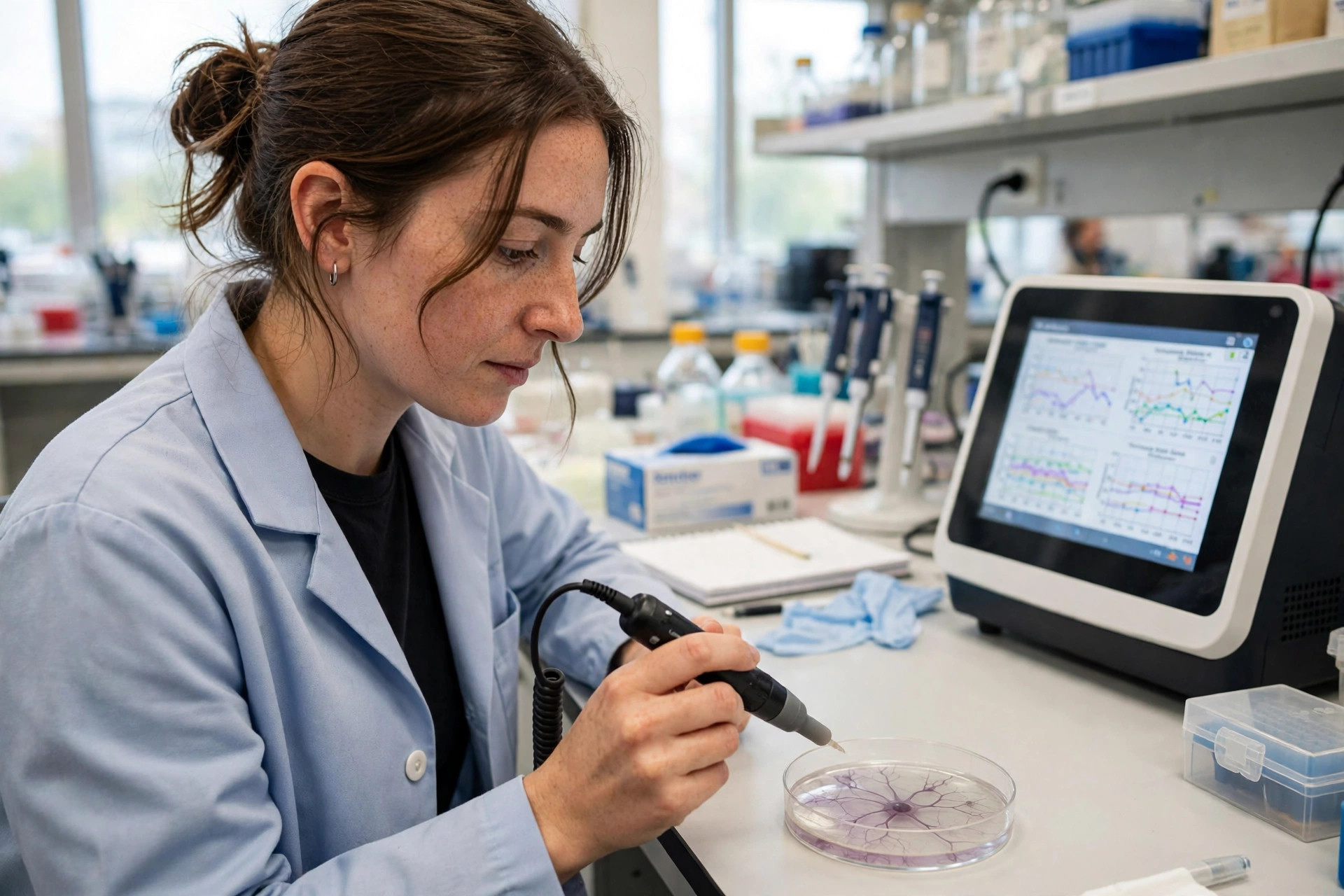
Cultured healthy adult rat sensory neurons — nerve cells grown in dishes, not a living animal and not a patient. StimCell's proprietary eBalance microcurrent technology was applied to the cultures, and mitochondrial function was measured with Seahorse-based bioenergetic assays (oxygen consumption and extracellular acidification) in Professor Paul Fernyhough's laboratory at the St. Boniface Hospital Albrechtsen Research Centre, affiliated with the University of Manitoba.
How large were the effects?
Compared with unstimulated controls (mean ± SEM, n=5; one-way ANOVA with Dunnett's post hoc test): basal respiration rose 49% (p<0.005), maximal respiration 119% (p<0.0001), and spare respiratory capacity 174% (p<0.0005). Those are large percentage gains on small samples — exactly the combination that calls for replication before anyone reads more into them.
What happens next — and what should readers not conclude?
The company itself calls these preliminary results from initial experimental rounds; longer-term stimulation studies and molecular assays are ongoing, and a comprehensive report is expected when the full program completes. Nothing here shows the device helps a person with neuropathy, aging or any other condition — mitochondrial impairment is a documented feature of diabetic neuropathy and neurodegeneration, which is why the direction is interesting, but cell-culture respiration gains are a starting point, not evidence of benefit.
Frequently asked questions
What is spare respiratory capacity?
The difference between a mitochondrion's resting oxygen use and its maximum. It is the reserve a cell can draw on when energy demand spikes or stress hits.
What is microcurrent stimulation?
The application of very low-level electrical current to tissue or cells. Devices using it are marketed for various purposes; effects on human mitochondria have not been established.
Were these results peer-reviewed?
Not yet. They were announced by the company on November 12, 2026 as preliminary results; a comprehensive report is expected when the full experimental program is complete.
Where the evidence stands
- Established: Mitochondrial impairment is a documented feature of aging, diabetic neuropathy and other neurodegenerative processes, and Seahorse oxygen-consumption assays are a standard way to measure mitochondrial respiration in cultured cells.
- Preliminary: The eBalance effect itself: one company-announced preliminary experiment in cultured rat sensory neurons (n=5 per group), not yet a peer-reviewed full report.
- Absent: Evidence in living animals or people, and any evidence that microcurrent stimulation improves symptoms or outcomes in any condition.
Join the discussion
To get the conversation started: What questions does this story raise for you? Share them below — every comment is reviewed by our moderators before it appears.
Community discussion only — not medical advice. Every comment is reviewed by our moderators before it appears. Sign in with Google or a free Hyvor account to join in.