
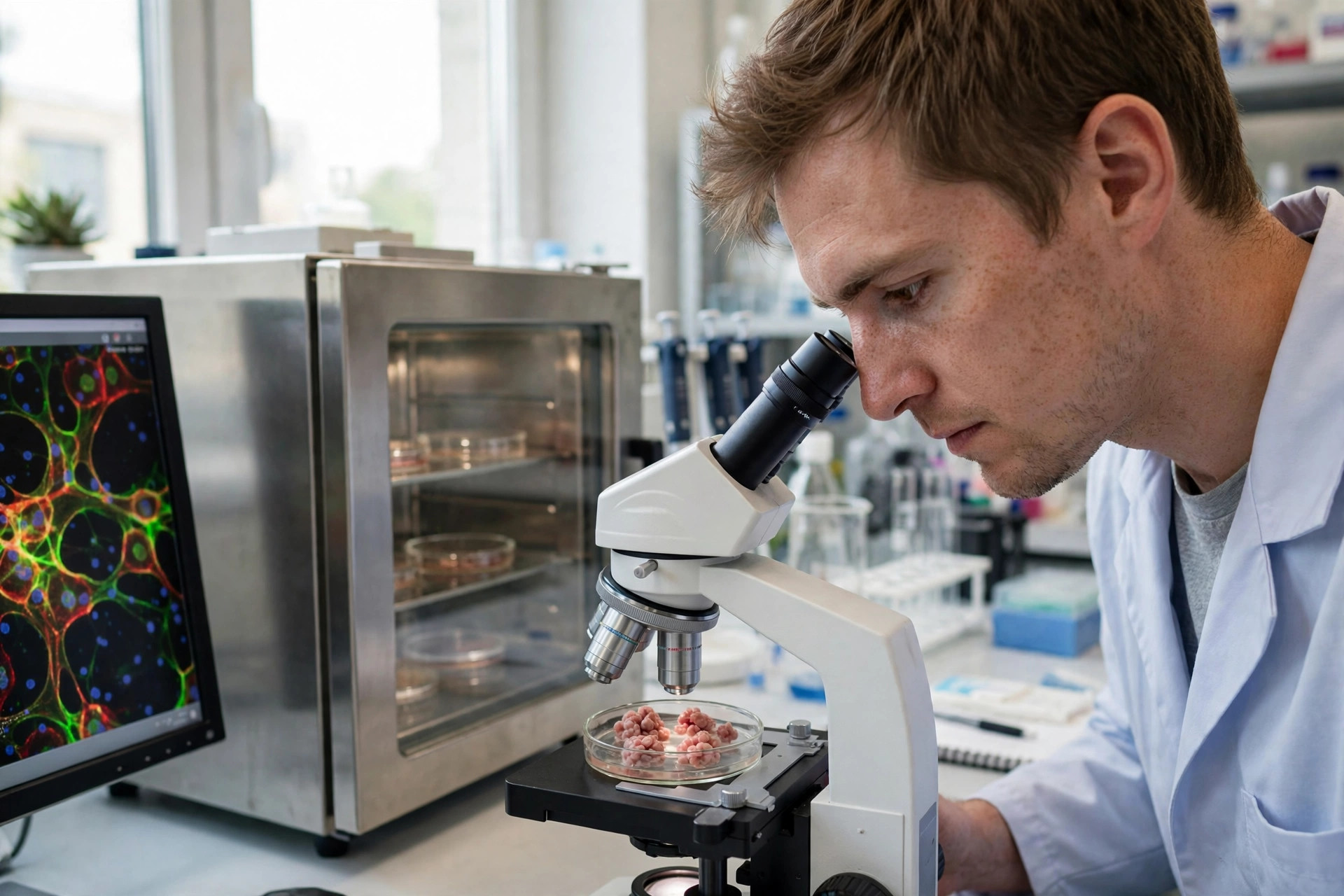
A telomere protein was raised in diabetic heart organoids — and targeting it restored mitochondrial cleanup — in lab-grown heart tissue
Edited by Samael A. Tejada, Founder & Editor-in-Chief
·Tip: press play, then lock your phone or switch apps — the article keeps reading.
Diabetic-donor heart organoids showed mitochondrial dysfunction and impaired mitophagy alongside significantly raised TINF2, a telomere-guardian protein, and targeting TINF2 restored mitophagy, a Cardiovascular Diabetology study reports (November 19, 2026), in lab-grown tissue from human donors. No patient was treated and no heart outcome was measured.
TINF2's day job is at the ends of chromosomes. Finding it in the middle of a mitochondrial cleanup failure in diabetic heart tissue is the kind of cross-system surprise organoid models were built to catch.
What is new about the model itself?
Vascularised cardiac organoids (VCOs) grown from induced pluripotent stem cells combine heart-muscle and vascular cells in one 3D tissue, letting researchers watch cardiac and vessel biology interact — the interplay where diabetic cardiovascular disease actually happens. Organoids from type 2 diabetic donors carried their disease signature with them: mechanistic, cellular and mitochondrial dysfunction compared with non-diabetic counterparts, confirmed across RNA sequencing, functional assays and targeted gene-expression tests.
Why does TINF2 matter here?
TINF2 (TRF1-interacting nuclear factor 2) is a core component of shelterin, the protein cap that protects telomeres. Its involvement had not previously been reported in cardiac or vascular cell types, nor altered in type 2 diabetes — yet in the diabetic organoids it was significantly upregulated, and the change was causal in the model, not just correlated: transgenic targeting of TINF2 was associated with reversing the targets of diabetes-related mitochondrial dysfunction and with restoring mitophagy, the selective recycling of damaged mitochondria whose failure lets defective organelles accumulate.
What would have to happen before this helps patients?
Replication and translation. Organoids are simplified tissues — no blood flow, no immune system, no years of diabetic exposure — and a gene-targeting result in a dish is the start of a drug-discovery path, not a therapy. The authors frame the contribution accurately: a potentially vital role for TINF2 in diabetes-associated mitochondrial dysfunction, and a reason to explore re-targeting mitophagy — a process no current diabetes therapy aims at — for diabetic cardiovascular risk.
Frequently asked questions
What is mitophagy?
The cell's selective recycling of damaged mitochondria. When mitophagy fails, defective mitochondria accumulate, energy production falls and damaging reactive molecules rise.
What is a cardiac organoid?
A miniature, self-organising 3D tissue grown from stem cells that mimics aspects of heart structure and cell mix — here including blood-vessel cells (vascularised) — used to model disease outside the body.
What is TINF2?
A protein in the shelterin complex that caps and protects telomeres, the ends of chromosomes. This study reports a previously unknown association with mitochondrial cleanup in diabetic heart tissue.
Where the evidence stands
- Established: Type 2 diabetes greatly raises cardiovascular risk, impaired mitophagy contributes to diabetic tissue damage, and TINF2 is a core shelterin protein protecting telomeres.
- Preliminary: TINF2's rise in diabetic heart tissue and the mitophagy restoration from targeting it: one study (Cardiovascular Diabetology, 2026) in donor-derived lab-grown organoids.
- Absent: Confirmation in human heart tissue in vivo, a TINF2-targeting drug, and any clinical outcome data.
Join the discussion
To get the conversation started: What questions does this story raise for you? Share them below — every comment is reviewed by our moderators before it appears.
Community discussion only — not medical advice. Every comment is reviewed by our moderators before it appears. Sign in with Google or a free Hyvor account to join in.