
Hydrogen gas shielded muscle cells' mitochondria from high-glucose stress — in lab-grown mouse muscle cells
Edited by Samael A. Tejada, Founder & Editor-in-Chief
·Tip: press play, then lock your phone or switch apps — the article keeps reading.
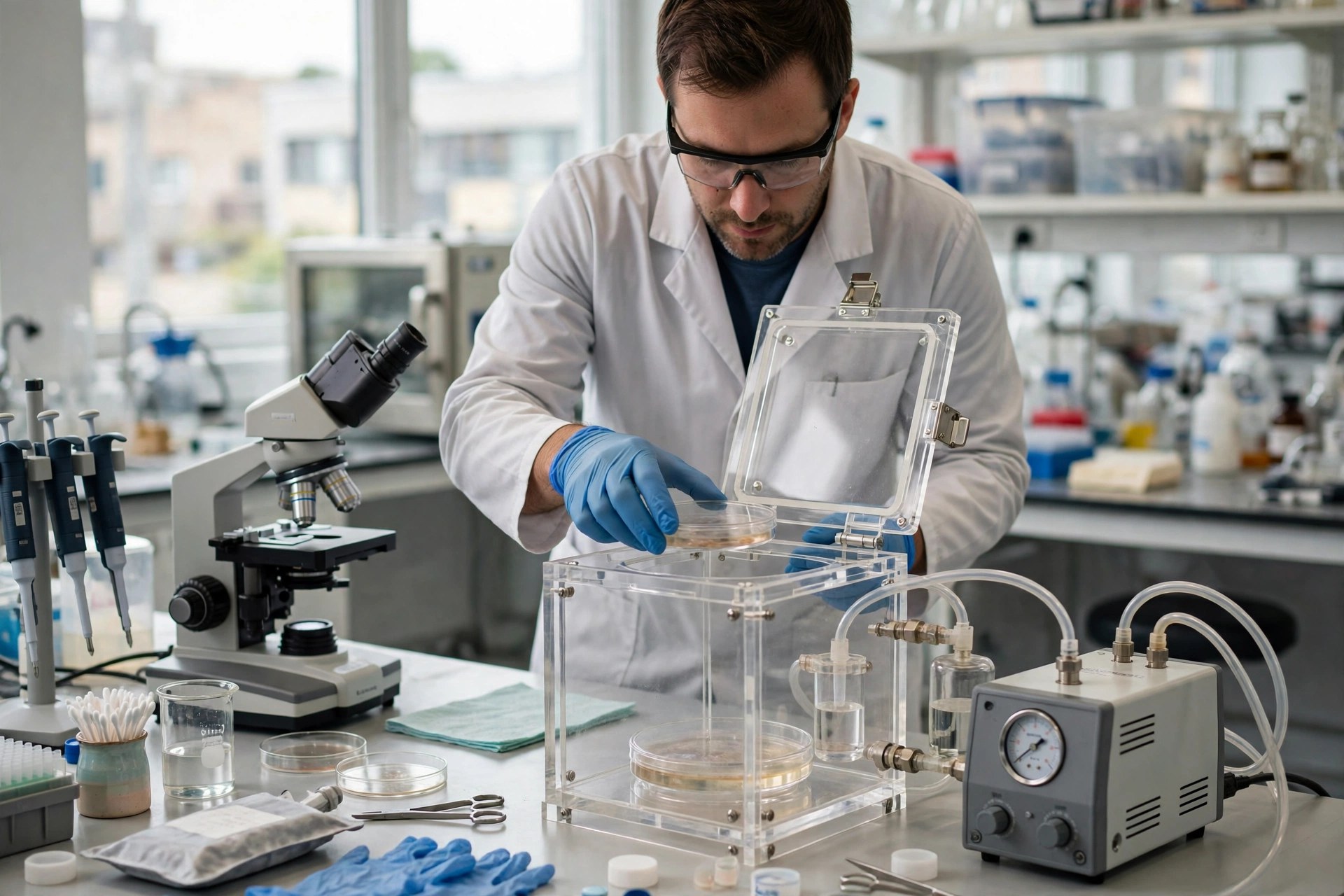
In lab-grown mouse muscle cells kept in 2% hydrogen gas, hydrogen reduced peroxide-driven lipid peroxidation and corrected high-glucose-induced mitochondrial membrane-potential abnormalities, but it did not prevent the stressed cells from dying and it slowed cell proliferation (Scientific Reports, November 6, 2026). This is a single cell study — fundamental, mechanistic evidence, not a treatment result.
Hydrogen research lives or dies on rigor about what the gas can and cannot do. This study is a useful specimen: a purpose-built sealed chamber, a clear mitochondrial readout that improved — and, reported in the same breath, the outcome that did not.
What did the hydrogen do to the mitochondria?
The mitochondrial signal was in membrane potential — the voltage across the inner mitochondrial membrane that drives ATP production. High glucose distorted it, pushing cells toward membrane hyperpolarization; hydrogen attenuated those abnormalities and prevented the hyperpolarization. Hydrogen also significantly inhibited hydrogen peroxide-induced lipid peroxidation, the oxidative membrane damage that hydrogen's antioxidant reputation rests on. Under standard conditions, hydrogen did not alter mitochondrial membrane potential and did not induce necrosis or apoptosis.
What did hydrogen fail to do?
Under high-glucose conditions, the cells' proliferative capacity fell and cell death (necrosis and apoptosis) rose. Hydrogen prevented the mitochondrial hyperpolarization but failed to rescue the cells from death. It also further suppressed proliferation compared with high glucose alone — a cytostatic effect the authors report plainly, without exacerbating cytotoxicity. For a therapy candidate aimed at muscle pathologies, growth suppression cuts both ways: it is the kind of detail marketing leaves out and abstracts should not.
Who is behind the study?
The paper is unusually transparent. Lead author Shiro Ebara conducted the study as part of his Master's program at Teikyo University, and he is the president and CEO of HBA Co., Ltd., a company that manufactures and sells hydrogen gas generators. The paper declares that no research grants, funding, donations, products, reagents or equipment came from HBA, that university academic advisors supervised all experiments, and that co-authors independently performed image quantification and statistical analyses. Readers can weigh that disclosure alongside the results — which include findings (no rescue from cell death, suppressed proliferation) that no marketing department would invent.
Frequently asked questions
What concentration of hydrogen was used?
2% hydrogen gas, maintained in a specialized sealed cell-culture system the team developed for this study.
Did hydrogen save the stressed muscle cells?
No. Hydrogen corrected the high-glucose-induced mitochondrial membrane-potential abnormality but failed to rescue the cells from death, and it further suppressed their proliferation.
Is there a conflict of interest?
Yes, and it is disclosed in the paper: lead author Shiro Ebara is president and CEO of HBA Co., Ltd., which manufactures and sells hydrogen gas generators. The paper states the company provided no funding, products or equipment, and that university advisors supervised the experiments.
Where the evidence stands
- Established: Hydrogen gas has antioxidant activity in cell systems, and mitochondrial membrane potential is a standard, measurable readout of mitochondrial state.
- Preliminary: The muscle-cell findings themselves: one cell-line study (C2C12 mouse myoblasts) at one concentration (2% H2), with mitochondrial protection on one readout and no survival rescue.
- Absent: Any animal or human evidence that hydrogen improves muscle health, and any evidence on the proliferation-suppression effect outside this cell system.
Join the discussion
To get the conversation started: What questions does this story raise for you? Share them below — every comment is reviewed by our moderators before it appears.
Community discussion only — not medical advice. Every comment is reviewed by our moderators before it appears. Sign in with Google or a free Hyvor account to join in.