
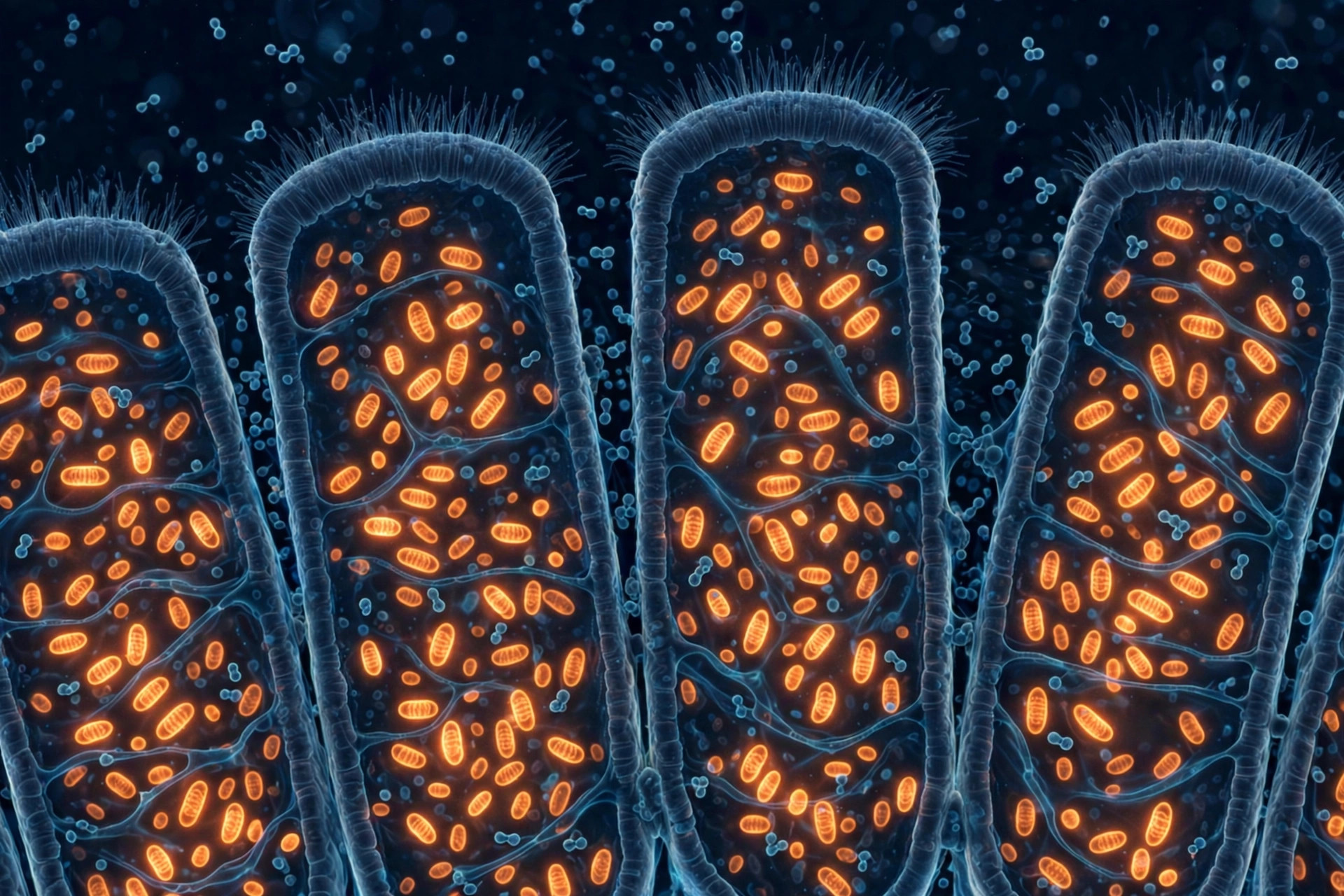
Hydrogen-rich gas and mitochondrial recovery after ischemia-reperfusion — in lab models
·When blood flow returns after being cut off — during an organ transplant, a heart attack, or major surgery — the sudden rush of oxygen can injure tissue as badly as the deprivation did. Mitochondria are the main casualties of this ischemia-reperfusion injury. A new study digs into how molecular hydrogen acts on the mitochondrial machinery itself — and finds it does more than mop up free radicals.
What did the researchers actually do?
The researchers worked with Caco-2 intestinal cells, splitting them into three groups: a control, a hypoxia group (99% nitrogen, 1% oxygen — no hydrogen — for 3, 6, or 24 hours), and a hypoxia-plus-hydrogen group (99% hydrogen gas, 1% oxygen, for the same durations). After treatment, the cells were reoxygenated under normal conditions for 1 to 6 hours. The team then measured mitochondrial membrane potential, oxygen consumption, ATP production, reactive oxygen species, and markers of apoptosis and metabolism.
What did they find?
Hydrogen markedly promoted mitochondrial recovery after the injury. ATP production rose, mitochondrial membrane potential was restored, and oxygen consumption improved. Reactive oxygen species fell and pro-apoptotic signaling was suppressed. Most interestingly, hydrogen suppressed the expression of HIF1α and PDK1 — two master alarms of the hypoxia response — suggesting hydrogen acts upstream of hypoxia-driven signaling rather than merely cleaning up after it. Together, these changes promoted oxidative phosphorylation and overall cellular function during reperfusion.
What it means — and what it doesn't
This is a mechanism story, not a treatment announcement. A single intestinal cell line is a long way from a transplant patient — and hydrogen's human record, as this year's big reviews keep showing, is promising in small trials and inconsistent in large ones. But the HIF1α/PDK1 finding gives researchers a concrete signaling pathway to test next, including in other hypoxia-related conditions where mitochondrial recovery is the whole game. Study: Biochemical and Biophysical Research Communications; PubMed 41043278.
Where the evidence stands
- Established: Ischemia-reperfusion injury damages mitochondria through oxidative stress; this is well documented in transplants, heart attacks, and strokes.
- Preliminary: The hydrogen effect was shown in one intestinal cell line; whether it holds in human tissue or patients is untested.
- Absent: No human trial has tested hydrogen gas for ischemia-reperfusion injury.