
Molecular hydrogen as a pleiotropic agent: a 2026 review of the clinical evidence
·Molecular hydrogen (H2) was long dismissed as biologically inert. Two decades and more than 2,000 papers later, a new Frontiers in Pharmacology review takes stock of H2 as a 'pleiotropic' agent — one small molecule reported to touch oxidative stress, inflammation, and mitochondrial function across many conditions at once. Its verdict is measured: mechanistically coherent, directionally positive in small trials, and not yet proven where it counts most.
Why hydrogen can reach mitochondria
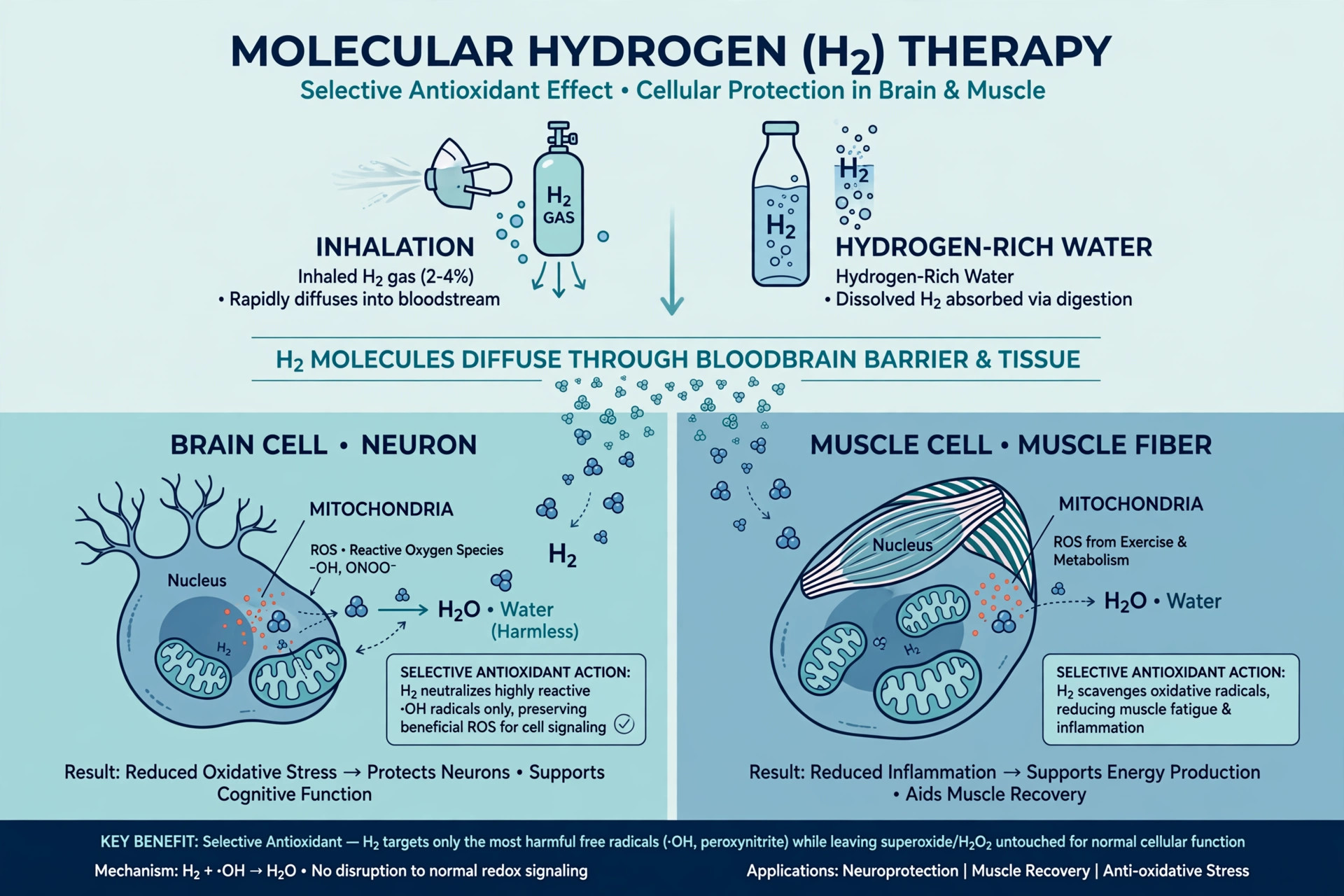
H2 is the smallest molecule in biology. It diffuses freely across membranes — into the nucleus, into mitochondria — without transporters or pharmacological help. There it selectively neutralizes the most damaging reactive oxygen species (hydroxyl radicals) while leaving signaling ROS largely intact, a selectivity most antioxidants cannot claim.
What the human evidence shows
Across the review's synthesis: multiple small RCTs support antioxidant and anti-inflammatory effects; exercise studies and meta-analyses (19 studies, 402 participants in 2023; 27 publications, 597 participants in 2024) consistently find reduced perceived exertion and blood lactate, with a small gain in lower-limb explosive power — but no universal improvement in VO2max, endurance, or strength. In neurology, preliminary trials in Parkinson's and Alzheimer's are inconclusive, with a 179-patient Parkinson's RCT null and a 73-patient cognition RCT null at one year. A Phase 3 post-COVID trial (n=700) is pending.
The delivery problem
Hydrogen-rich water, inhaled gas, and IV hydrogen saline deliver very different doses to tissues, and studies vary widely in concentration and duration — the review's chief methodological complaint. Inhalation offers systemic reach within a single session; oral routes are convenient but dilute. Cross-study comparison remains difficult until protocols standardize.
The honest limits
Most human trials are small, short, and heterogeneous. The review positions H2 as a candidate adjunct — complementing, not replacing, conventional care — and calls for larger, standardized, longer RCTs. A measurable mitochondrial or biomarker effect is not the same as a patient feeling or functioning better; the review keeps that distinction front and center.
Where the evidence stands
- Established: H2 diffuses into mitochondria and selectively scavenges hydroxyl radicals; multiple RCTs show antioxidant/anti-inflammatory biomarker effects.
- Preliminary: Anti-fatigue effects (perceived exertion, lactate) are supported by two meta-analyses; mitochondrial-disease data rest on one open-label study (n=41). Post-COVID Phase 3 (n=700) is pending.
- Contested: Large trials are inconsistent: Parkinson's RCT (n=179) null; cognition RCT (n=73) null at 1 year; cardiac-arrest data mixed and underpowered.
- Absent: No long-term, adequately powered trial establishes a clinical outcome benefit for any wellness indication.