
Taurine restored mitochondrial function in cells from people with mitochondrial tRNA disease — in lab-grown cells
Edited by Samael A. Tejada, Founder & Editor-in-Chief
·Tip: press play, then lock your phone or switch apps — the article keeps reading.
Patients with mitochondrial tRNA-mutation disease had 26% lower blood taurine, and supplementing taurine restored respiration and membrane potential in their cultured fibroblasts, an Orphanet Journal of Rare Diseases study reports (November 20, 2026). The benefit was shown only in lab-grown cells; the authors frame it as a rationale for clinical studies, not a therapy.
Taurine is a familiar name from energy drinks and longevity headlines. Strip the marketing away and this study is the careful version: a measured deficiency, a compensating genome, and a rescue that works in a dish — with the distance to a treatment stated plainly by the authors themselves.
What did patient tissue show?
Two coordinated findings. Transcriptome profiling of skeletal-muscle biopsies showed mito-nuclear decoupling: respiratory-chain genes encoded by mitochondrial DNA were turned up while oxidative-phosphorylation subunits encoded by nuclear DNA were turned down — the two genomes that must cooperate to build the energy machinery pulling in opposite directions. Targeted metabolomics of matched blood samples then found taurine concentrations 26% lower in patients, alongside increased expression of taurine biosynthesis and transport genes — a pattern consistent with the body sensing and trying to correct a shortfall.
What did taurine do in the dish?
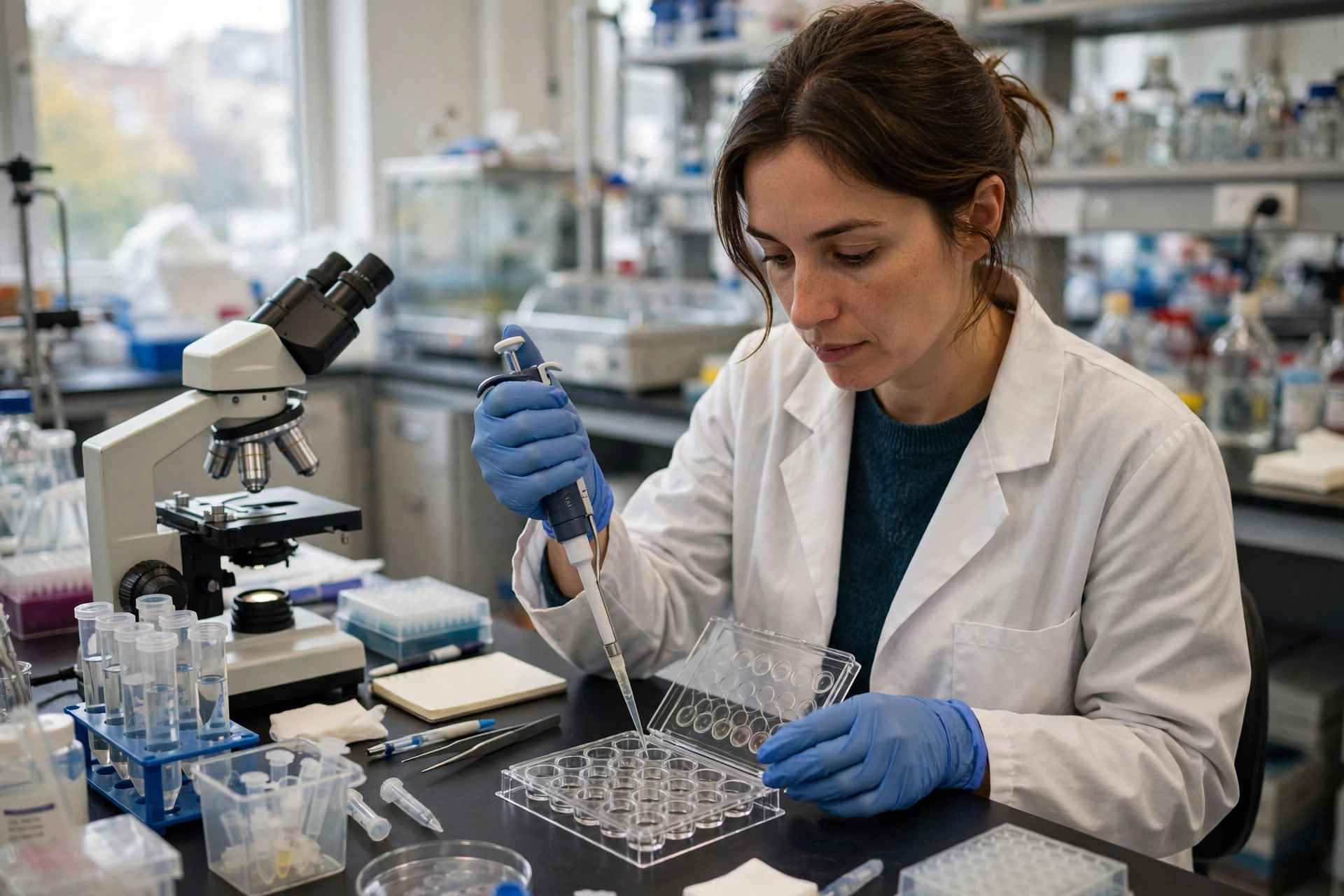
In fibroblasts carrying mt-tRNA mutations, taurine supplementation improved mitochondrial respiration and restored mitochondrial membrane potential — the voltage that drives energy production. It also increased mitochondrial DNA content and reduced accumulation of reactive oxygen species, the damaging by-products of a struggling respiratory chain. Together those are the core functional parameters of mitochondrial health, all moving the right way in vitro.
Should patients take taurine now?
The study does not say that, and neither do we. The functional rescue was demonstrated exclusively in cultured cells; the patient data establish association — low taurine alongside disease — not that supplementation changes the disease in a person. Dose, delivery to muscle and brain, and safety in this specific population are all unstudied. What the work provides, in the authors' own framing, is a mechanistic rationale for future clinical studies in a disease family that badly needs testable ideas.
Frequently asked questions
What is taurine?
A sulphur-containing amino-acid-like compound the body makes and also gets from food (meat, seafood, dairy). Inside mitochondria it is chemically attached to certain transfer RNAs, a modification needed for accurate mitochondrial protein production.
What are mt-tRNA diseases?
Disorders caused by mutations in the mitochondrial genome's transfer-RNA genes, which impair production of respiratory-chain proteins. MELAS and MERRF are the best-known examples.
What is mito-nuclear decoupling?
A mismatch in which mitochondrial-DNA genes and nuclear-DNA genes for the same energy machinery are regulated in opposite directions, as seen in these patients' muscle — a sign the two genomes' coordination has broken down.
Where the evidence stands
- Established: Mitochondrial tRNA mutations cause serious multisystem diseases (including MELAS and MERRF) with few effective treatments, and taurine is an abundant nutrient involved in mitochondrial translation and cell protection.
- Preliminary: The taurine shortfall, the mito-nuclear decoupling signature and the fibroblast rescue: one study (Orphanet Journal of Rare Diseases, 2026) combining patient biopsies and blood with an in-vitro cell model.
- Absent: Any trial of taurine in people with mt-tRNA disease, dosing or safety data in this population, and evidence of benefit in muscle or brain tissue in vivo.
Join the discussion
To get the conversation started: What questions does this story raise for you? Share them below — every comment is reviewed by our moderators before it appears.
Community discussion only — not medical advice. Every comment is reviewed by our moderators before it appears. Sign in with Google or a free Hyvor account to join in.