MAHA Summit closes with a big AI promise: a second opinion on your phone
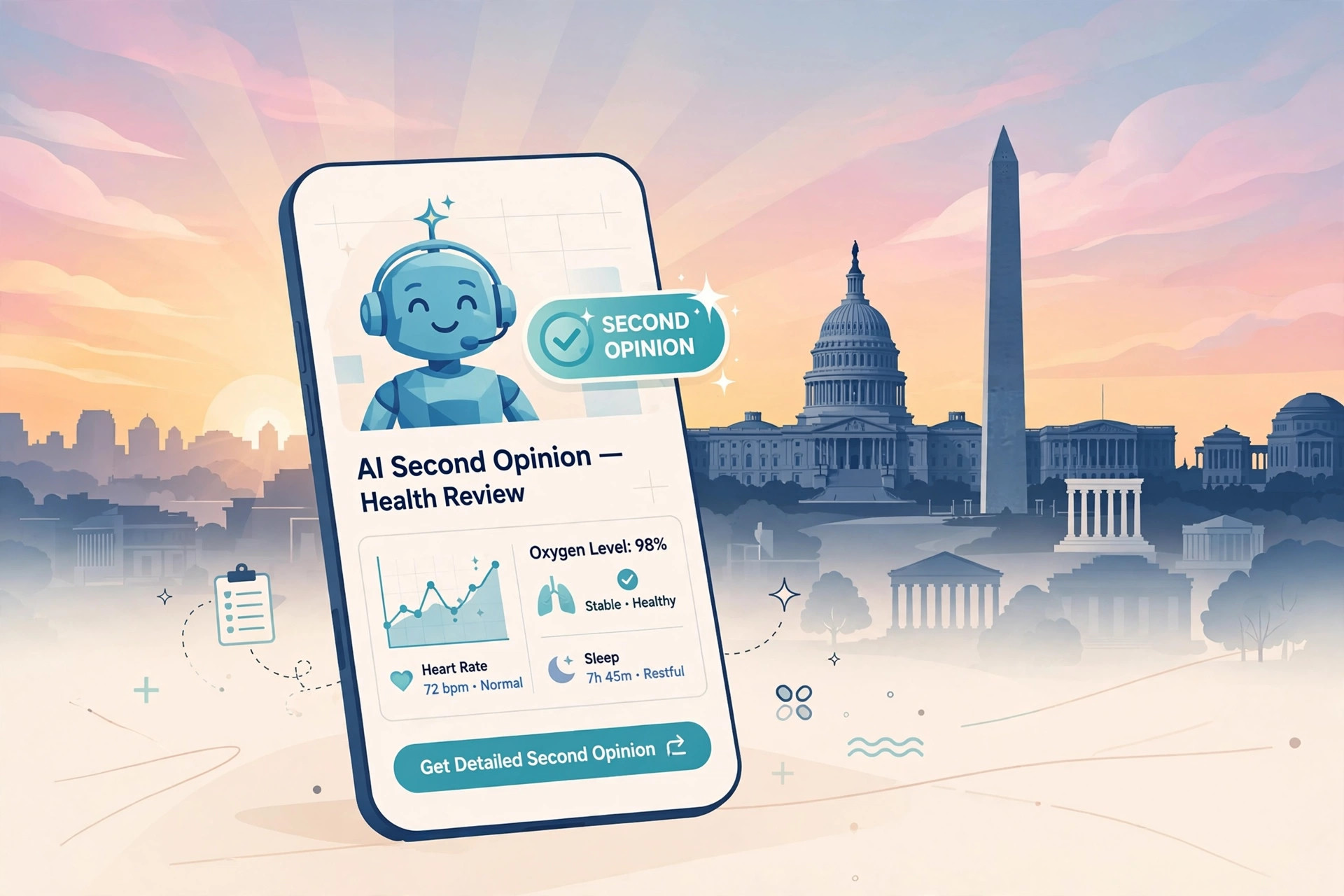
·The second MAHA Summit closed Tuesday at Washington's Waldorf Astoria with a headlining fireside chat: Vice President JD Vance and HHS Secretary Robert F. Kennedy Jr. laying out the movement's accomplishments and agenda. The biggest promise of the closing session was about health data and AI: Kennedy told the crowd that “by the time we leave, every American will have access on their cell phones to their own medical records,” and that AI would distill a thousand-page chart into second opinions “better informed than any doctor in the country.” The movement's grassroots critics, meanwhile, left unconvinced — activists who built MAHA say corporate sponsors captured the stage.
What they promised
Kennedy argued AI will free patients from “medical tyranny” by double-checking experts — on vaccines, masks, and social distancing — and help patients understand records no six-minute doctor visit could cover. Vance highlighted AI's potential for cancer treatment and drug discovery. Notably, Kennedy also claimed his agency has found “nearly $250 billion in alleged fraud” in federal programs — a striking figure presented without published supporting detail.
What AI can — and can't — do for your cells
Strip away the politics: the premise has a cellular-health cousin. Chronic disease does start upstream — in food, sleep, environment, early detection — and better health data could help people catch dysfunction earlier. But a second opinion is only as good as the data it's based on. A thousand-page medical record of billing codes and normal-range labs is not the same as a validated mitochondrial workup — whole-mtDNA sequencing, respiratory-chain biochemistry, expert interpretation. AI that hasn't been taught what validated mitochondrial testing looks like can't order it, grade it, or tell you your “mitochondrial age” score is marketing.
The credibility question
The summit ended with the same tension it started with: real upstream-health goals — food-as-medicine, sleep, early detection — argued out on a stage bankrolled by Walmart, OpenAI, Anthropic, and Hims & Hers, while the activists who built the movement cried foul. Whether AI second opinions become a patient-empowerment tool or a confusion engine will depend on the boring part: data standards, evidence grading, and who controls the algorithm. Worth watching — for your cells' sake.
Where the evidence stands
- Established: The closing fireside chat took place September 29 at the Waldorf Astoria; Kennedy's and Vance's quoted remarks are on-the-record from the event.
- Preliminary: Whether the promised phone-access health-record system and AI second opinions materialize in any form.
- Contested: Whether AI second opinions improve health decisions or risk amplifying confident misreadings of complex records — experts in health-data science are split.
- Absent: No proposal at the summit addressed validated mitochondrial testing, clinical data standards, or evidence grading.