Mitochondria in a capsule: the real delivery breakthrough — and the clinics selling it ahead of the evidence
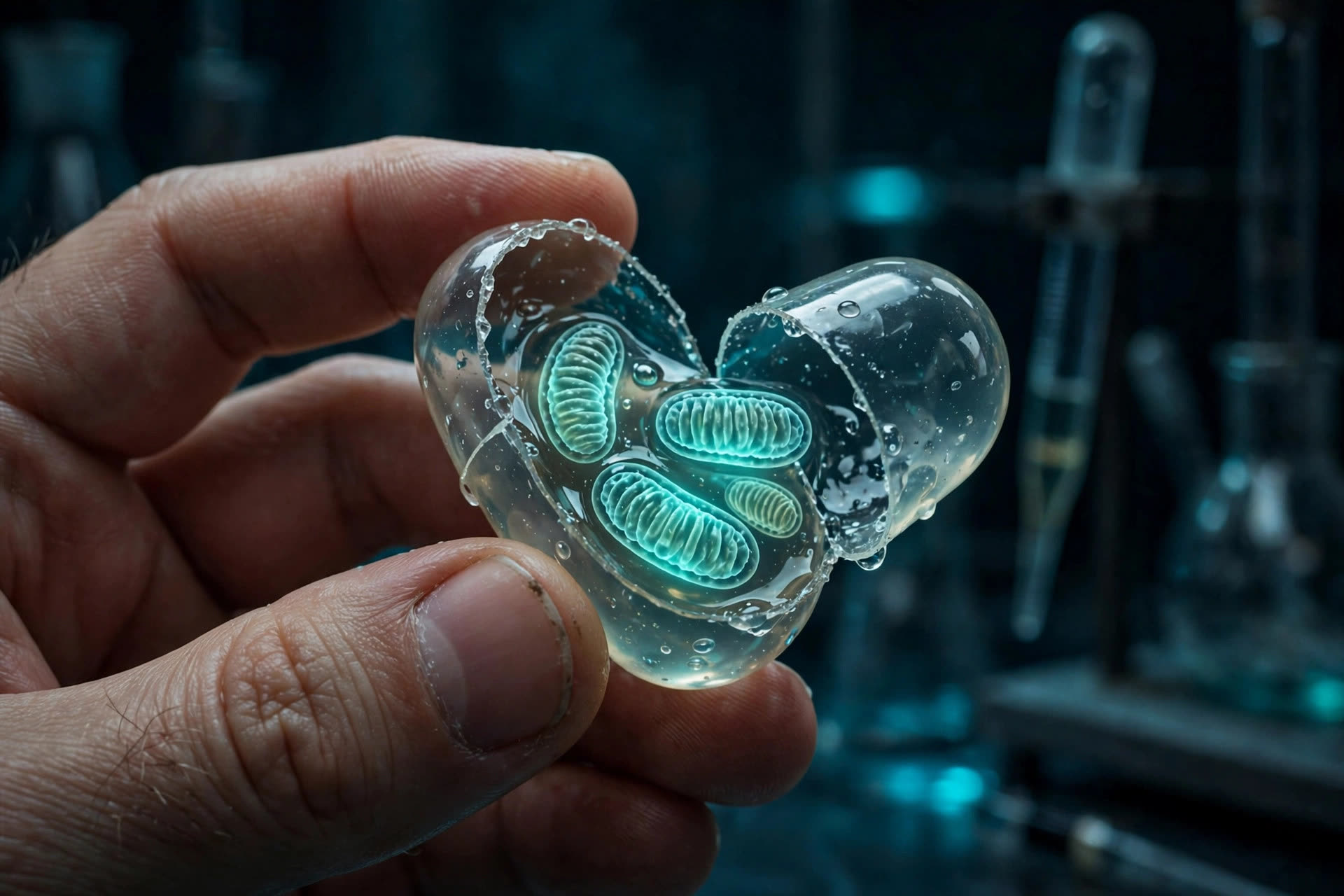
·“Mitochondria in a capsule” sounds like a longevity-clinic sales pitch. This week it became a genuine scientific headline: a multi-institution Chinese team published an open-access engineering review in Science Bulletin mapping how fragile mitochondria could be packaged, protected, and delivered as a drug product — reaching roughly 80% cellular uptake in laboratory dishes.
What did the scientists actually achieve?
Mitochondria are terrible drug candidates on their own: yanked out of a cell, they degrade fast, and naked mitochondrial DNA floating in the blood is a danger signal that provokes inflammation. The Chinese team (Guangzhou Institutes of Biomedicine and Health, Chinese Academy of Sciences, and colleagues) systematically engineered around those problems — protective packaging, delivery routes, uptake mechanisms — producing the first comprehensive map from “fragile organelle” to “deliverable drug.”
It is real, careful science. It is also, strictly, cell-culture and animal-disease-model work. Nothing in it is a product, and nothing in it was tested in people.
So why is this a watchdog story?
Because the marketplace is not waiting. As analysts noted this week, no approved mitochondrial transplant product exists anywhere — the only human use on record is an uncontrolled 2017 report in a handful of children after cardiac surgery. Yet clinics are already selling “mitochondrial infusions” for anti-aging, operating years ahead of the evidence.
The safety gap is not theoretical: damaged mitochondria can provoke inflammation and cell death, and unengineered infusions carry exactly the leaked-mtDNA risk the new paper engineers around. Selling infusions that skip the delivery science is selling the danger without the therapy.
Where could this legitimately go?
The realistic first uses, per the analysts: severe inherited mitochondrial disease and acute organ injury — settings where the risk-benefit math of an experimental intervention can make sense, under trial protocols with safety monitoring. General anti-aging is not on that list, and won’t be for a very long time, if ever.
The pattern to watch: every genuine mitochondrial advance will be shadowed by a clinic selling a premature version of it. Today’s two transplant stories are a matched pair — the science in the lead story, the shadow market here. Read both before you believe either.
Where the evidence stands
- Established: No approved mitochondrial transplant product exists; the only human use is a 2017 uncontrolled pediatric report; leaked mitochondrial DNA can trigger inflammation.
- Preliminary: The delivery-engineering review is cell-culture and animal-model work; ~80% uptake was measured in dishes.
- Contested: Commercial “mitochondrial infusion” anti-aging claims, which run ahead of all clinical evidence.