
Cancer cells drain their excess NADH to survive a stalled energy chain — blocking the drain is a lab finding, not a treatment
Edited by Samael A. Tejada, Founder & Editor-in-Chief
·Tip: press play, then lock your phone or switch apps — the article keeps reading.
Cancer cells survive a stalled mitochondrial respiratory chain by draining surplus NADH through a shuttle ending in NADPH, a study in The Innovation found in cultured cell lines. Blocking the drain sensitised the cells to metformin — in dishes, using a tool compound that is not a drug. No animal or human evidence exists, and metformin is not a cancer treatment on this basis.
The science here is genuinely interesting — a mapped escape route that could one day matter. The watchdog point is about distance: four cell lines and a tool compound are several large steps from the clinic, and the headline version skips every one of them.
What did the study actually map?
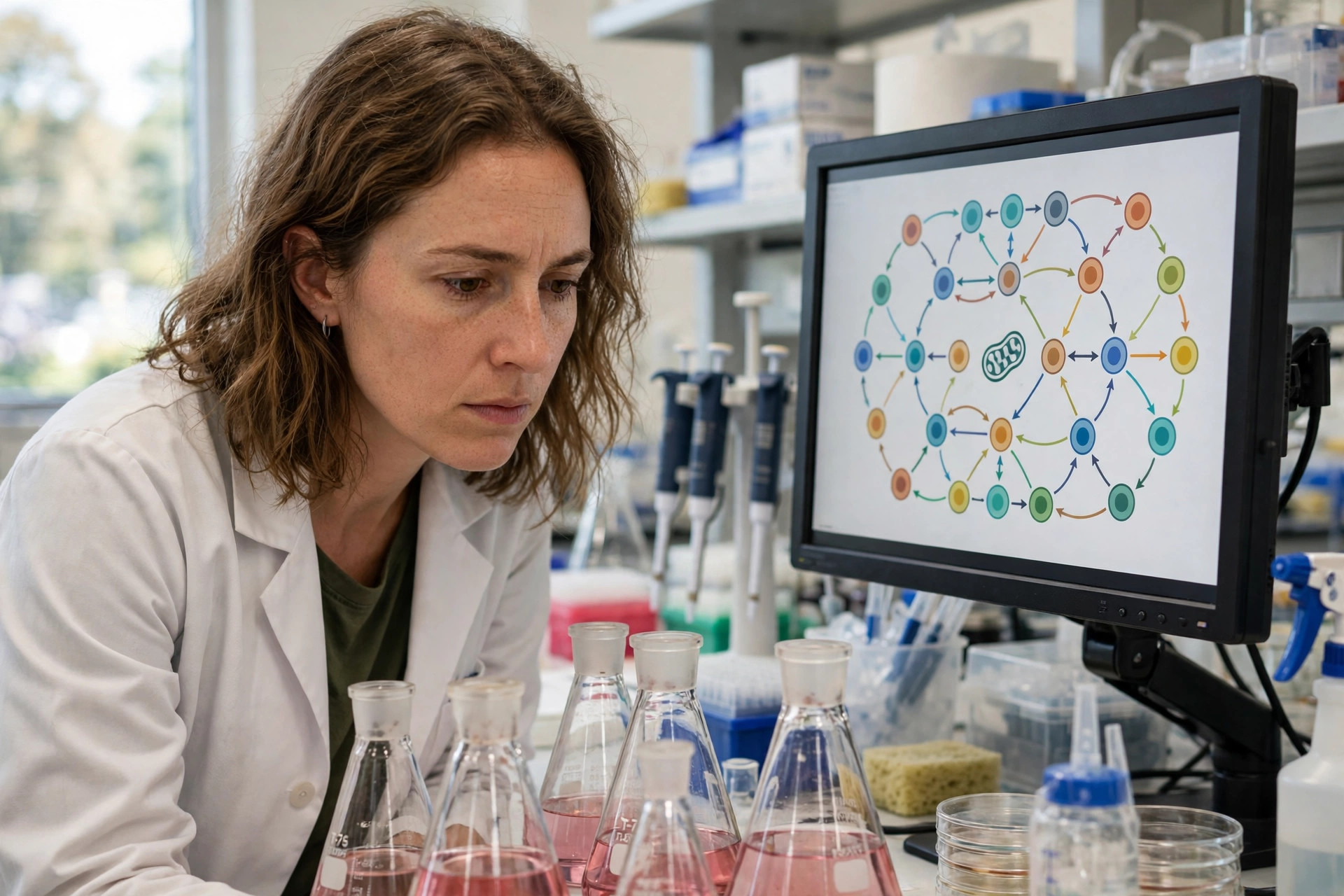
A metabolic circuit. Blocking the respiratory chain leaves NADH — the electron carrier that feeds the chain — piled up in both the cytosol and the mitochondria. The researchers showed tumour cells buffer that surplus through a two-branch shuttle whose end product is NADPH, the cell's reductive currency. So long as the drain runs, the cells tolerate a stalled chain — including the stall metformin produces.
What happened when the drain was blocked?
The pyruvate-carboxylase inhibitor ZY444 sensitised three cultured cancer cell lines (HeLa, SK-Hep1 and 143B) to metformin, and adding CB839, which blocks glutamine-fuelled metabolism, suppressed growth more than either pair. That is a coherent, testable vulnerability — in the exact, limited sense that it was demonstrated: pharmacological blockade in cell lines, with research compounds.
Where does the hype outrun the evidence?
In three places. First, ZY444 is a tool compound — a laboratory probe, not a developed drug with known safety in any species. Second, spontaneously arising tumours in a body are not cell lines under pharmacological blockade; metabolism in a real tumour microenvironment differs. Third, metformin itself, despite decades of interest, is not an approved cancer treatment, and this study does not change that. File this under 'mechanism worth watching', not 'combination worth trying'.
Frequently asked questions
What is NADH?
Nicotinamide adenine dinucleotide in its electron-loaded form — the courier that carries electrons from food breakdown to the mitochondrial respiratory chain, where they are cashed in for ATP.
Is metformin a cancer drug now?
No. Metformin is an approved diabetes medicine that researchers have long studied in cancer. This cell-line study adds a mechanism, not a treatment.
What is a tool compound?
A chemical used in laboratories to probe a biological target. Tool compounds are not developed or tested as medicines and are often unsuitable for use in living patients.
Where the evidence stands
- Established: NADH/NADPH balance is central to cell metabolism, metformin can inhibit the mitochondrial respiratory chain, and cancer cells rewire metabolism to survive stress.
- Preliminary: The NADH-buffering circuit and the ZY444 combination effect: one study (The Innovation, 2026) in cultured cancer cell lines under drug-induced respiratory blockade.
- Absent: Evidence in animals or people, a developable drug blocking the pathway, and any basis for using metformin combinations against cancer outside trials.
Join the discussion
To get the conversation started: What questions does this story raise for you? Share them below — every comment is reviewed by our moderators before it appears.
Community discussion only — not medical advice. Every comment is reviewed by our moderators before it appears. Sign in with Google or a free Hyvor account to join in.