
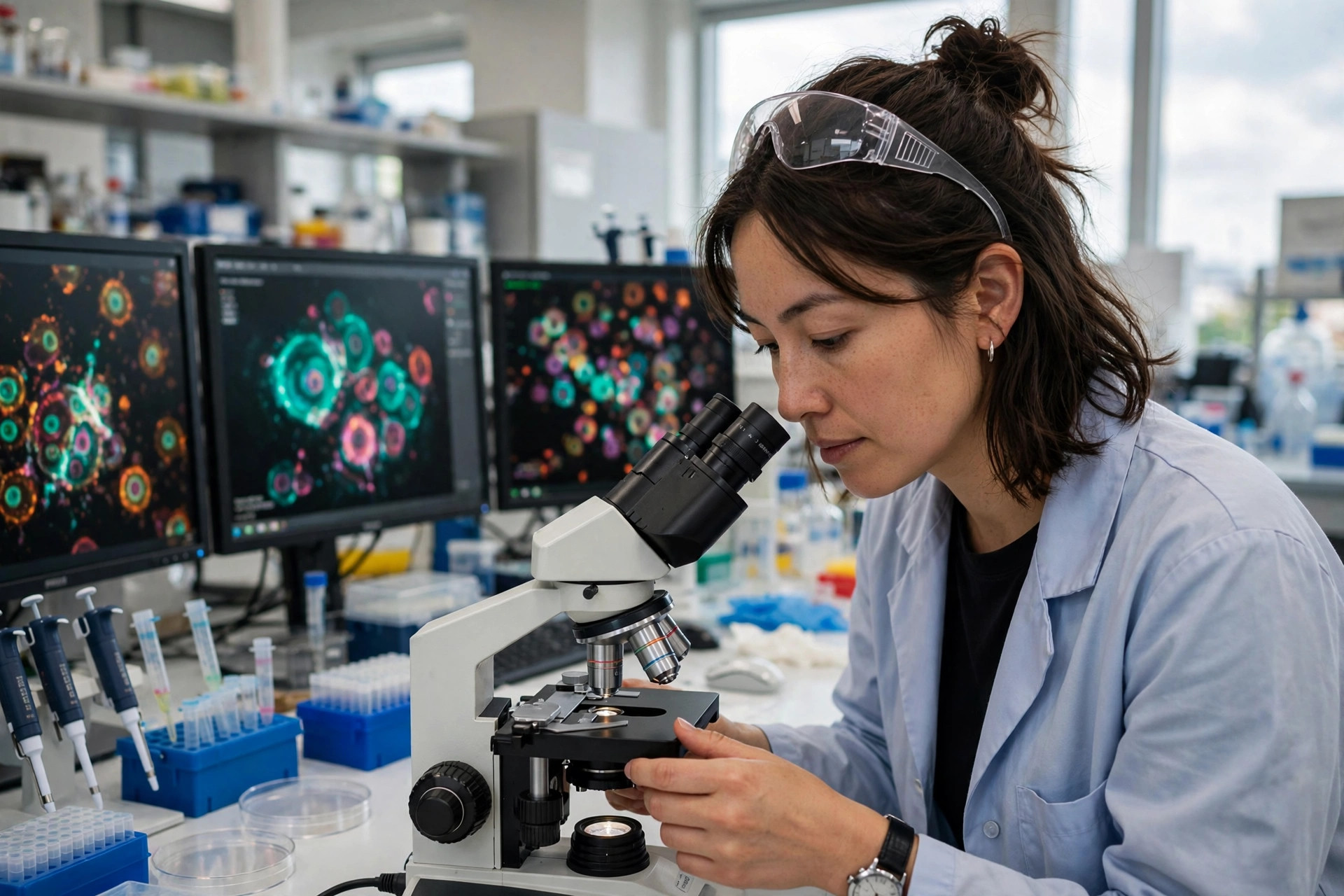
Two experimental compounds wreck glioblastoma cells by destroying their mitochondria — in lab models
·Tip: press play, then lock your phone or switch apps — the article keeps reading.
Glioblastoma cells survive by rewiring how they make energy, and mitochondria sit at the center of that rewiring. When the standard chemotherapy temozolomide stops working — as it often does — researchers look for ways to attack the machinery tumor cells cannot easily replace.
A paper published October 16, 2026 in Oncogene describes a two-compound strategy built on exactly that idea. The compounds — EPIC-1027, which targets the HOTAIR/PRC2 complex, and EPIC-1042, which disrupts the PTRF-CAV1 interaction — were combined to target mitochondrial function, with proteomics used to map the global protein changes that followed.
What did the compounds do to mitochondria?
According to the study, the dual compounds promoted p62-mediated protein degradation of mitochondrial respiratory-chain complex components. As those complexes were broken down, mitochondrial morphology and function collapsed — the organelles that power the cell were dismantled from inside, rather than merely slowed.
Why does this matter for treatment-resistant tumors?
Temozolomide resistance is a central reason glioblastoma outcomes remain poor. A therapy that works by degrading the respiratory chain attacks a different vulnerability than DNA-damaging chemotherapy, which is why mitochondrial targeting keeps drawing interest in resistant cancers. This remains preclinical work: cell and model-system findings are a starting point for drug development, not evidence that patients will benefit.
What should readers take from this?
Treat this as an early, mechanistically interesting lead. The next questions are the usual hard ones — selectivity for tumor over healthy brain, delivery across the blood-brain barrier, toxicity, and whether the effect holds in animals and, eventually, in carefully designed human trials.
Where the evidence stands
- Established: Glioblastoma commonly develops resistance to temozolomide, and mitochondrial metabolism is a recognized vulnerability researchers target in treatment-resistant tumors.
- Preliminary: In preclinical models reported in Oncogene (Oct 16, 2026), EPIC-1027 plus EPIC-1042 promoted p62-mediated degradation of respiratory-chain complex proteins and destroyed mitochondrial morphology and function.
- Absent: Human safety or efficacy data for these compounds, and any evidence they improve outcomes for people with glioblastoma.
Join the discussion
To get the conversation started: What questions does this story raise for you? Share them below — every comment is reviewed by our moderators before it appears.
Community discussion only — not medical advice. Every comment is reviewed by our moderators before it appears. Sign in with Google or a free Hyvor account to join in.