
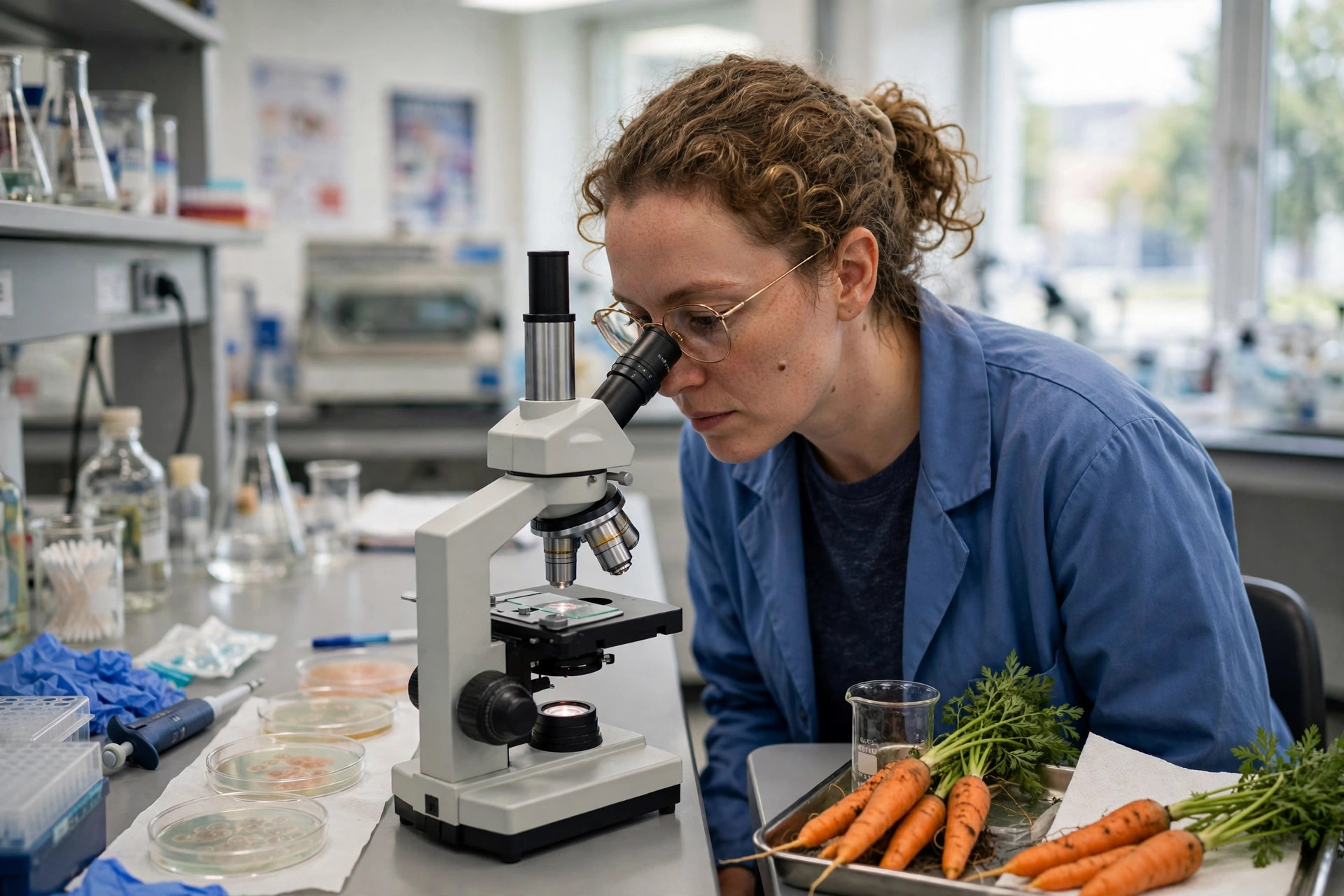
A carrot compound switched on mitochondrial cleanup and protected insulin cells — in mice and cells
Edited by Samael A. Tejada, Founder & Editor-in-Chief
·Tip: press play, then lock your phone or switch apps — the article keeps reading.
Isofalcarintriol, a compound from carrots, improved blood sugar and protected pancreatic beta cells in a mouse model of gestational diabetes and in cultured beta cells, by triggering PINK1/Parkin mitophagy (Communications Biology, November 12, 2026). Blocking that cleanup erased the benefit. All evidence is preclinical; nothing has been tested in pregnant people.
Beta cells fail in gestational diabetes partly because their damaged mitochondria are not cleared out. This study found a food-derived molecule that presses the cleanup button — and proved the button mattered by switching it off again.
What did the compound do?
In the high-fat-diet pregnant mouse model, isofalcarintriol ameliorated hyperglycemia and insulin resistance. In both the mice and the stressed MIN6 beta cells, it promoted beta-cell maturation and proliferation, induced mitophagy, and enhanced the cells' antioxidant capacity.
How does the mechanism work?
The compound targets macrophage migration inhibitory factor (MIF): it promotes MIF's dissociation from the enzyme USP7 (through its C224 residue) and MIF's ubiquitination (through F50/L59 residues), which drives PINK1/Parkin-mediated mitophagy — the best-known mitochondrial cleanup pathway. The causal checks are what make the paper persuasive at this level: a mitophagy inhibitor eliminated the compound's benefits, and knocking down PINK1 reversed the mitophagy-promoting effect of MIF knockdown.
What are the limits?
Everything shown is in a diet-induced mouse model of pregnancy diabetes and one cultured beta-cell line. Gestational diabetes care in people is a high-stakes, tightly evidence-bound area, and a carrot-derived compound is not a treatment lead until it survives pharmacology, safety and human testing — none of which exists yet. The value here is mechanistic: it ties MIF to beta-cell mitophagy in a new way.
Frequently asked questions
What is mitophagy?
The cell's selective recycling of damaged mitochondria. The PINK1/Parkin pathway tags failing mitochondria for removal, keeping the remaining network healthier.
What is isofalcarintriol?
A polyacetylene compound found in carrots and related plants, studied here as an antioxidant that promotes mitophagy in pancreatic beta cells.
Should pregnant readers take carrot extracts?
No. This is a mouse-and-cell study of a purified compound; nothing in it supports supplement use in pregnancy.
Where the evidence stands
- Established: Impaired mitophagy and beta-cell dysfunction are core features of gestational diabetes biology, and PINK1/Parkin is a central mitophagy pathway.
- Preliminary: Isofalcarintriol's effects: one preclinical study (Communications Biology, 2026) in a mouse model and cultured MIN6 cells.
- Absent: Any human data — including safety in pregnancy, which is untested and should not be assumed from a food source.
Join the discussion
To get the conversation started: What questions does this story raise for you? Share them below — every comment is reviewed by our moderators before it appears.
Community discussion only — not medical advice. Every comment is reviewed by our moderators before it appears. Sign in with Google or a free Hyvor account to join in.