
A blood-test fingerprint for schizophrenia and bipolar disorder? Mitochondrial markers show promise
·Tip: press play, then lock your phone or switch apps — the article keeps reading.
Telling schizophrenia apart from bipolar disorder can take years of clinical observation — and getting it wrong means the wrong treatment. A new study in Scientific Reports suggests the blood may hold a clue: in 934 people from France's I-GIVE cohort, researchers found that mitochondrial markers — mitochondrial DNA copy number, circulating cell-free mitochondrial DNA, and lactate — combined with inflammation signals could distinguish patients from healthy controls with high accuracy, and moderately separate the two disorders from each other.
What 934 blood samples revealed
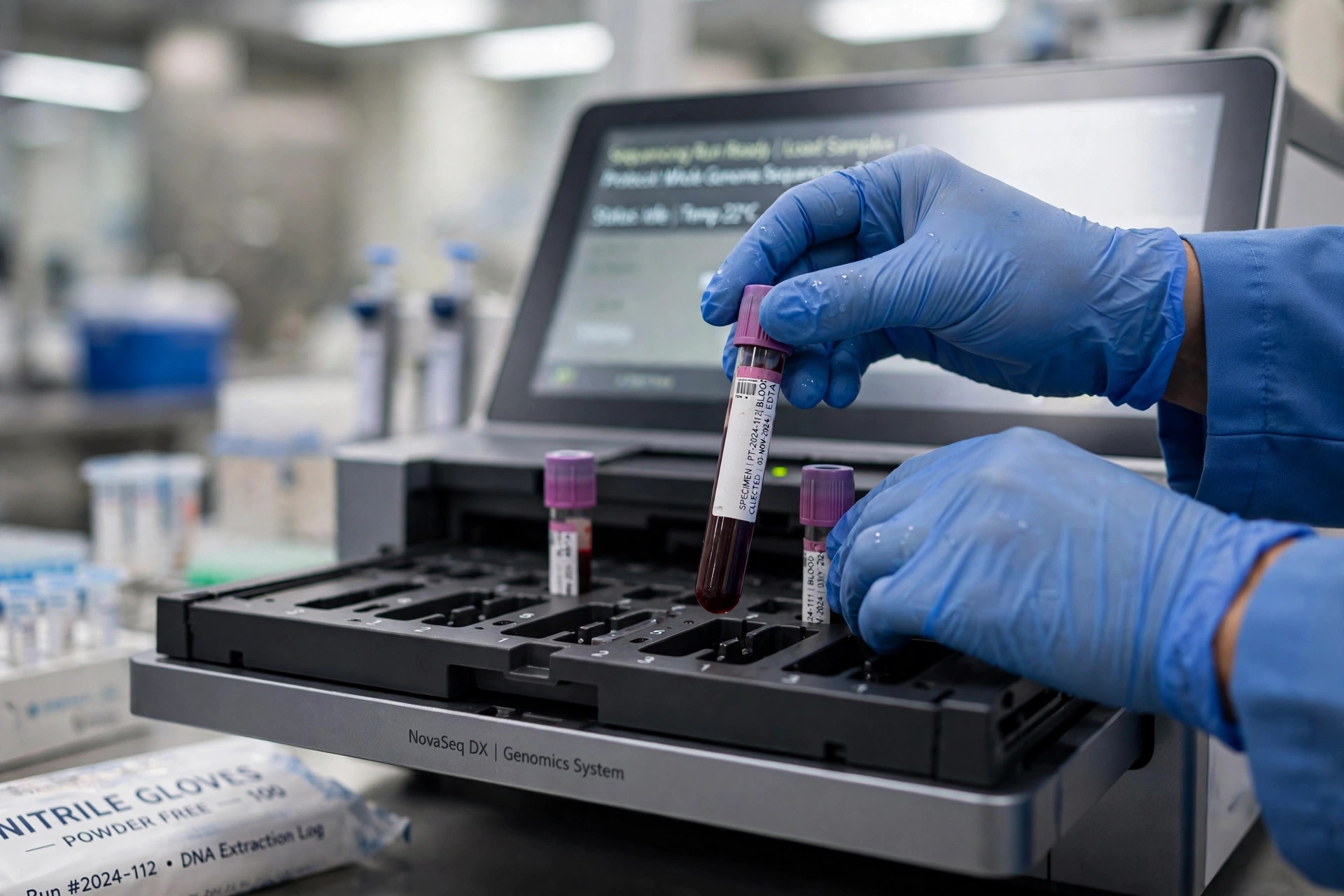
Jérémy Bernard, Ana Andreazza, and colleagues at Henri Mondor Hospital, INSERM, and the University of Toronto quantified mitochondrial markers — mtDNA copy number (mtDNA-cn), lactate, and circulating cell-free mtDNA — alongside a panel of immune markers (IL-1β, IL-6, IL-10, IL-13, IL-16, IL-17, TNF-α, CRP) in 934 individuals: people with schizophrenia, people with bipolar disorder, and healthy controls.
Both disorders were associated with increased lactate and decreased mtDNA copy number during acute episodes. Mitochondrial markers correlated with inflammatory markers and with clinical outcomes — and models combining the two signal types performed best, supporting the idea that energy-metabolism and immune alterations travel together in the biology of severe psychiatric disorders.
How close is this to a real test?
How close is this to a test your doctor could order? Not close yet. This is single-cohort observational data — the kind of result that needs replication in independent groups, standardized assays, and proof it adds value beyond a careful clinical interview before anyone talks about a diagnostic product. The authors say exactly that: if replicated, such biomarkers may help refine diagnostic stratification.
Still, the direction matters for the Testing desk. Psychiatry remains one of the last specialties without routine biological tests, and mitochondrial markers keep surfacing across disorders — Parkinson's, schizophrenia, bipolar. The pattern is getting harder to dismiss as coincidence, even if no single marker is ready for the clinic.
Where the evidence stands
- Established: Mitochondrial dysfunction and low-grade inflammation have both been previously implicated in schizophrenia and bipolar disorder; the I-GIVE cohort is a real French clinical cohort (Henri Mondor Hospital, INSERM, Fondation FondaMental).
- Preliminary: Single observational cohort of 934; both disorders showed increased lactate and decreased mtDNA copy number during acute episodes; combined mitochondrial + inflammatory models discriminated patients from controls with high accuracy and moderately distinguished schizophrenia from bipolar disorder.
- Absent: Replication in independent cohorts; a validated clinical diagnostic test; prospective proof the markers guide treatment.
Join the discussion
To get the conversation started: What questions does this story raise for you? Share them below — every comment is reviewed by our moderators before it appears.
Community discussion only — not medical advice. Every comment is reviewed by our moderators before it appears. Sign in with Google or a free Hyvor account to join in.