
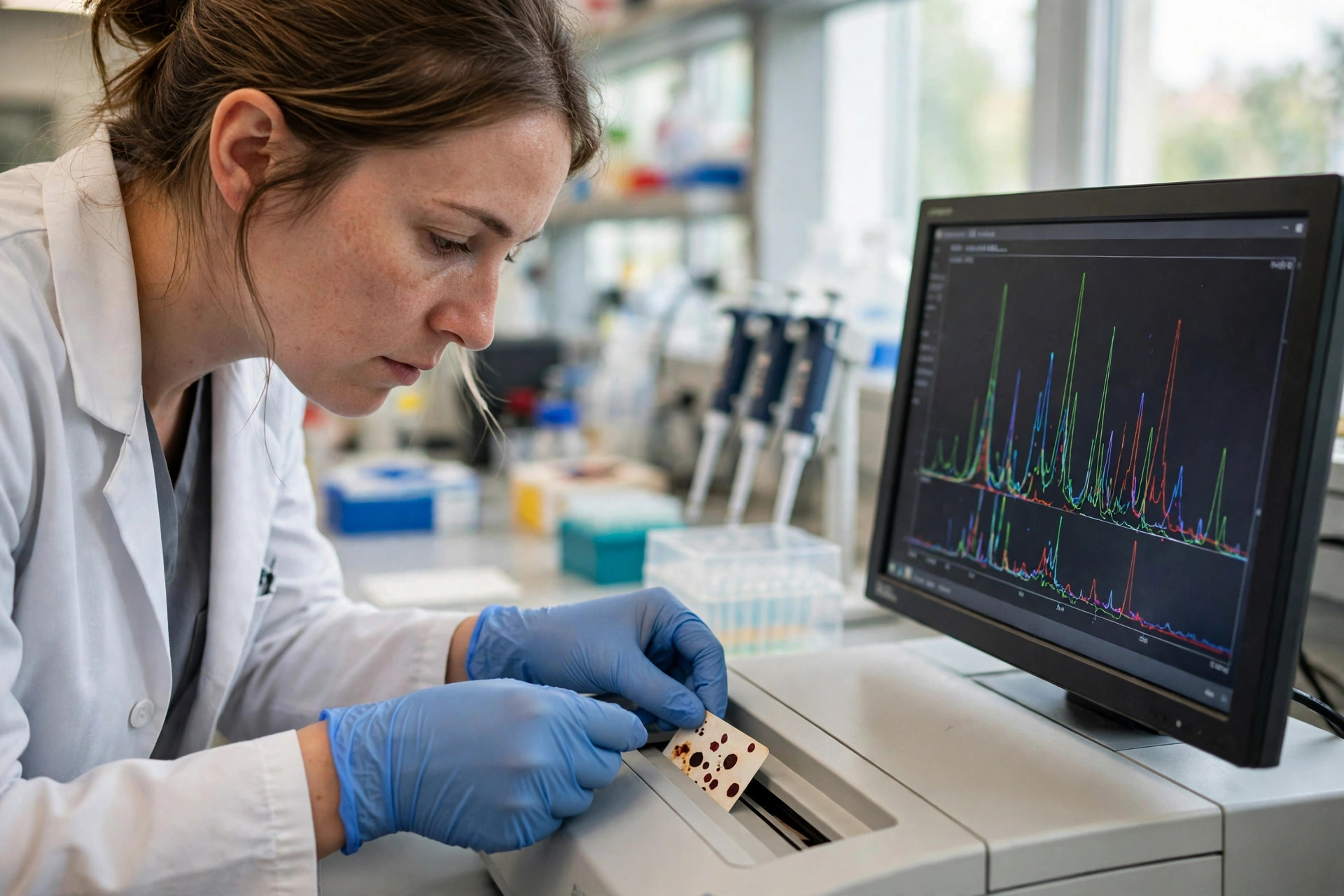
More than 10,000 rare diseases, one in ten Americans: the case for finding mitochondrial and genetic conditions at birth
Edited by Samael A. Tejada, Founder & Editor-in-Chief
·Tip: press play, then lock your phone or switch apps — the article keeps reading.
A Washington symposium on rare disease (reported November 23, 2026) heard that more than 10,000 rare diseases affect one in ten Americans, and experts including Harvard's Dr. Robert Green made the case for DNA sequencing in newborn screening to shorten diagnostic odysseys — including for mitochondrial conditions such as Barth syndrome. Federal officials described $100 million to ARPA-H over 4.5 years aimed at faster diagnosis.
A diagnosis is not a cure, but for rare mitochondrial and genetic conditions it is the door everything else stands behind — trials, registries, family planning, and care that fits the actual disease.
Why does newborn sequencing matter for mitochondrial disease?
Many mitochondrial conditions are genetic, present in infancy, and hard to recognise from symptoms alone — the parent panel's Barth syndrome case is typical: Barth affects the cardiolipin of mitochondrial membranes, causing heart and muscle problems that can take years to name. Sequencing at birth could flag such conditions before the odyssey begins, though panelists also aired privacy and parental-rights caveats.
What did the symposium ask for, beyond technology?
Capacity is the bottleneck: roughly 777 conditions were discussed against a system able to take on about two a year at current pace. The asks were shared data systems (Brosco), stronger genetic anti-discrimination law (Green), and state funding (Kyriacopoulos of APHL). In a fireside conversation, federal health officials emphasised that most rare diseases are genetic and early diagnosis is how patients reach treatment that can extend life.
What should readers take from the funding figure?
The $100 million ARPA-H commitment over the next four and a half years, described at the symposium, sits inside an agency funded at about $1.5 billion a year. It is a signal of federal priority on diagnosis speed — not yet a programme whose results can be judged. The test will be how many conditions screening actually adds, and how fast families get answers.
Frequently asked questions
What is Barth syndrome?
A rare genetic mitochondrial disease affecting cardiolipin, a fat essential to mitochondrial membranes, causing heart muscle weakness, muscle problems and growth delays, mostly in boys.
What is a diagnostic odyssey?
The years-long process many rare-disease families endure — repeated referrals and tests — before receiving a correct diagnosis.
Does newborn screening test for mitochondrial diseases today?
Only a limited panel of conditions is screened routinely, varying by state; most mitochondrial diseases are not on standard newborn panels, which is why sequencing expansion is debated.
Where the evidence stands
- Established: There are more than 10,000 known rare diseases affecting roughly one in ten Americans; Barth syndrome is a mitochondrial disease; many rare and mitochondrial conditions are genetic and diagnosable by sequencing.
- Preliminary: Newborn genomic screening at population scale: expert-supported and expanding in pilots, with open questions on capacity, follow-up, privacy and anti-discrimination protection.
- Absent: Evidence yet that the announced funding shortens time-to-diagnosis in practice, and universal newborn sequencing coverage.
Join the discussion
To get the conversation started: What questions does this story raise for you? Share them below — every comment is reviewed by our moderators before it appears.
Community discussion only — not medical advice. Every comment is reviewed by our moderators before it appears. Sign in with Google or a free Hyvor account to join in.