
Mitochondria harvested from a simple blood draw repaired injured nerves — in rats
·Tip: press play, then lock your phone or switch apps — the article keeps reading.
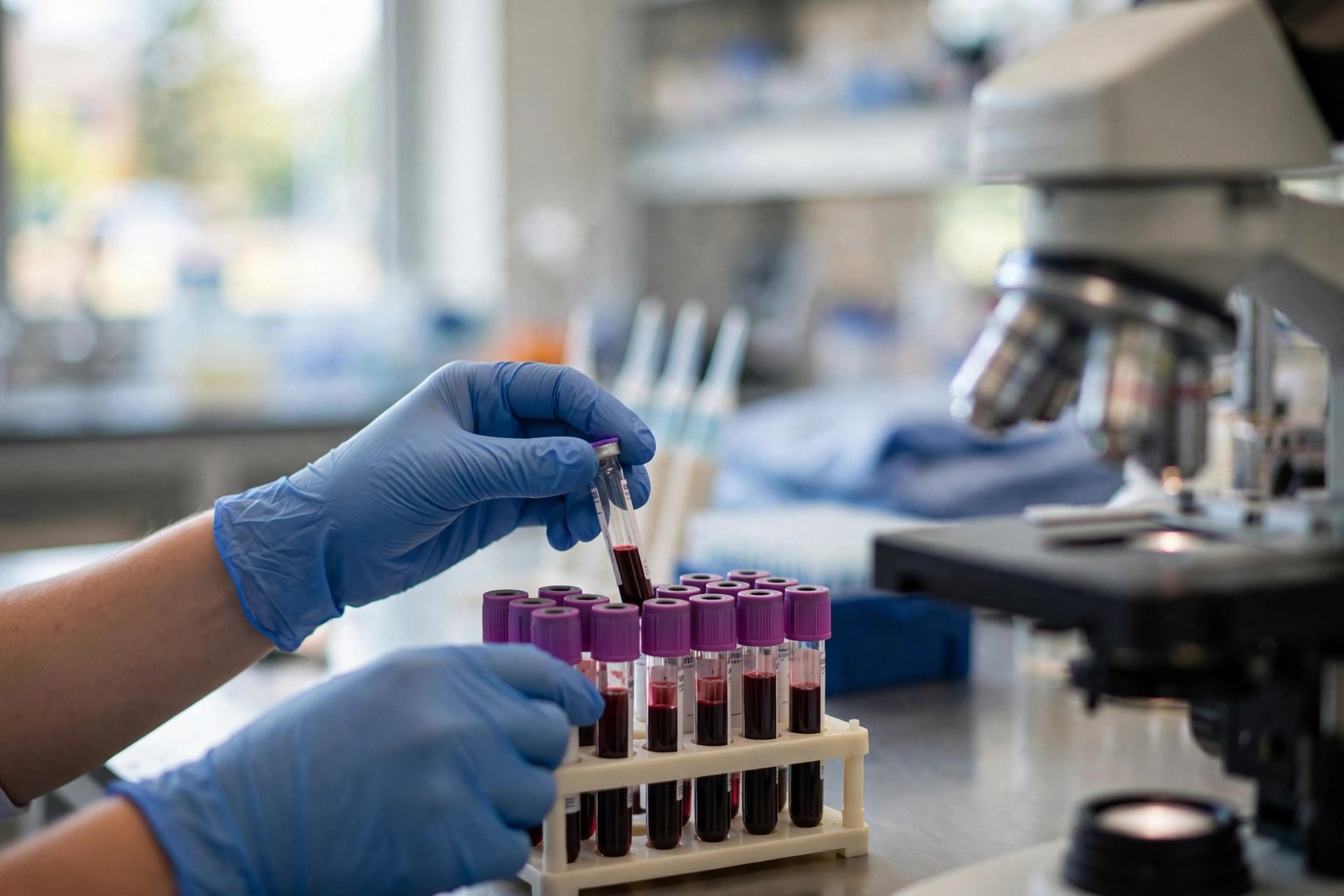
Transplanting healthy mitochondria into injured tissue is one of the most intriguing ideas in regenerative medicine, and one of the most impractical: the usual donor sources — skeletal muscle or cultured stem cells — mean extra surgery or weeks of cell expansion. A study published October 14, 2026 in Scientific Reports (Gao, Wang, Cui and colleagues, PLA General Hospital, Beijing) tested a source any clinic already collects: peripheral blood mononuclear cells, the white blood cells separated from a routine blood draw.
How did blood-cell mitochondria perform?
The team isolated mitochondria from both rat and human PBMCs and from adipose-derived stem cells, and confirmed the blood-derived organelles were structurally intact, with protein profiles similar to the stem-cell mitochondria — particularly in energy-production (oxidative phosphorylation) pathways. In a rat sciatic nerve crush model, injecting PBMC mitochondria under the nerve sheath significantly improved functional recovery by day 21, with better axon regrowth and less muscle wasting, comparable to the stem-cell mitochondria. In a harder test — a 10-millimeter nerve gap bridged with an acellular nerve allograft — mitochondria loaded into the graft improved electrical recovery, axon regeneration, Schwann-cell reconstruction, target-muscle preservation, and gait at 12 weeks.
Did the transplanted mitochondria actually get into nerve cells?
In cell-culture experiments, the transplanted mitochondria were taken up by neuronal cells within about three hours and measurably raised the cells' respiratory capacity. Donor mitochondria also promoted axon growth in dorsal root ganglion neurons, and gene-activity analysis pointed to axon-guidance pathways. Human-derived mitochondria produced no evident systemic inflammatory response or major-organ injury in the animals under the conditions studied — an early, limited safety signal, not a safety guarantee.
What stands between this and a human treatment?
Everything that usually does: scale, dose standardization, storage, delivery, and proof in large animals before any human trial. Nerve repair is a field littered with rodent successes that did not survive translation. What this study genuinely changes is logistics: if a patient's own blood can supply therapeutic mitochondria on the day of surgery — no extra tissue harvest, no cell-expansion delay — the autologous version of mitochondrial transplantation becomes much easier to test properly.
Where the evidence stands
- Established: Mitochondrial transplantation can restore cellular energy production in injured tissue in animal models; conventional mitochondria sources (muscle, stem cells) require invasive harvesting or prolonged cell expansion.
- Preliminary: In rat sciatic crush and 10-mm defect models, PBMC-derived mitochondria improved functional, electrical, and gait recovery comparably to adipose stem-cell mitochondria (Scientific Reports, Oct 14, 2026); human PBMC mitochondria raised respiration in cultured neurons.
- Absent: Large-animal replication, dose and storage standards, and any human trial of PBMC-derived mitochondrial transplantation for nerve injury.
Join the discussion
To get the conversation started: What questions does this story raise for you? Share them below — every comment is reviewed by our moderators before it appears.
Community discussion only — not medical advice. Every comment is reviewed by our moderators before it appears. Sign in with Google or a free Hyvor account to join in.