
An RNA medicine aims to restore a mitochondrial protein and slow inherited vision loss
·Tip: press play, then lock your phone or switch apps — the article keeps reading.
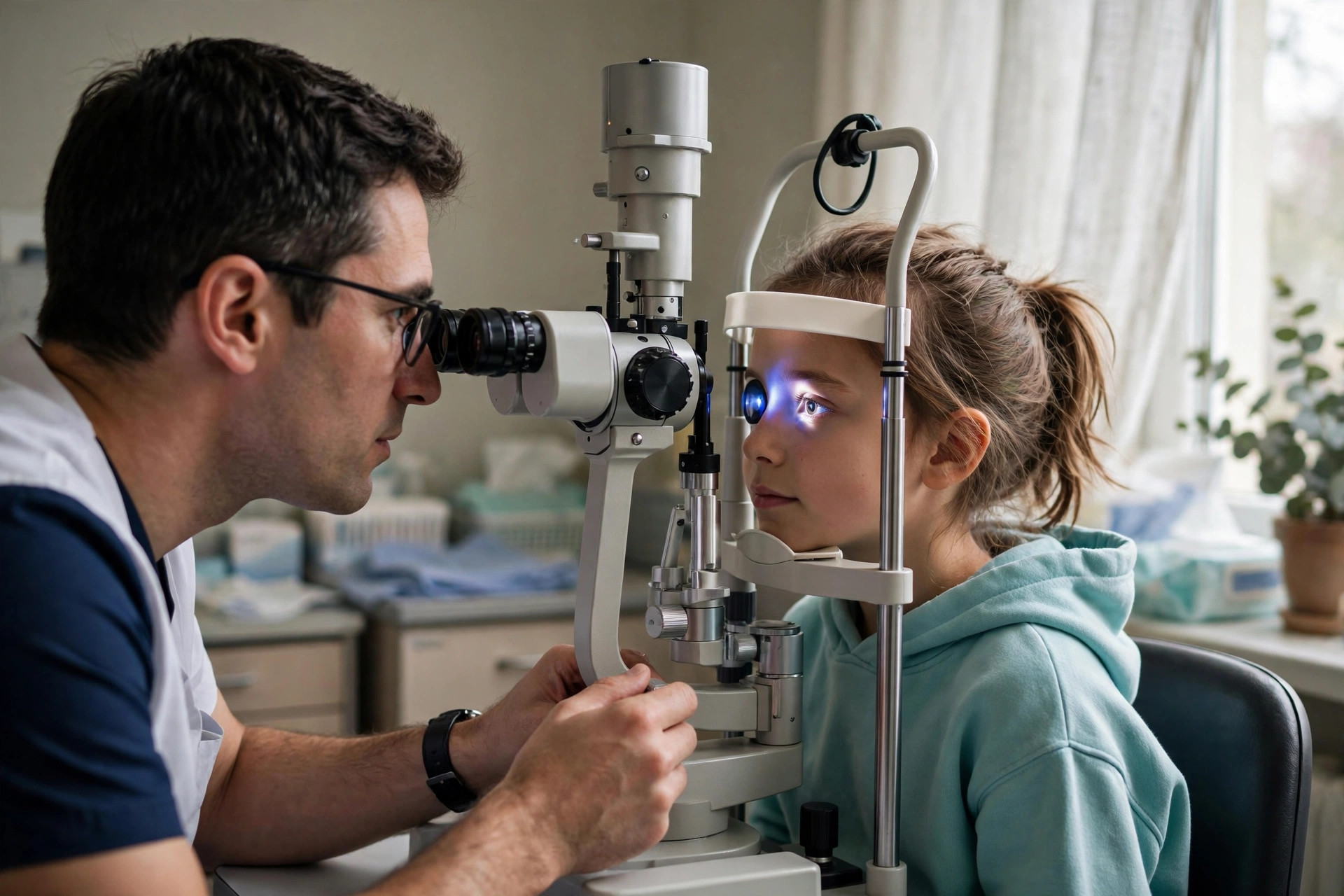
Some mitochondrial diseases announce themselves in the organ that can least afford an energy shortfall. In autosomal dominant optic atrophy (ADOA), the retinal ganglion cells that form the optic nerve — among the most energy-hungry cells in the body — slowly degenerate, causing progressive, irreversible vision loss that often begins in childhood. There are currently no approved treatments.
At the American Academy of Ophthalmology (AAO) 2026 annual meeting in New Orleans (October 9–12), Stoke Therapeutics presented new data on STK-002, an investigational RNA medicine built around the disease's mitochondrial root cause.
What goes wrong in ADOA?
Most ADOA cases — an estimated 65% to 90% — are caused by variants in the OPA1 gene. Typically one copy of the gene is faulty, leaving the body with roughly half the normal amount of OPA1 protein, a state called haploinsufficiency. OPA1 helps mitochondria maintain their shape and function; with too little of it, mitochondrial function falters, the optic nerve degenerates, and vision declines. ADOA affects roughly 1 in 25,000 people worldwide.
Data from the company's FALCON natural-history study (47 patients followed for 24 months) add a supporting detail: people with ADOA showed higher levels of mitochondrial oxidative stress than healthy individuals, and those levels correlated strongly with worse visual acuity — consistent with the idea that restoring OPA1 could matter clinically, though correlation alone does not prove it.
How is STK-002 supposed to work?
STK-002 is an antisense oligonucleotide — a short, engineered strand of RNA-like material — designed to increase how much functional messenger RNA the healthy copy of the OPA1 gene produces, thereby raising OPA1 protein levels. In preclinical studies, the company reports dose-dependent delivery to the retina, target engagement, higher OPA1 expression, and improved mitochondrial function in patient-derived cells carrying different OPA1 variants.
The approach is now in people. OSPREY, a Phase 1 first-in-human dose-escalation study in children and adults ages 6 to 55 with confirmed OPA1-related ADOA, has completed dosing in its first two cohorts; the third cohort is expected to finish dosing by the end of 2026, with initial safety and efficacy data anticipated in the first half of 2027. The study's primary job at this stage is safety and tolerability.
What should readers take from this?
This is a genuinely mechanism-first program: the drug targets the exact protein shortfall that causes most cases of the disease, and the natural-history data tie mitochondrial oxidative stress to how much vision patients lose. That is a stronger starting position than a shot in the dark.
It is also very early. Everything about benefit so far is preclinical or correlational; the human trial has produced no published efficacy results, and the first two cohorts were dose-escalation steps, with the potentially therapeutic dose levels in cohorts three and four still ahead. Company-presented conference data is a progress report, not proof — the H1 2027 readout is the milestone that will start to answer whether raising OPA1 changes vision.
Where the evidence stands
- Established: ADOA is the most common inherited optic nerve disorder, most cases involve OPA1 haploinsufficiency (~50% protein), OPA1 supports mitochondrial function in energy-hungry retinal ganglion cells, and no treatments are approved.
- Preliminary: FALCON natural-history data link higher mitochondrial oxidative stress to worse visual acuity in ADOA; preclinically, STK-002 raised OPA1 expression and improved mitochondrial function in patient-derived cells. The Phase 1 OSPREY trial has dosed its first two cohorts.
- Absent: Any human efficacy or safety results for STK-002 (first readout expected H1 2027), evidence that raising OPA1 improves or preserves vision in patients, and long-term safety data.
Join the discussion
To get the conversation started: What questions does this story raise for you? Share them below — every comment is reviewed by our moderators before it appears.
Community discussion only — not medical advice. Every comment is reviewed by our moderators before it appears. Sign in with Google or a free Hyvor account to join in.