
Could hydrogen gas help early Alzheimer's smell loss? The scientists behind the idea say: not proven — yet
·Tip: press play, then lock your phone or switch apps — the article keeps reading.
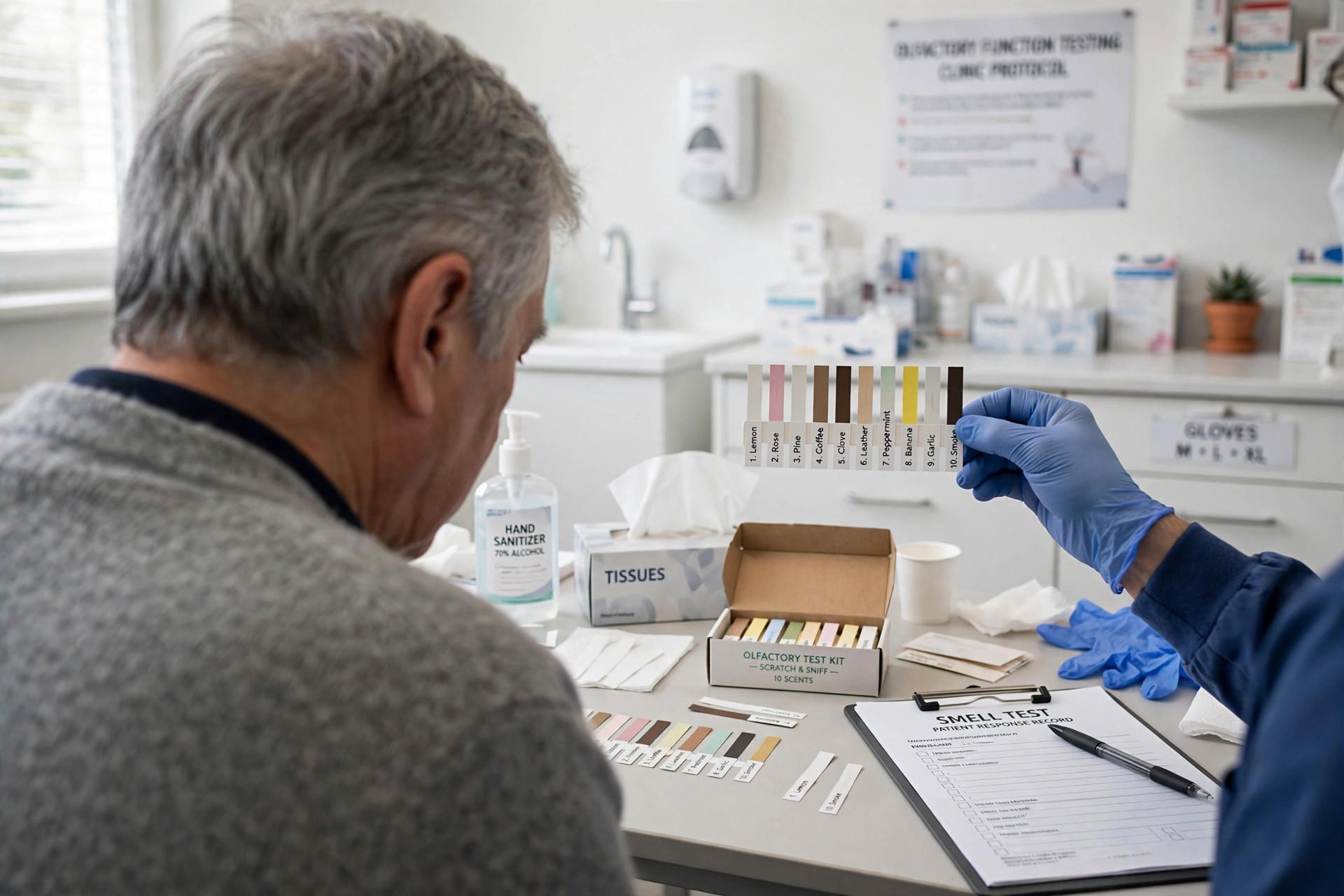
Losing your sense of smell is one of the earliest detectable signs of Alzheimer's — and the wellness internet has not been shy about suggesting molecular hydrogen as an answer. A new paper in Frontiers in Aging Neuroscience does something refreshing: it proposes the 'Hydrogen–Olfactory–Limbic' hypothesis as a research framework — and then states, explicitly, that direct evidence hydrogen modifies Alzheimer's-related smell loss is currently lacking. This is a hypothesis, not a treatment. The distinction is the whole story.
What the paper actually proposes
What the authors lay out is careful. The clinical association is real: impaired odor identification predicts cognitive decline and Alzheimer's dementia in longitudinal studies. The biology is not: whether smell loss comes from peripheral sensory damage, circuit breakdown, memory failure, or some combination remains unresolved — and the authors spend considerable ink warning that finding amyloid or tau in an olfactory structure does not prove it caused the smell loss.
Their proposal: use molecular hydrogen as an experimental intervention to find out whether modulating oxidative, inflammatory, and metabolic processes changes olfactory function and olfactory–limbic circuit physiology during Alzheimer's progression. Hydrogen can diffuse through membranes and has shown mitochondrial-modulatory effects in experimental systems — which makes it a reasonable probe. A probe is what it is: a tool for generating testable questions, not a treatment recommendation.
The fine print the marketing skips
Here's why this lands on the watchdog desk. The paper's own guardrails read like a checklist for evaluating every hydrogen-health claim you'll encounter: association is not mechanism; a test result is not a diagnosis (smell tests aren't Alzheimer's-specific); and a plausible biological rationale is not evidence of benefit. When a clinic or influencer cites 'the hydrogen–Alzheimer's study' to sell you something, ask which part they're citing — the proposed experiments, or the direct evidence the authors say doesn't exist yet. The honest answer, per the scientists themselves, is that only the experiments have been proposed.
Where the evidence stands
- Established: Olfactory dysfunction is a well-documented early feature of Alzheimer's, often preceding measurable cognitive impairment; molecular hydrogen has shown antioxidant, anti-inflammatory, and mitochondrial-modulatory effects in experimental systems.
- Contested: Whether hydrogen can modify Alzheimer's-related olfactory dysfunction at all — the authors state directly that evidence is lacking and frame their proposal as a testable hypothesis, not a therapy.
- Absent: Any data that hydrogen improves smell loss or any Alzheimer's outcome in people; any validated treatment based on this hypothesis.
Join the discussion
To get the conversation started: What questions does this story raise for you? Share them below — every comment is reviewed by our moderators before it appears.
Community discussion only — not medical advice. Every comment is reviewed by our moderators before it appears. Sign in with Google or a free Hyvor account to join in.