
Flavored vaping aerosols impaired liver mitochondria only in pregnant mice — a watchdog signal, in mice
Edited by Samael A. Tejada, Founder & Editor-in-Chief
·Tip: press play, then lock your phone or switch apps — the article keeps reading.
In a chronic-exposure mouse study, Virginia Tobacco and Menthol flavored vaping aerosols significantly reduced liver mitochondrial oxidative function in pregnant mice but not in non-pregnant mice, with flavor-specific lung inflammation and liver lipid disruption on top (International Journal of Molecular Sciences, November 3, 2026). It is a mouse toxicology signal — no human pregnancy outcomes were measured — against marketing that treats flavors as harmless.
The control group that matters most in this study is not the sham mice. It is the non-pregnant vapers, whose liver mitochondria came through fine — which is precisely what makes the pregnant group's result impossible to wave away as generic aerosol noise.
What did the exposure actually involve?
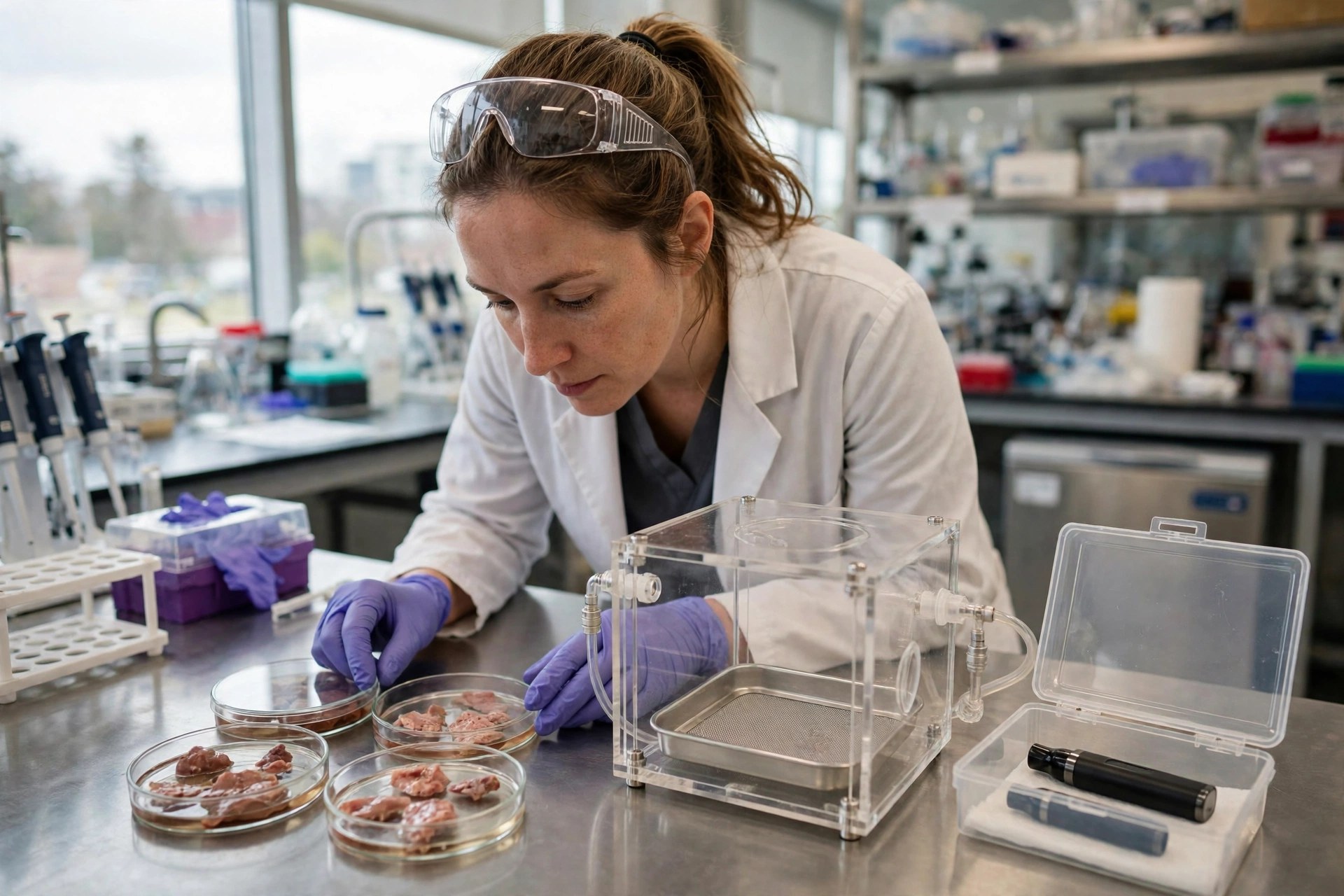
This was not a weekend puff test. Female C57BL/6J mice were exposed nose-only to Virginia Tobacco or Menthol JUUL aerosols (puff topography: 36.4 mL puffs, 3 puffs per minute) or sham aerosols for 13 weeks before mating, with exposure continuing through 12 days of gestation in the pregnant cohorts. The team then measured pulmonary inflammation in bronchoalveolar lavage fluid (total cells, protein, LDH activity), hepatic triglycerides and lipogenic gene expression (Scd1, Fasn, Srebp1c, estrogen receptor) by RT-qPCR and Western blot, liver fibrosis by histopathology, mitochondrial function directly in fresh liver tissue on an Oroboros Oxygraph respirometer, and serum cytokines. Mitochondrial oxidative function was measured, not inferred — the study's central claim rests on respirometry of the organelle itself.
What did pregnancy change?
Almost everything about the response. Vaping either VT or MT significantly reduced mitochondrial oxidative function in the livers of pregnant mice but not in those of non-pregnant mice — the study's central, pregnancy-specific finding. Inflammation also split by state: VT-exposed pregnant mice showed pulmonary inflammation with increased lavage cell counts and protein without an LDH change, while in non-pregnant mice it was MT that drove pro-inflammatory cell infiltration. In the liver, VT exposure in pregnancy upregulated lipogenic genes (Scd1, Fasn) and disrupted maternal lipid equilibrium, with SREBP1-pathway expression profoundly downregulated by pregnancy itself; MT exposure in pregnant animals produced the highest liver triglyceride fold difference and was associated with liver structural changes and fibrosis-related outcomes. The authors' summary: pregnancy may be associated with distinct immunological and metabolic responses to these aerosols — flavor and physiological state both matter.
What should readers take from a mouse vaping study?
Boundaries first, because watchdog pages owe readers the same discipline as research pages: these are mice, exposed under laboratory topography to two specific commercial flavors; mice are not pregnant women; no fetal outcome was measured; and a single study does not set policy. What it legitimately does is remove two comforting assumptions from the marketing shelf. Assumption one — that flavorings are inert decoration — fails inside this experiment: the flavors produced measurably different biological profiles. Assumption two — that an exposure tolerated by a non-pregnant body is equally tolerated in pregnancy — fails with it: the mitochondrial impairment appeared only in the pregnant liver. For a product category whose safety conversation leans heavily on comparisons to cigarettes, a pregnancy-specific mitochondrial signal in a controlled chronic-exposure study is exactly the kind of evidence that belongs in that conversation, at exactly its evidentiary size.
Frequently asked questions
What is the main finding?
Chronic exposure to Virginia Tobacco or Menthol flavored vaping aerosols significantly reduced mitochondrial oxidative function in the livers of pregnant mice, but not in non-pregnant mice — a pregnancy-specific effect, measured directly by respirometry.
Did the two flavors differ?
Yes. Virginia Tobacco drove lung inflammation and lipogenic-gene disruption in the pregnant cohort; Menthol was associated with liver structural changes and fibrosis-related outcomes and the highest liver triglyceride increase in pregnant animals.
Does this prove vaping harms human pregnancies?
No. It is a controlled mouse study with no human or fetal outcomes measured. It shows that pregnancy changed the biological response to these aerosols in mice, including a mitochondrial effect — evidence that belongs in the safety discussion at that weight.
Where the evidence stands
- Established: E-cigarette aerosols contain carrier solvents, nicotine, flavoring chemicals and metals — not just water vapor; pregnancy remodels maternal liver metabolism and immune balance; and mitochondrial oxidative function can be measured directly by respirometry in fresh liver tissue.
- Preliminary: In chronically exposed mice (Int J Mol Sci, Nov 3, 2026), VT and MT aerosols significantly reduced hepatic mitochondrial oxidative function in pregnant but not non-pregnant cohorts; VT drove pulmonary inflammation and lipogenic-gene disruption in pregnancy; MT was associated with liver structural/fibrosis-related changes and the highest pregnant-cohort triglyceride fold-change.
- Absent: Human pregnancy data of any kind, fetal outcomes, other flavors or devices, and any dose translation to human vaping patterns.
Join the discussion
To get the conversation started: What questions does this story raise for you? Share them below — every comment is reviewed by our moderators before it appears.
Community discussion only — not medical advice. Every comment is reviewed by our moderators before it appears. Sign in with Google or a free Hyvor account to join in.