
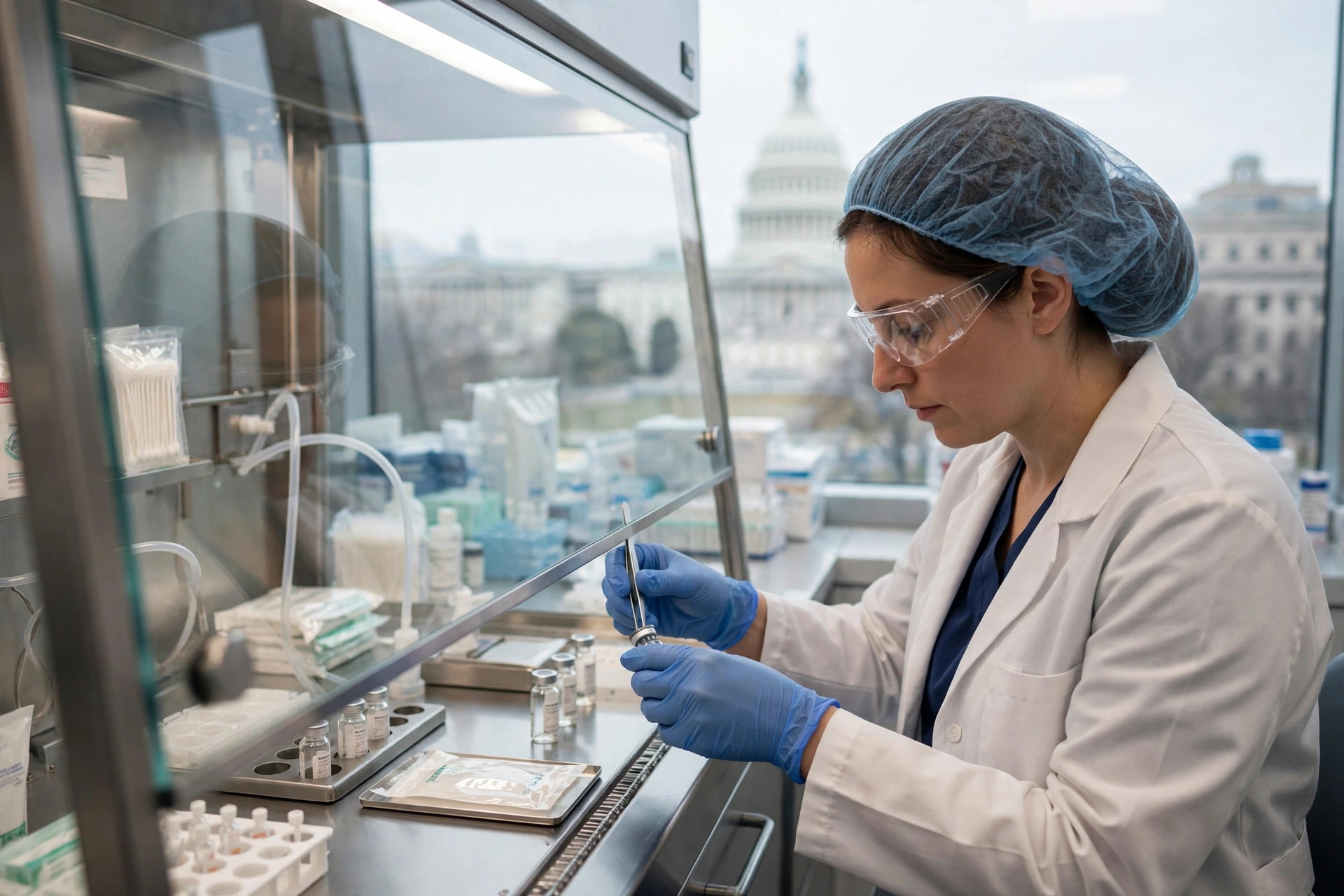
A possible temporary path for compounded peptides — including mitochondria's own MOTS-c — reaches the White House
·Tip: press play, then lock your phone or switch apps — the article keeps reading.
The peptide compounding fight moved one concrete step this week. On October 15, 2026, Reuters and the Associated Press reported — via a White House Office of Management and Budget filing — that the FDA and HHS have submitted an 'interim access policy for compounding using certain peptides' for review. The filing itself contains no details.
Two people familiar with the matter told the AP the policy would let compounding pharmacies temporarily make popular peptides, including BPC-157 (nicknamed 'Wolverine'), through enforcement discretion. MOTS-c — a peptide encoded in mitochondrial DNA and the most directly mitochondrial name in this debate — was among the six substances the FDA's advisory committee voted in July to recommend for the 503A compounding list.
What would 'interim access' actually mean?
Enforcement discretion is a temporary posture, not approval. It would mean the agency chooses not to enforce certain restrictions for a period while longer-term rulemaking proceeds. It would not make any peptide an FDA-approved drug, would not establish safety or efficacy, and could change or never be announced at all — reporting stresses the plan is not final.
Why does the mitochondria angle matter here?
Because MOTS-c is made from mitochondrial DNA and studied for metabolic and exercise-related effects, its regulatory fate is a bellwether for mitochondrial-derived peptides as a class. Clinics already market these compounds aggressively; readers should separate three questions that marketing routinely merges: is it legal to compound, is it proven to work, and is a specific preparation what it claims to be. Today the honest answers are: not yet settled, no, and only a verified pharmacy can say.
Where the evidence stands
- Established: An FDA advisory committee in July 2026 recommended 6 of 7 peptides, including MOTS-c, for the 503A compounding list, over FDA staff scientists' objections; advisory votes are not binding and rulemaking has not been completed.
- Preliminary: Reporting on October 15, 2026 (Reuters/AP, via an OMB filing) describes a submitted interim access policy that could temporarily permit compounding of certain peptides through enforcement discretion; the filing has no public details and the policy is not final.
- Absent: FDA approval of BPC-157, MOTS-c, or any of these peptides as safe and effective for any condition, and any final interim-access policy text.
Join the discussion
To get the conversation started: What questions does this story raise for you? Share them below — every comment is reviewed by our moderators before it appears.
Community discussion only — not medical advice. Every comment is reviewed by our moderators before it appears. Sign in with Google or a free Hyvor account to join in.