
One broken fission gene, a lifetime of seizures: a new DNM1L variant explains a child's refractory epilepsy
·Tip: press play, then lock your phone or switch apps — the article keeps reading.
DNM1L-related disease (encephalopathy due to defective mitochondrial and peroxisomal fission, EMPF1) is a rare, severe neurodevelopmental disorder. The new report integrates clinical, metabolic, neuroimaging, genetic, structural, neuropathological and functional analyses in a single patient to expand what is known about the condition — and to show how a full workup can pin a devastating epilepsy on one gene.
What did the workup find?
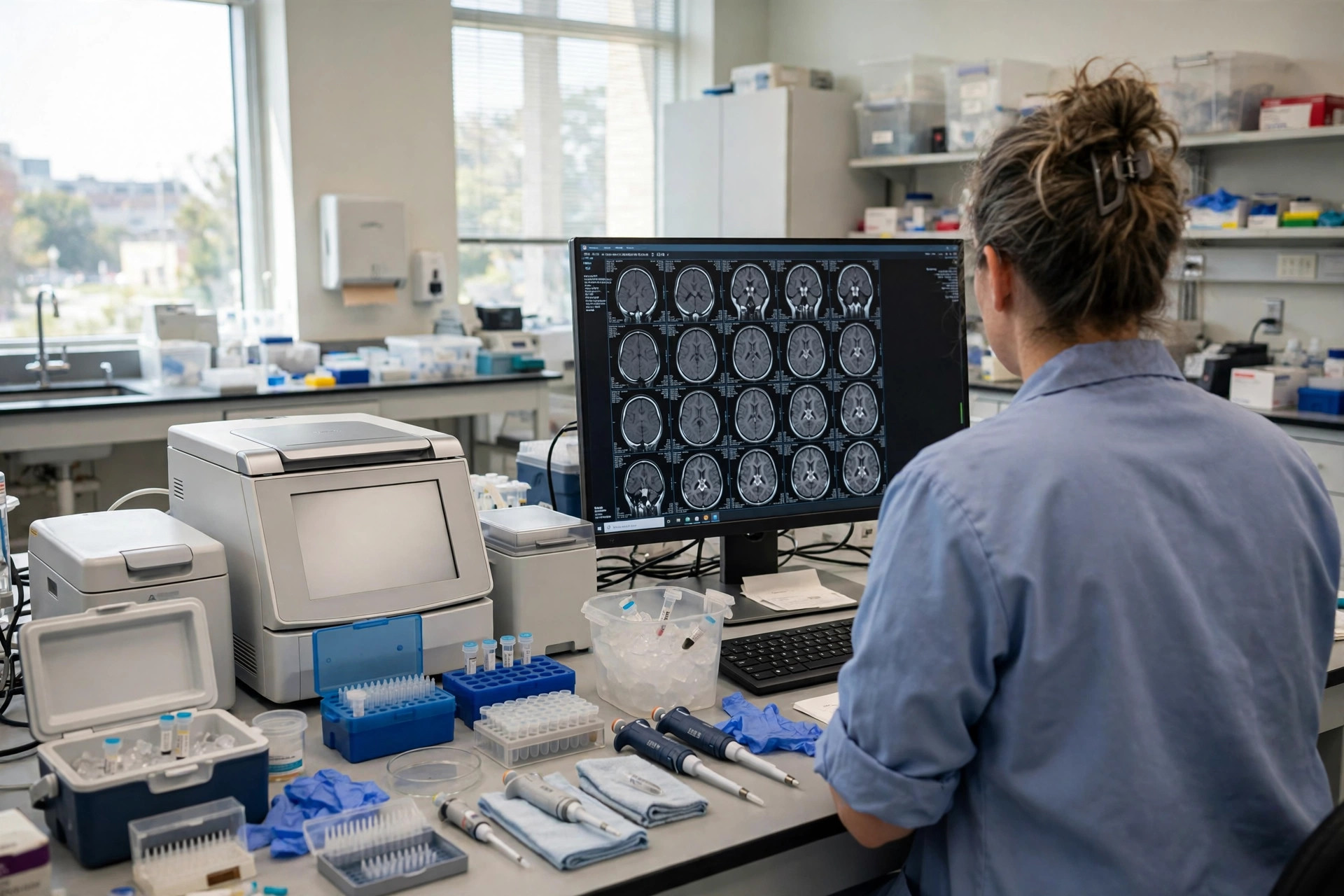
The patient, a 12-year-old girl, presented with severe developmental delay, microcephaly, ataxia, refractory seizures and behavioral disturbances. Brain MRI was unremarkable, while metabolic testing showed transient lactate elevation and EEG showed generalized slowing with multifocal seizure activity — a pattern that can mislead clinicians toward more common causes. Genetic testing found the heterozygous de novo variant in the DRP1 middle domain, classified as likely pathogenic; structural modeling predicted destabilized protein packing.
What did the tissue show about fission?
Postmortem examination revealed widespread neuronal loss, gliosis and neurodegenerative change across cortical and subcortical regions. Western blot and immunofluorescence analyses showed altered DRP1 species and increased DRP1 immunoreactivity, with pronounced mitochondrial hyperfusion in patient neurons — the expected signature when the fission machinery fails and mitochondria cannot divide (the authors note tissue-composition limits on the blot findings). Together, the results support a detrimental effect of p.Arg365Gly on DRP1 function and mitochondrial dynamics.
Why does one case matter?
Single cases cannot establish treatments, and none exists for DNM1L disease. What a case like this changes is diagnosis: it expands the variant spectrum clinicians and geneticists can recognize, shortens the diagnostic odyssey for the next family, and identifies the fission machinery itself as the process a future therapy would need to restore.
Where the evidence stands
- Established: DNM1L encodes DRP1, the core mitochondrial fission protein; pathogenic DNM1L variants cause severe neurodevelopmental disease with refractory epilepsy (EMPF1).
- Preliminary: A single-patient integrated case study (Orphanet Journal of Rare Diseases, Oct 19, 2026) reports a novel de novo p.Arg365Gly variant classified likely pathogenic, with structural destabilization predicted and mitochondrial hyperfusion with widespread neuronal loss observed in patient tissue.
- Absent: Any treatment for DNM1L-related disease, and cohort-level data on this specific variant (n=1).
Join the discussion
To get the conversation started: What questions does this story raise for you? Share them below — every comment is reviewed by our moderators before it appears.
Community discussion only — not medical advice. Every comment is reviewed by our moderators before it appears. Sign in with Google or a free Hyvor account to join in.